
Brand-Wise Breakdown of Local Smartphone Production in India
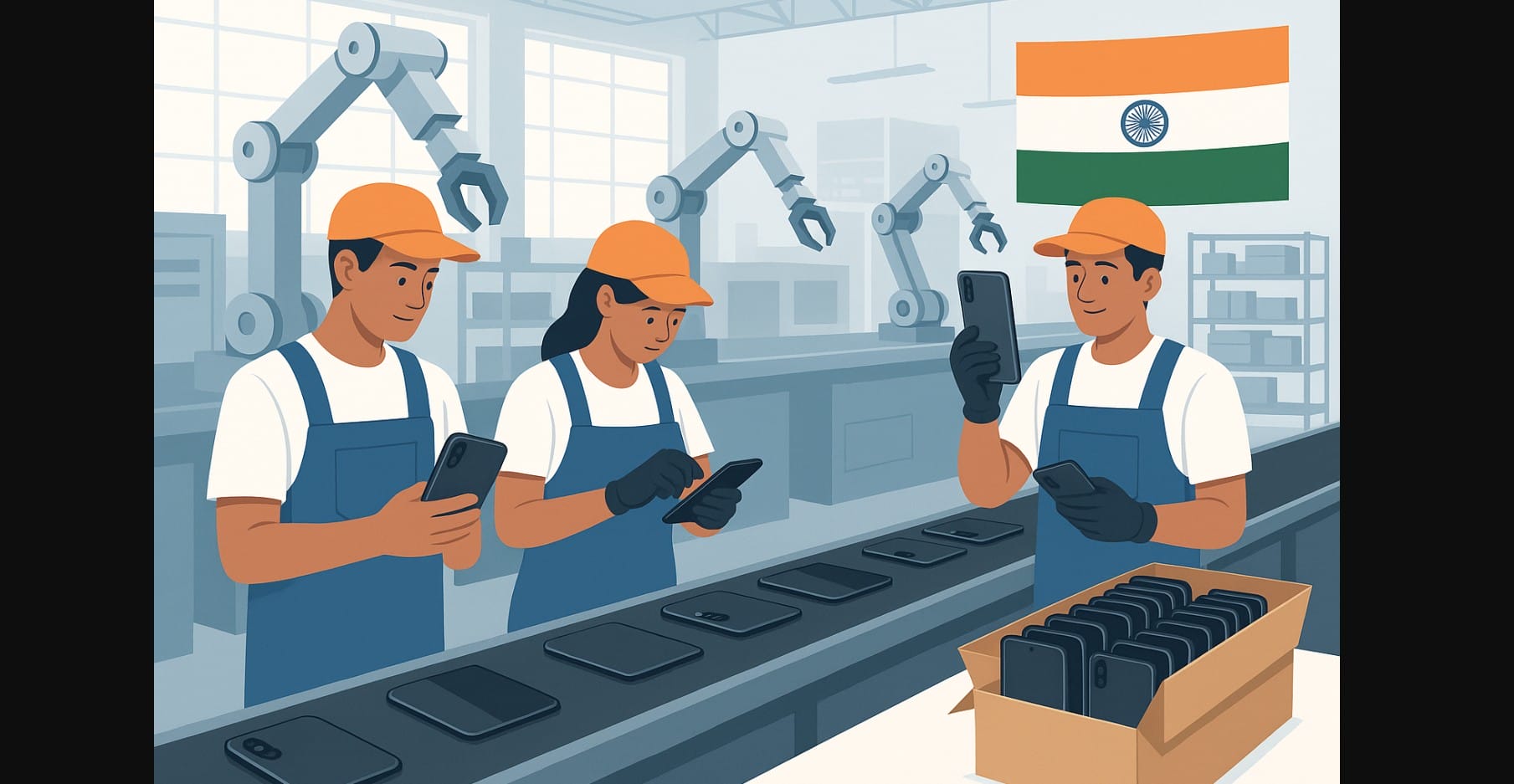
India’s shift from importing smartphones to local manufacturing and global exports is now complete. As of mid-2025, over 97% of phones sold in India are assembled domestically. Indian mobile exports soared beyond ₹2 lakh crore ($24 billion) in FY 2024-25. Let’s explore which brands build phones in India, what they manufacture, and how it benefits buyers and the economy.
India’s smartphone landscape in 2025 looks very different from a decade ago. Once dependent on imports, the country now manufactures nearly all smartphones sold locally, and a growing number for global markets too. With more than ₹2 lakh crore worth of mobile phones exported in FY 2024-25, India’s manufacturing ambition is no longer just a plan, it’s a working reality.
1. India’s Smartphone Manufacturing Boom: Schemes and Scale
The Production-Linked Incentive (PLI) scheme and the Phased Manufacturing Program (PMP) have been central to this change.
- PLI (Production‑Linked Incentive): ₹44,000 crore for smartphones to boost local manufacturing.
- PMP (Phased Manufacturing Program): Raised taxes on parts gradually to encourage local component making.
- Result: Over 300 electronics factories now operate in Tamil Nadu, Uttar Pradesh, Karnataka, Andhra Pradesh, and Maharashtra.
2. Apple: iPhones Made in Tamil Nadu and Karnataka
In 2025, Apple now manufactures 17% of its global iPhone output from India. Foxconn and Pegatron run massive factories in Tamil Nadu, while Tata Electronics has joined the ranks in Karnataka. From iPhone 12 to iPhone 16, and with the iPhone 17 soon entering production, these plants have exported phones worth over ₹1.5 lakh crore in FY25 alone. India is no longer just a secondary production base, it’s central to Apple’s future strategy.
- Factories: Foxconn, Pegatron (TN); Tata Electronics (KA)
- Production: iPhone 12 to iPhone 16 models
- Output: 4+ crore units/year; ~17% of global iPhones
- Exports: ₹1.5 lakh crore in FY25
- Future Plan: Assemble iPhone 17; reach 35% global share by 2027
3. Samsung: Flagships and Midrange Phones from Noida
Samsung’s Noida plant remains the world’s largest mobile factory. It produces everything from Galaxy M and A series to flagship S models. The company also exports significantly to regions like the Middle East and Africa. Because of its scale, Samsung manufactures not just phones but also components like displays and batteries within India.
- Location: Noida, Uttar Pradesh
- Models: Galaxy M, A, F, and S series
- Exports: To Middle East, Africa, Latin America
- Other: Manufactures displays and batteries locally
4. Xiaomi: High Local Content Across Popular Models
Xiaomi has increased local sourcing to over 70%, partnering with firms like Dixon and DBG across multiple states. Their Redmi, Mi, and Poco models under ₹30,000 are mostly made here.
- Partners: Dixon, DBG, Foxconn
- States: UP, TN, AP
- Local sourcing: 70-75%
- Models: Redmi, Poco, Mi (up to ₹30K)
5. BBK Group (Oppo, Realme, Vivo, OnePlus): Shared Mega Factory
Meanwhile, the BBK Group, which includes Oppo, Vivo, Realme, and OnePlus, runs a massive shared facility in Greater Noida. Oppo’s hundred acre campus is one of India’s largest phone factories, churning out over 50 million units annually across all its associated brands.
- Location: Greater Noida
- Structure: Shared 100-acre Oppo facility
- Brands and Products:
- Realme: C, Narzo, number series
- Oppo: A, F, Reno
- Vivo: Y, V, T, iQOO
- OnePlus: Nord series, selected number models
- Annual Output: Over 50 million units
6. Lava and Micromax: Indian Brands Resilient in 2025
While global giants dominate headlines, Indian brands like Lava and Micromax continue to build in India. Lava operates its own facility in Noida and has become a notable player in the entry-level segment, also eyeing export markets. Micromax, though smaller in scale, still produces budget-friendly devices aimed at domestic buyers in rural and Tier 3 towns.
- Lava:
- Owns full Noida facility
- Makes PCBA, shells
- Models: Blaze, Agni, Z series
- Exploring export growth
- Micromax:
- Operates via Bhagwati Group
- Focus: Ultra-budget phones in ₹6-10K range
7. Motorola and Transsion Group
Motorola assembles its midrange G and E-series models through Flex in Chennai. Transsion Holdings, which owns Itel, Infinix, and Tecno, builds its budget phones in Noida. These brands target users looking for basic connectivity, particularly in smaller cities and villages.
- Motorola:
- Assembled by Flex Ltd, Chennai
- G- and E-series made in India
- Edge series mostly imported
- Transsion (Itel, Infinix, Tecno):
- Assembled in Noida
- Targets rural and Tier 2/3 segments
8. What These Phone Manufacturing Schemes Achieved or Planned
- PLI Disbursement: ₹4,400 crore released by mid-2025
- Dixon: Investing ₹1,000 crore in component manufacturing (camera, fingerprint modules)
- PLI 2.0: ₹22,919 crore for local PCBs, modules, and equipment
9. What’s Still Imported for Final Smartphone Assembly
| Component | Source |
|---|---|
| SoCs (chipsets) | Taiwan, China |
| Displays | South Korea, China |
| Camera Sensors | Japan, Korea |
| Memory | China, Singapore |
Value Addition: Only ~32% of final phone value is from India
10. Benefits for Indian Smartphone Buyers
- Avoids 15-22% import duty
- Faster availability of latest models
- Local spare parts = quicker repairs
- Improved after-sales and warranty service
11. What’s Next for India’s Smartphone Manufacturing?
- Apple to hit 35% global iPhone output in India by 2027
- Google Pixel now made in India (Dixon, Lava)
- Lava to spin off its manufacturing arm for PLI-backed exports
- Rising Indian content in enclosures, camera modules, and batteries
Summary – Inside India’s Smartphone Manufacturing Ecosystem
India has successfully become a smartphone assembly and export hub. Every major brand now makes or assembles devices locally. While high-end components are still imported, the foundation is laid for a complete electronics ecosystem. For consumers, this means better pricing, faster access, and improved servicing.
India’s smartphone success story is no longer about just assembling phones, it’s about building a full-fledged ecosystem. The shift benefits both consumers and the broader economy. With stronger supply chains, faster product rollouts, and deeper local involvement, 2025 marks a real turning point. The next challenge? Moving from assembly to innovation, and making India not just a hub for building smartphones, but designing them too.
Sources:
- https://economictimes.indiatimes.com/industry/cons-products/electronics/made-in-india-chinese-phones-ring-overseas/articleshow/121837786.cms
- https://timesofindia.indiatimes.com/city/chennai/tn-iphone-capital-of-india/articleshow/121083869.cms
- https://www.ft.com/content/3939b8e6-641c-443e-8b76-ac77eaad91ca
- https://reuters.com/technology/google-pixel-maker-dixon-double-revenue-india-ramps-up-electronics-production-2025-02-20
- https://thecore.in/technology/inside-lavas-mobile-manufacturing-facility-see-how-your-smartphone-is-made-1384101
- https://m.economictimes.com/industry/cons-products/electronics/lava-mulling-spinning-off-manufacturing-arm-into-independent-co/articleshow/111631576.cms
- https://www.livemint.com/industry/electronics-pli-china-korea-taiwan-assembling-phones-manufacture-drones-wearables-boat-noise-foxconn-dixon-apple-xiaomi-11750583664237.html

