
The Impact of Make in India on India’s Computer Industry: Growth, Jobs, and Challenges
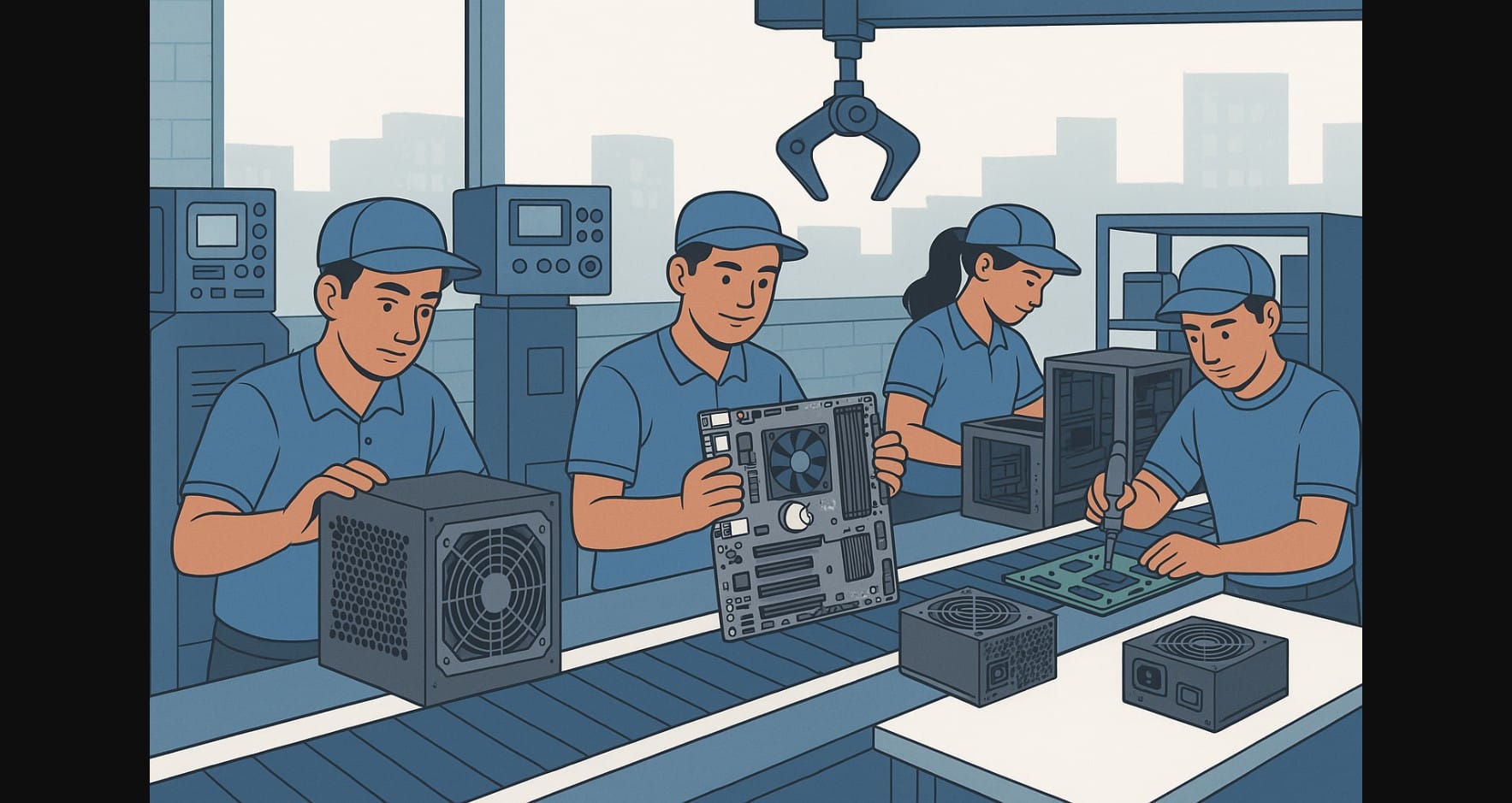
When the Make in India initiative was launched in 2014, the government set an ambitious target: expand manufacturing’s share of GDP from ~16% to 25%, reduce import dependency, and create millions of jobs.
For most of the last two decades, India’s PC market depended heavily on imports, not just for chips, but for fully assembled laptops and desktops. That reliance meant higher costs, supply vulnerabilities, and no real ecosystem for local players. With digital adoption rising during the pandemic and the demand for laptops, desktops, and servers surging, the PC industry became one of the clearest test cases for whether “Make in India” could deliver results.
1. The Policy Tools Behind India’s Computer Manufacturing Push
PLI Scheme for IT Hardware: Incentives That Changed the Game
The Production-Linked Incentive (PLI) scheme for IT hardware marked the first major policy tool aimed directly at PCs. Under this, 27 manufacturers received approval to set up or expand plants in India, covering laptops, desktops, tablets, and servers. The government expects these firms to generate $42 billion worth of output over the next few years, a scale that can reshape the domestic supply chain.
Import Licensing: Nudging Global Brands to Assemble Locally
In 2023, India introduced import restrictions on laptops and PCs, requiring licenses for shipments. While controversial at first, this measure pushed global players like HP, Dell, Lenovo, Acer, and Apple suppliers to accelerate local assembly. It also gave domestic contract manufacturers such as Dixon Technologies a significant role; by FY 2025/26, Dixon alone is projected to supply 15% of India’s laptop demand.
Semiconductor Mission: Early Steps Toward Self-Reliance
The government also approved a ₹3,700 crore HCL-Foxconn semiconductor facility in Noida to produce 36 million display driver ICs per month, critical components for laptops, monitors, and smartphones. While India is still far from self-sufficient in semiconductors, such moves mark the first steps toward reducing dependence on Taiwan and China.
2. How Local Manufacturing is Shaping the Computer Market in India
Rising Shipments and Penetration
The Indian PC market is showing consistent growth:
- 14.4 million PCs shipped in 2024, up 3.8% from the previous year.
- 3.3 million units shipped in Q1 2025, an 8.1% YoY increase.
- Household penetration has doubled since 2019, from 6-8% of homes to 13-15% by 2024.
This growth reflects not just rising demand but also the confidence of brands to serve that demand locally.
Local Supply Chains and Shorter Delivery Cycles
Local assembly has cut delivery times and reduced dependency on global shipping. While critical parts like CPUs, GPUs, and DRAM are still imported, assembling final products in India lowers logistics costs and builds domestic capability step by step.
3. Made-in-India Benefits Visible So Far
- Job Creation: Electronics PLI has created close to 10 Lakhs jobs, direct and indirect.
- Investment Flows: Make in India has pulled in $17+ billion of electronics manufacturing investment, with FDI inflows rising from $45B (2014-15) to $71B (2023-24).
- Growth of EMS Firms: Local players like Dixon and Optiemus have emerged as strong partners for global brands, scaling from mobile assembly into laptops and desktops.
- Consumer Advantage: Over time, greater local assembly could lower prices in mid-tier laptops and desktops, where cost sensitivity is highest.
4. India’s Position in the Global Computer Supply Chain
The impact of Make in India goes beyond domestic consumption. The bigger question is whether India can establish itself as a serious player in the global PC and IT hardware supply chain, where China, Taiwan, and Vietnam dominate today.
From Importer of Finished Units to Local Assembler
For years, almost every PC sold in India came as a fully built unit (FBU) from China. Now, thanks to the PLI scheme and import licensing, a growing share of India’s laptops and desktops are assembled locally. Brands like HP, Dell, Lenovo, and Acer have begun shifting part of their production lines to India, while contract manufacturers such as Dixon Technologies and Optiemus are scaling up operations.
How the China+1 Strategy Brings Investments to India
Global PC makers are actively reducing reliance on China by setting up facilities in Vietnam, Thailand, and India. India’s edge is its huge domestic market, which gives companies immediate demand to serve, making investment more attractive than in smaller Southeast Asian countries.
Why Vietnam, Taiwan, and China Still Hold the Upper Hand
Despite progress, India’s role is still mostly screwdriver assembly, putting together imported CPUs, GPUs, memory, and motherboards. In contrast, Vietnam already manufactures key components and Taiwan remains the global leader in advanced PCBs and semiconductors. Without stronger backward integration, India risks staying at the assembly stage.
Export Potential: Can India Serve Africa and South Asia?
If India succeeds in building its semiconductor and component ecosystem, it could position itself as an export hub for PCs to regions like Africa, the Middle East, and South Asia. With labor costs lower than many peers and government incentives in place, the long-term opportunity is significant, but execution will decide whether India captures it.
5. Local PC Manufacturing Challenges Holding Back Full Impact
- Assembly vs. Manufacturing Depth: Most of today’s “Make in India” PCs are assembled locally, but core parts like CPUs, GPUs, and motherboards remain imported. Without a robust component ecosystem, India risks staying an assembly hub rather than a full manufacturing base.
- Cost Pressures: Even with incentives, producing in India can be 7-10% costlier than importing from China or Vietnam. Sustaining competitiveness after PLI incentives end will be difficult.
- Scale Gap: India shipped 14.4M PCs in 2024; by comparison, China shipped over 50M in the same year. Bridging that scale difference will take years of capacity expansion.
6. Future Outlook: What’s Next for India’s Computer Industry
Looking ahead, the momentum points in a clear direction:
- Market Growth: India’s PC market is forecast to expand another 6% in 2025, crossing 15M shipments, and AI-driven PCs will accelerate growth further in 2026.
- Rise of Mini-PCs and SFF Desktops: With demand for compact, power-efficient devices growing in metro cities, locally assembled small form factor PCs may take off alongside laptops.
- Semiconductor Ecosystem: If proposed fabs under the India Semiconductor Mission go live, India could finally reduce dependence on imports for high-value components.
- Strategic Shift Away from China: With global companies seeking “China+1” alternatives, India is positioning itself as a serious hub for PC assembly, with potential to move higher up the value chain.
Conclusion: From Policy Success to Long-Term Competitiveness
The Make in India initiative has already altered the trajectory of the Computer industry. From a market almost fully dependent on imports, India now assembles a meaningful share of its laptop and desktop demand locally, has attracted billions in investment, and is beginning to build semiconductor capacity.
But the journey isn’t finished. Unless India develops a strong component ecosystem, chips, motherboards, memory, it risks staying at the assembly stage. The real test of Make in India in PC will be whether it can move beyond assembly plants and into end-to-end hardware manufacturing.
For now, the initiative has given India a foothold in the global PC supply chain, created jobs, and boosted domestic availability. In a country where digital adoption is only accelerating, that foothold could become a foundation for genuine global competitiveness, if the next steps are executed right.

