
Maximize Rooftop Solar with Smart Uses Across Your Home
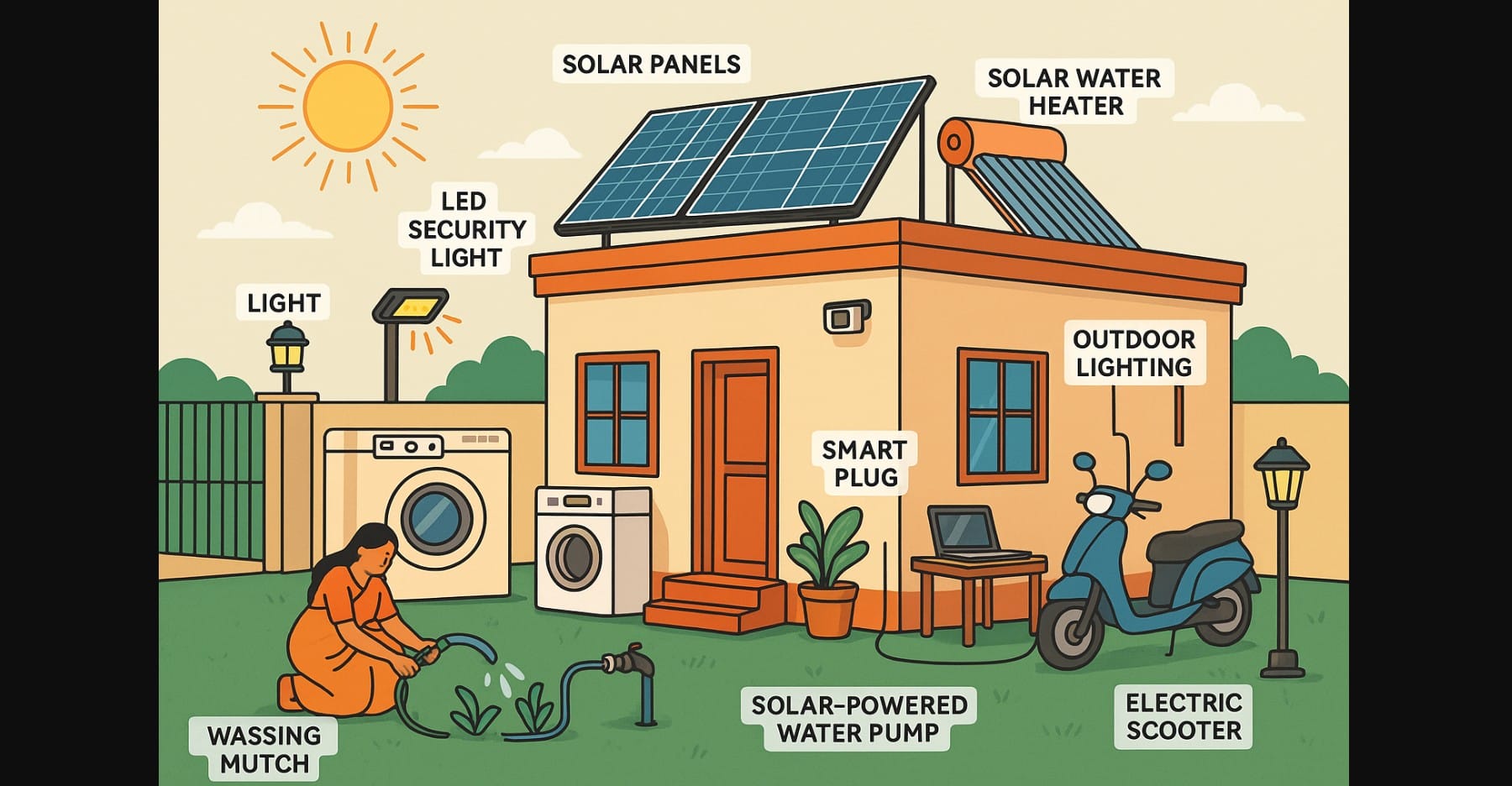
If you already have a rooftop solar system or are planning one, chances are you’re thinking about powering lights, fans, and maybe a fridge or TV. But solar can do much more than basic electricity.
In India’s sun-rich climate, your solar setup can:
- Run water heaters and pumps
- Automate appliances during peak generation hours
- Cut down on LPG, diesel, and heating bills
- Power outdoor security lighting and garden systems
If you’re only using solar for backup lighting, you’re leaving money on the table.
1: Solar Water Heating – A Proven Indian Essential
- Solar water heaters are one of the oldest and most efficient solar applications in India
- Unlike PV panels, they use thermal energy directly (no electricity conversion)
- Saves 50-70% of your geyser electricity in cities like Bengaluru, Pune, Dehradun, or Shimla
- Works best on clear rooftops with 3-4 hours of sun
Types You Can Install:
| Type | Best For |
|---|---|
| Flat Plate Collectors | Moderate climates, cities |
| Evacuated Tube Collectors | Cold or semi-cloudy regions |
Many states (like Karnataka and Maharashtra) still support these systems in housing societies and standalone homes.
2: Solar-Powered Water Pumps for Storage and Gardens
Running your overhead tank motor pump daily can consume 1-2 units per day. That adds up.
- A solar-powered 0.5HP or 1HP pump can:
- Fill your terrace tank
- Irrigate your garden or kitchen terrace farm
- Run on direct sunlight with a controller (no battery needed)
This is a great use for semi-urban homes or bungalows with rooftop tanks and gardens.
3: Outdoor Lighting, Pathway Lamps, and Motion Lights
- Solar motion-sensor security lights now start at ₹600-₹1,200
- Boundary lights or gate lights can be fully solar with dusk-to-dawn sensors
- Ideal for:
- Independent homes
- Village homes
- Rooftop patios and pathways
They require no wiring and eliminate standby grid usage at night.
4: Load-Shifting Smart Appliances During Daytime
If you already have a 3-5 kW rooftop solar setup, you can plan your appliance usage like this:
| Appliance | Best Use Time (Solar) | Reason |
|---|---|---|
| Washing machine | 11 am – 2 pm | Matches peak solar, avoids battery |
| Mixer grinder | 12 pm – 4 pm | Short burst power, solar direct |
| Induction stove (hybrid use) | 12 pm – 2 pm | Works best if load is split |
| Geyser (electric backup) | 10 am – 3 pm | Uses solar when hot water is ready anyway |
| Water purifier with UV | 11 am – 3 pm | Avoids battery draw in evenings |
Use smart plugs with timers (₹900-₹1,500) to schedule them, even if you’re not home.
5: Solar + Smart Plugs for Phantom Load Control
Even when you turn off a TV or router, standby mode draws 5-10W/hour.
- A solar-powered smart plug or relay can:
- Automatically disconnect loads after peak hours
- Prioritize low-wattage items during cloudy days
- Schedule “off” times for pumps, TVs, purifiers, or chargers
Combined with a solar app + Wi-Fi plug, you can cut 10-15% of your standby load every month.
6. Charging EV, Laptops, or Small Devices
Have an electric scooter/car or laptop-heavy home office setup?
- Charge your scooter during 11 am – 3 pm to avoid grid draw
- Use solar USB power banks or mobile chargers
- Schedule laptop and desktop charging with smart socket timing
For homes running a part-time business or remote work setup, this ensures near-zero charging cost.
7. Solar Power Applications Beyond Basic Power
| Use | Device/System | Approx. Cost (₹) | Power Source |
|---|---|---|---|
| Water heating | Solar geyser (ETC/FPC) | ₹20,000-₹35,000 | Thermal |
| Terrace water pump | 0.5HP solar pump kit | ₹12,000-₹20,000 | PV panel |
| Motion sensor lights | Solar LED + sensor unit | ₹700-₹1,500 each | Integrated |
| Daytime smart plug automation | Wi-Fi timer socket | ₹900-₹1,500 | Solar-controlled |
| Outdoor lights | Dusk-to-dawn solar LEDs | ₹400-₹1,000 | Standalone |
| Smart phone/device charging | Solar USB power bank (10,000-20,000 mAh) | ₹1,000-₹2,500 | PV cell |
8. Solar Is More Than Just Lights and Fans
You don’t need a massive setup to start powering more with solar. Small adjustments in what you power, when you use it, and how you control it can:
- Lower your bills
- Reduce your carbon impact
- Improve your system’s overall efficiency
- Make your home smarter and more resilient
In a sunny country like India, solar power can efficiently run most of your home.

