
Protect Your Solar Panels and Inverter with SPDs in India
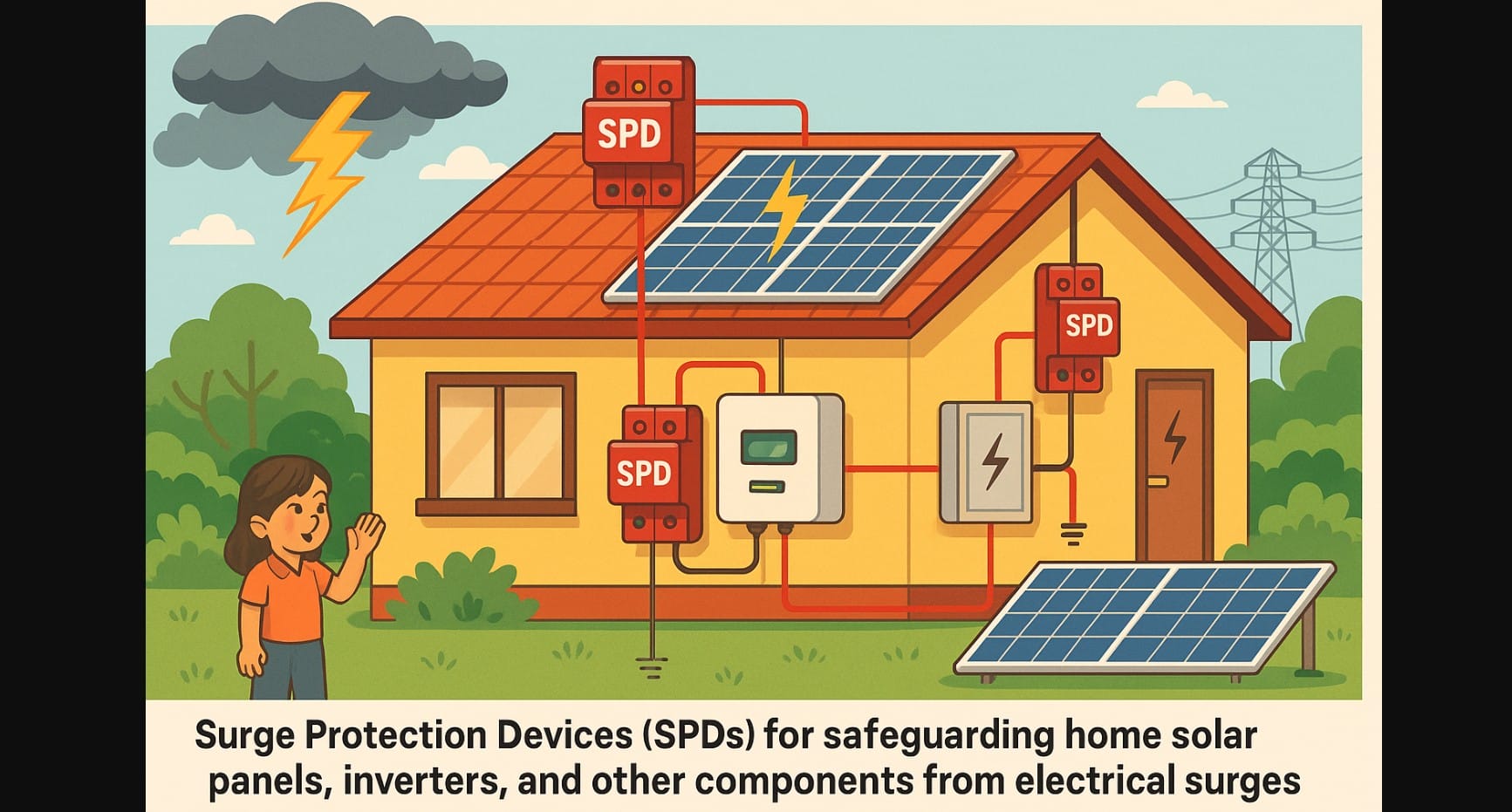
Indian power conditions aren’t always stable. Voltage spikes, sudden fluctuations, and frequent storms especially during the monsoon make your solar system vulnerable to sudden electrical surges. Without protection, one surge can:
- Burn your inverter board
- Damage the wiring between your panels
- Interrupt power export and monitoring
- Void your warranty
Adding a surge protection device (SPD) is not an upgrade it’s a safeguard that every solar system in India needs from day one.
1. What Causes Electrical Surges in Solar?
| Source of Surge | Impact on Your System |
|---|---|
| Lightning (even nearby strikes) | Induces high voltage in long rooftop wiring runs |
| Grid switching or blackouts | Sudden voltage recovery spikes through AC line |
| Generator or inverter sync | Voltage overshoots during transfer between sources |
| Poor earthing or loose wiring | Causes local surges and arcing near terminals |
Even if your area has no history of direct lightning strikes, the long cable runs between rooftop panels and your inverter act like antennas absorbing stray surge currents easily during storms.
2. How Surge Protection Devices (SPDs) Actually Work
An SPD sits between your solar wiring and your connected equipment (like inverters or breakers). It doesn’t block or filter regular current. Instead:
- It waits silently for abnormal voltage
- If a sudden spike hits the wire, the SPD activates instantly
- It redirects that energy to the ground before it reaches your devices
- Once the spike ends, the SPD resets and normal operation resumes
Without an SPD, that same energy flows straight into your system’s electronics frying expensive boards and damaging components within seconds.
3. Where Should You Install SPDs in Your Solar Setup?
To protect your entire rooftop system, you need at least two SPDs one on the DC side and one on the AC side.
| Location | Type of SPD Required |
|---|---|
| DC input (before inverter) | DC SPD – blocks surges from panel side |
| AC output (after inverter) | AC SPD – blocks surges from grid side |
| Main MCB (optional) | Additional SPD for sensitive appliances |
Some systems also include data line SPDs to protect monitoring cables or remote gateways.
4. What Type of SPD Should You Choose?
Match It to the Application
- DC SPD: Used for panel-to-inverter protection. Rated for higher voltages (usually 600V to 1000V DC).
- AC SPD: Used on inverter output or home DB. Rated for 230V or 415V AC depending on phase.
Specs to Look For
| Specification | Ideal Value for Indian Homes |
|---|---|
| Response time | ≤ 25 nanoseconds |
| Discharge capacity | Minimum 10 kA per mode (preferably more) |
| Replaceable cartridge | Choose modular SPDs – easy to replace after damage |
| Standard compliance | IS/IEC 61643 or IEC 61643-11 certified |
Popular SPD brands in India include Phoenix Contact, HPL, C&S Electric, OBO Bettermann, and L&T.
5. Solar SPD Class Types – Which One Fits Rooftop Solar?
| SPD Class | Use Case in Solar |
|---|---|
| Class I | High-risk zones with direct lightning (rare for city rooftops) |
| Class II | Most common for Indian homes – handles indirect surges and switching spikes |
| Class III | Optional – protects sensitive electronics after Class II SPD |
For rooftop solar in residential areas, Class II SPDs are the minimum requirement and work well in most Indian conditions.
6. How to Install SPDs for Best Results
A good SPD can fail if it’s installed poorly. Follow these practices:
- Keep the wire between SPD and the earthing point as short as possible (under 0.5 meters preferred)
- Use minimum 6 sq.mm copper wire for grounding
- Don’t install SPDs inside sealed metal boxes without ventilation
- Always connect the SPD’s ground terminal to a properly tested earthing rod
- Inspect the status indicator (LED or flag) every few months replace if it shows failure or after a major storm
7. How to Know if Your SPD Has Done Its Job
SPDs sacrifice themselves to protect your system. After a surge event, they may be:
- Permanently open (and no longer working)
- Showing a fault flag (usually red or blank)
- Still functional but nearing the end of life
If your SPD handled a major event, get it tested or replaced, especially before monsoon season.
8. SPD Key Points
| Component | Surge Protection Device Needed? | Recommended SPD Type |
|---|---|---|
| Rooftop panels (DC side) | Yes | Class II DC SPD (600-1000V) |
| Inverter output (AC) | Yes | Class II AC SPD (230V/415V) |
| Monitoring/data lines | Optional (depends on system) | Data/communication SPD |
| Earthing system | Mandatory for SPD to work | Proper rod + 6 sq.mm wire |
9. A Small Device That Protects a Big Solar Investment
Installing a rooftop solar system is a major investment and a single surge from a distant lightning strike or grid fluctuation can damage critical components within seconds.
For the cost of a couple of SPDs (typically ₹1,000-₹3,000 each), you protect:
- Your inverter (₹20,000-₹60,000+)
- Your panel strings
- Your savings over 25+ years
If your installer didn’t talk about surge protection, ask them now. If you have SPDs, check them before each storm season because it’s important to stay safe.

