
How to Spot Real Monitor Deals in India (And Avoid Fake Discounts)
You might see the same monitor listed for ₹11,999 on one site, ₹13,490 on another, and ₹10,999 with a “lightning deal” tag somewhere else. Confusing, right?
In India, comparing monitor prices isn’t as simple as checking numbers. Discounts aren’t always real, model names are often misleading, and what looks cheaper now might cost more later when you factor in cables, warranty, or delayed delivery.
This guide helps you become a smarter monitor buyer so you don’t just grab what’s cheapest, but get real value that lasts.
1. Why Monitor Prices Vary So Much in India
Several things quietly affect monitor pricing here:
- Sale cycles tied to festivals and exam seasons
- Model numbers that look almost identical, but have different features
- Sellers adding “freebies” that aren’t really free like low-quality HDMI cables
- Price manipulation before big sales, so “discounts” look bigger than they are
- Cashback and card offers that change what you actually pay
2. The Common Mistakes to Avoid
If you’re like most buyers, you’ve done this at least once:
- Chosen the monitor with the biggest price cut, only to realize it was the older version
- Missed out on an extra ₹1,000 off because you didn’t check bank card offers
- Paid more offline without realizing the online version had a longer warranty
- Bought during a “deal” week but prices had actually dropped further two days later
Price tags alone don’t tell the full story.
3. How to Compare Monitor Prices the Right Way in India
Here’s how experienced buyers approach it step by step.
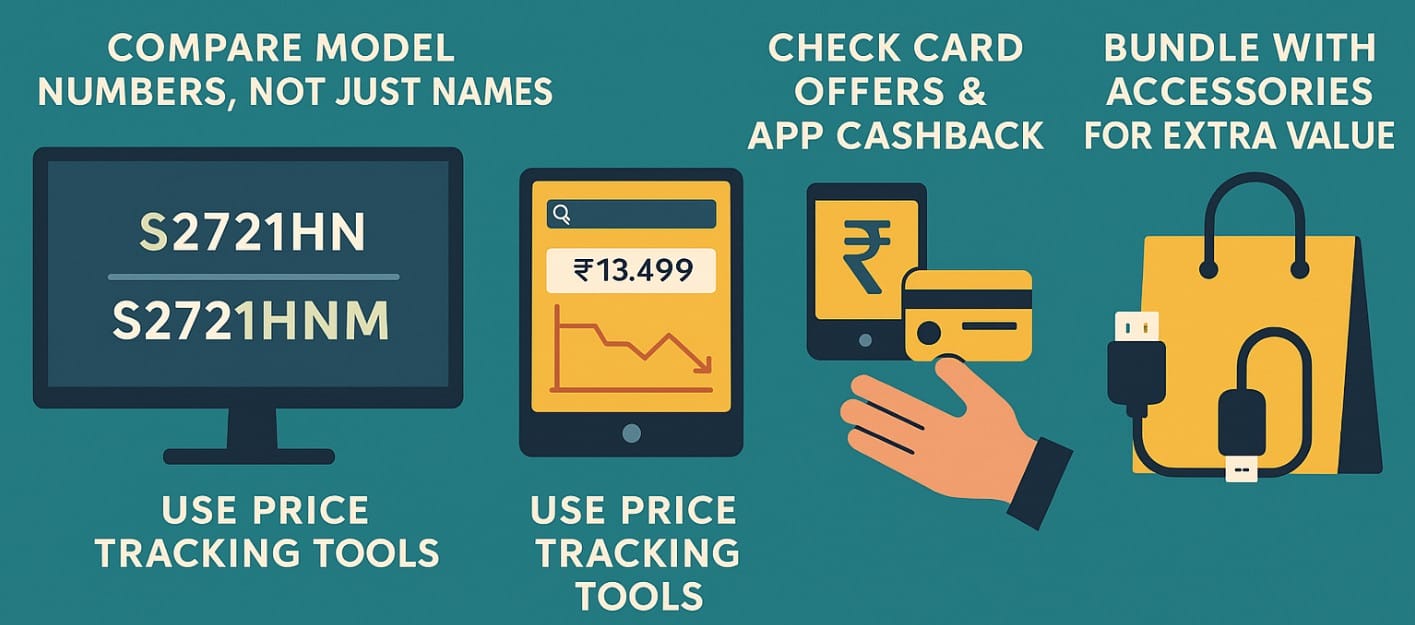
Always Start with the Exact Model Number
Don’t go by just “LG 24-inch IPS” or “Dell 27-inch Full HD.”
Look for codes like S2421HN or S2722QC. A single letter change can mean:
- A better panel
- Adjustable stand
- More ports
- Higher refresh rate
Cross-check it on the brand’s official site to confirm what it actually offers.
Use Price Tracking Tools That Work in India
Sites and extensions like:
- BuyHatke: Compares Flipkart, Amazon, Croma, Reliance
- Keepa (for Amazon): Tracks actual price drops over months
These tools reveal whether today’s “deal” is actually the lowest it’s been in weeks.
Don’t Ignore Card Offers or App Cashback
Sometimes a ₹13,499 monitor with a ₹1,500 SBI or HDFC card discount ends up cheaper than a ₹12,299 monitor with no offer.
Also check:
- UPI or wallet discounts (Paytm, PhonePe)
- No-cost EMI options with zero interest
- Student discounts on brand sites (Dell, Lenovo sometimes offer these)
Factor in Warranty, Cable, and Return Support
A seller offering:
- An extra HDMI cable
- 2-year warranty vs 1-year
Might be worth spending ₹500 more for. Especially if they offer easier returns or local support.
Match Online Offers Against Your Local Store
Offline sellers are more flexible than you think:
- Show them a screenshot many will price-match or bundle extras
- Some offer faster returns or let you inspect the unit before buying
- You might get freebies: branded mousepads, laptop bags, or HDMI cords
Even if you buy online, your local store is a great comparison tool.
4. When to Buy a Monitor in India (Timing Is Everything)
| Time of Year | What’s Special |
|---|---|
| Republic Day (Jan) | Stock clearance from previous year, early-year launches |
| April-May | Student laptop/monitor bundles, WFH demand returns |
| Independence Day (Aug) | Mid-year brand promos, lead-up to festival season |
| Navratri/Diwali (Oct-Nov) | Deepest discounts, combo deals, cashback offers |
| End of December | Final clearance, off-season deals before new year inventory |
Set alerts a week before these dates and compare daily some of the best prices drop for less than 24 hours.
5. Extra Discount – Buying a monitor with:
- A PC build or laptop
- Other accessories (keyboard, webcam, speakers)
- From the same seller or during combo sale
Can unlock extra discounts. Always ask if buying Offline.
Don’t Just Click ‘Buy’ – Compare Monitor Prices the Smart Way
You don’t need insider connections or special coupons to get a good deal on a monitor in India.
You just need to:
- Know how to read model numbers
- Use a few simple tools
- Time your purchase right
- And understand what “value” really means to you
If you take 10 minutes to compare smartly, you’ll not only save money, you’ll also avoid regret.

