
Monitor Reviews in India: Who to Trust and What to Ignore
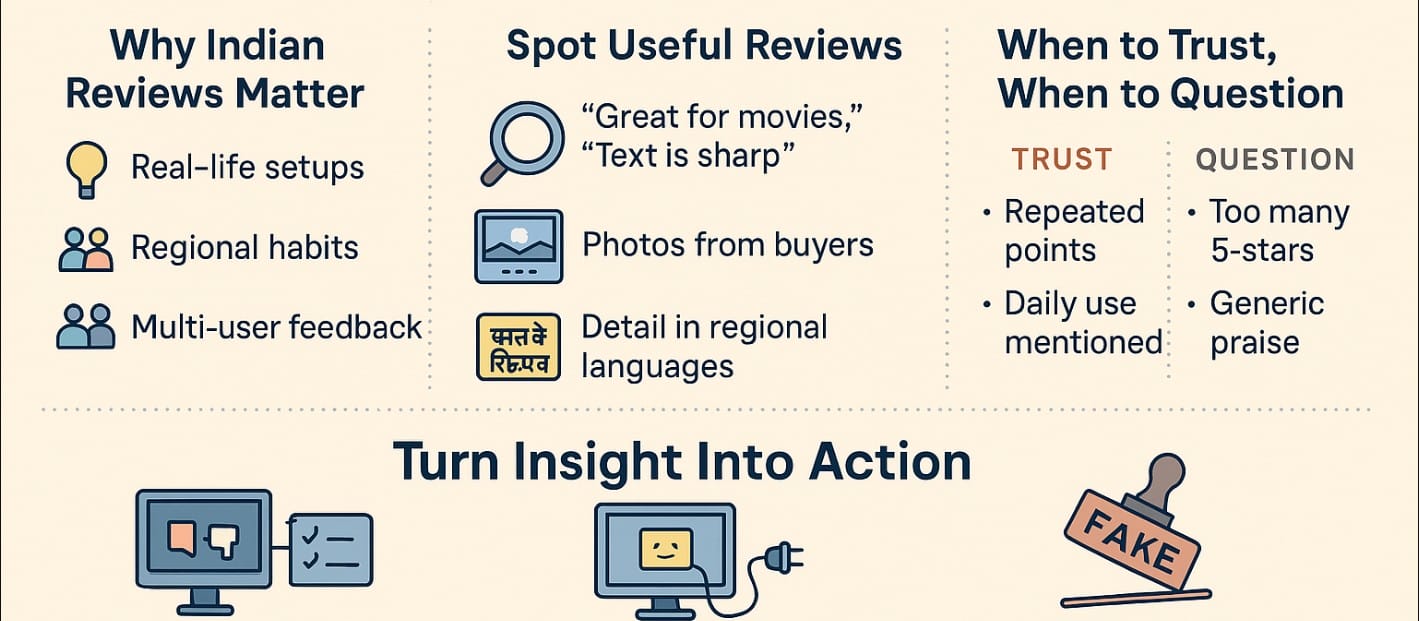
You’ve seen the specs, read brand claims, maybe even watched a few YouTube unboxings. But when it comes to buying the right monitor for your desk in your home, in your city nothing is more helpful than reading what real Indian users have experienced.
A tech review might talk about “pixel density” and “factory calibration,” but an Indian review might say, “Text is super clear even when I sit far away on the bed.”
That’s the kind of insight you won’t find in a spec sheet.
1. What Makes Indian Monitor Reviews Uniquely Useful
India is too diverse for a one-size-fits-all product experience. From Kolkata to Coimbatore, and from Nagpur to Guwahati, the way people use monitors and what they expect from them varies hugely.
You’ll find reviews that mention:
- Whether the monitor works well on inverters or during power cuts
- How the screen looks when sunlight hits the desk at 4PM
- If it’s safe enough for kids, or comfortable for long online classes
- Whether you need a longer HDMI cable to reach your CPU under the table
These are not product specs they’re real-life use cases, and they often reveal what you’ll actually face after unboxing.
2. How to Read PC Monitor Reviews That Actually Help
Not all reviews are created equal. Here’s how to spot the ones that give you true insight:
Look for usage-based comments
Instead of just focusing on ratings, search for phrases like:
- “Great for AutoCAD,” “Perfect for OTT,” “My eyes don’t hurt after hours”
- These show how the monitor is used not just what it claims to do
Watch out for reviews with photos or videos
Images uploaded by Indian users show you:
- How thick the bezels really are
- Whether the stand fits a regular Indian desk
- What ports are easily accessible or hidden
Don’t ignore regional language reviews
A review in Tamil or Hindi might say “brightness is okay during load-shedding,” or “text is sharp for bank exam prep.” Translate if needed these can be gold.
3. When the Crowd Gets It Right And When It Doesn’t
Indian review sections often act like a forum with people replying to each other, correcting specs, or sharing tips.
But even crowds can be wrong sometimes.
Trust the crowd when:
- The same issue comes up repeatedly (e.g. “no HDMI cable included”)
- People describe long-term use (“Using daily for 6 months no flicker”)
- There’s a mix of good and bad real products never please everyone equally
Be cautious when:
- You see only 5-star ratings with no detail
- Reviews repeat the exact same words (“Best ever. Fast delivery. Love it.”)
- Complaints are vague (“Not working” with no explanation)
4. Go Beyond Shopping Sites Where to Find Better Peer Input
Besides Amazon and Flipkart, Indian buyers are sharing monitor feedback in places you might not expect:
- YouTube regional tech reviewers search in your language for real setup demos
- Reddit India (r/IndianGaming, r/IndianTech) honest, blunt, helpful
These platforms help you get real feedback before you spend your money and often tell you which seller or version is worth it.
5. Turn What Others Say Into Your Best Purchase Yet
Here’s how Indian desktop monitor reviews can guide your final decision:
- If multiple buyers say “text is clear for reading,” it’s likely good for study/work
- If reviews mention “Netflix looks amazing,” it’s a safe bet for OTT setups
- If several people say “had to buy a longer cable,” factor that into your budget
- If someone says “got it cheaper last week,” you know to wait for a price drop
When in doubt, search the product name + ‘review India’ you’ll often find a mix of videos, discussions, and user feedback.
6. How Indian User Reviews Reveal the Truth About Monitors
Real Indian reviews won’t just help you pick the right monitor. They’ll help you:
- Avoid unexpected issues
- Plan your setup better
- Save some money
So don’t just look at review stars.

