
How E-commerce Is Changing Computer Component Sales in India
For years, if you wanted to build or upgrade a PC in India, the journey began in places like Nehru Place (Delhi) or Lamington Road (Mumbai). These markets were legendary: rows of tiny shops stacked with motherboards, GPUs, and cabinets, where bargaining was as important as product knowledge. The shopkeeper wasn’t just a seller; he was also your warranty contact, tech advisor, and sometimes even the person who assembled your machine on the spot.
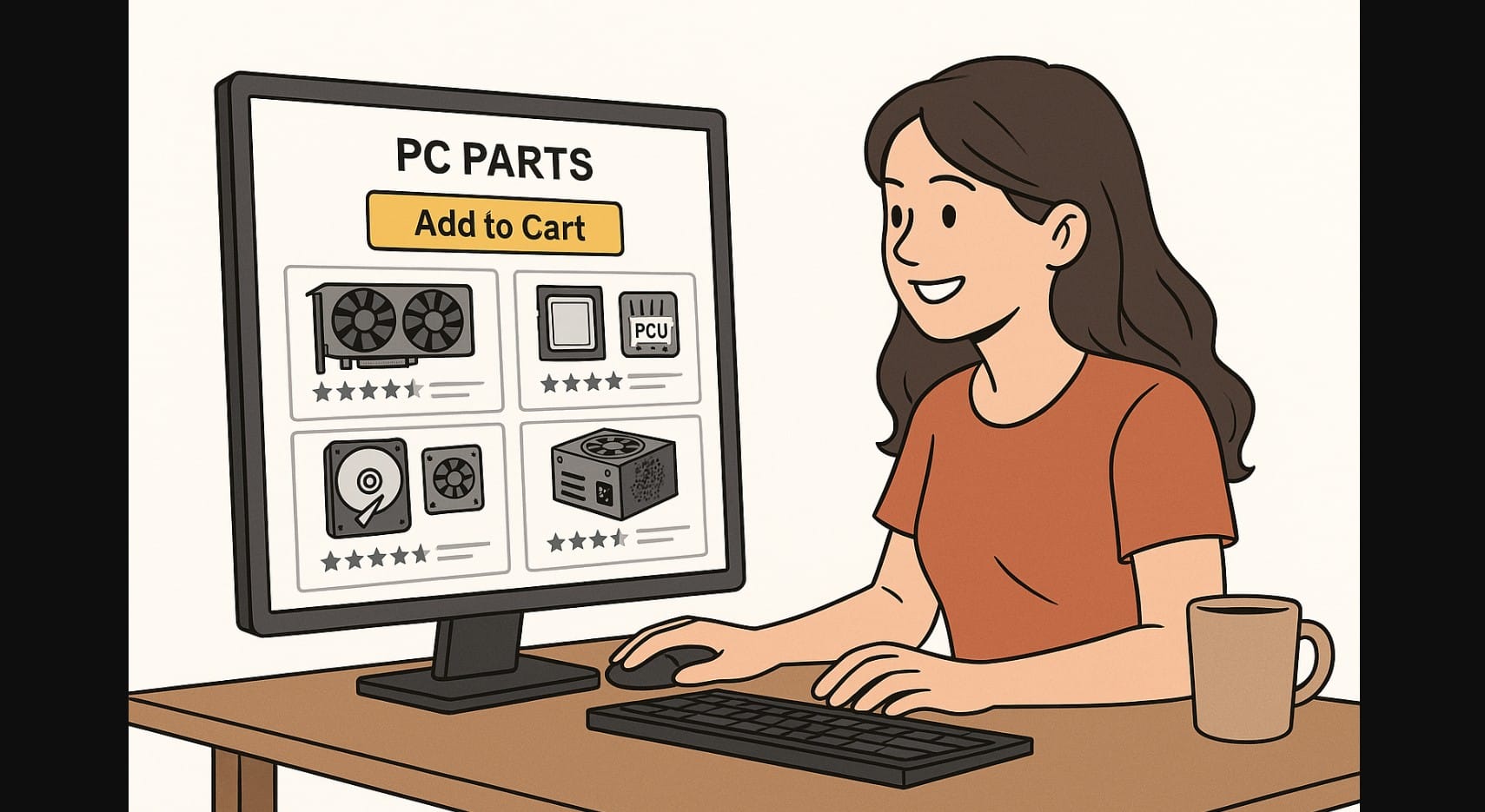
Fast forward to 2025, and a different scene has emerged. Today, you can add the same GPU or SSD to your cart on Amazon or Flipkart, next to groceries and headphones, and have it shipped to your doorstep in a couple of days. Younger buyers, especially in Tier 2 and Tier 3 cities, may never step into a computer market at all. E-commerce has redrawn not just where new users buy components, but also how they trust the process of buying.
1. How a Student in Patna or Gamer in Guwahati Now Builds Entire PCs Online
In India’s Tier 2 and Tier 3 cities, where large IT markets like Nehru Place or Lamington Road don’t exist, Flipkart and Amazon have effectively become the default suppliers of computer components. For many students building their first budget gaming PC, freelancers setting up a workstation, or content creators piecing together editing systems, the entire process of sourcing hardware now happens through a smartphone or laptop. These buyers may never step into a traditional market, and in many cases, they don’t even have a local shop within reach that stocks high-end GPUs, motherboards, or power supplies.
Instead of walking into a store and relying on the guidance of a shopkeeper, this new generation of PC builders relies on online communities and references. YouTube build guides, benchmarking videos, Discord servers, Reddit forums, and Indian tech influencers often act as their primary advisors. A five-star rating on Amazon or a “recommended seller” label on Flipkart can weigh more heavily than the personal word of a local vendor. Social proof, crowd reviews, and influencer recommendations have replaced face-to-face bargaining as the basis of trust.
This shift has created a new type of buyer, the online-first PC builder. For them, ordering parts online is not seen as a risk but as a necessity. Delivery logistics allow a student in Guwahati or a freelancer in Indore to access the same range of GPUs and SSDs as someone in Delhi or Mumbai. EMI schemes, digital wallets, and seasonal discount sales further make online purchases attractive to young buyers who may not have the upfront cash for an entire build.
The result is a gradual redefinition of India’s assembled computer culture. What was once concentrated in metro markets is now spreading across smaller cities, enabled by e-commerce platforms that act as both supply chains and trust brokers. For these buyers, Flipkart and Amazon are not just convenient alternatives, they are the foundation that makes PC building possible outside traditional markets.
2. Why Nehru Place and Lamington Road Still Matter in the Age of Flipkart/Amazon
In metro cities, however, the big offline markets are still very much alive. They offer things e-commerce can’t replicate:
- Immediacy, a same-day replacement for a PSU or GPU.
- Negotiation, 5-10% off if you buy multiple parts together.
- Personal guarantees, a shopkeeper who promises to handle your warranty claim.
E-commerce has cut into sales of low-cost items like RAM, SSDs, and peripherals. But for GPUs, CPUs, and power supplies, many Indians still prefer to walk into a shop, inspect the part in person, and rely on the shopkeeper’s accountability. Some vendors have even adapted by becoming hybrid sellers, listing their inventory on Amazon while keeping their offline presence intact.
3. Computer Parts Warranty in India: One Call to a Shopkeeper vs Weeks of Courier Emails
Warranty is where the difference between offline and online becomes most visible.
- Offline: If your PSU dies, you bring it back to the shop. The seller often handles the distributor RMA on your behalf, sometimes even giving you a temporary replacement part to keep your PC running. It’s a personal, relationship-driven process.
- Online: Amazon and Flipkart direct you to the brand’s official service center. This can mean couriering a heavy GPU to another city and waiting weeks for a resolution. There’s no middleman to shield you from the process.
The result is a cultural divide: offline buyers trust a person, while online buyers trust a procedure.
4. From Shopkeeper Advice to YouTube Reviews: Who Do Buyers Trust Now?
Ten years ago, a shopkeeper’s recommendation carried enormous weight. Today, Amazon star ratings and Flipkart reviews are just as influential. Online gaming and tech forums routinely share both offline and online prices, and new PC builders often use these as a benchmark before deciding where to buy.
This shift represents a broader cultural change: We are increasingly replacing personal trust in a seller with crowd-based trust in online communities. It’s not always better, but it’s faster, scalable, and appeals to younger buyers who don’t want to haggle.
5. Which Computer Components Reflect the Shift Most Clearly?
Not every computer part has been equally affected by the rise of e-commerce in India. Some categories have moved online quickly, while others remain firmly rooted in offline markets because of cost, trust, and warranty considerations.
- SSDs, RAM, and smaller peripherals – These have become clear winners for e-commerce. Their compact size makes shipping simple, the risk of damage is low, and frequent discounts during Amazon and Flipkart sales have shifted much of this business online. For first-time PC builders, these are often the entry-level purchases that build trust in online platforms.
- GPUs, CPUs, and power supplies – These remain strongholds of offline markets. Buyers prefer to see the packaging, verify warranty seals, and lean on the shopkeeper’s support for returns or replacements. With high-value items like GPUs in particular, concerns about counterfeits, parallel imports, and courier delays keep many buyers tied to traditional markets, even if the price looks slightly better online.
- Monitors and cases – This category sits in the middle. Shoppers often research online to compare specifications, prices, and reviews, but many still head to local shops before finalizing the purchase. Being able to check panel quality, color accuracy, or physical build of a cabinet in person remains important, especially when spending on premium models.
In short, the smaller, standardized parts have shifted decisively online, while the big-ticket or risk-prone items still rely on offline trust, leaving certain categories like monitors and cases to straddle both worlds.
6. Where Flipkart and Amazon Became the Only Computer Market
The real story of e-commerce’s impact on PC components is not in metro cities but in Tier 2 and Tier 3 India. In metros, offline hubs like Nehru Place or Lamington Road still offer immediate availability and price negotiations. But in towns like Ranchi, Surat, or Guwahati, those options never existed. Until recently, buyers in these cities had to either rely on limited local shops with poor inventories or travel hundreds of kilometers to bigger markets.
That gap is now being filled by Amazon and Flipkart. Recent industry data shows that Tier 3 cities drove a 21% year-on-year growth in 2025 summer online sales, contributing nearly 38% of India’s total e-commerce orders, second only to Tier 1 cities. At the same time, research indicates that over 60% of new online shoppers in India now come from Tier 2 and Tier 3 locations. This isn’t just about mobile phones or groceries; it includes high-value items like GPUs, SSDs, and motherboards, which smaller markets could never stock reliably.
For a student in Bhilai building an editing rig or a gamer in Bikaner upgrading their GPU, ordering online isn’t a matter of choice versus local shops, it’s often the only viable option. This is where e-commerce platforms have their biggest influence, creating access rather than replacing existing networks. In effect, Flipkart and Amazon haven’t just changed buying habits; they’ve democratized access to advanced PC hardware in regions that were previously shut out of India’s assembler culture.
7. Future Outlook: Building/Assembling a Computer in India Won’t Be Online vs Offline
By 2026, India’s PC component market will not simply follow a neat “online vs offline” split. Instead, the two ecosystems will intertwine in complex ways shaped by price sensitivity, geography, and buyer expectations.
Local markets are unlikely to disappear, but their role will evolve. They will remain the first stop for high-value or failure-prone components like GPUs, PSUs, and motherboards, where immediate troubleshooting and personal accountability are more important than a discount. Shopkeepers may also lean into offering bundled assembly services and warranty management as their competitive edge against online platforms.
E-commerce, meanwhile, will keep broadening its reach into areas that have historically been underserved. For buyers in smaller cities, Flipkart and Amazon aren’t just alternatives, they are the only access points to advanced computer hardware. Online platforms will continue to dominate standardized, low-risk items like SSDs, RAM, and peripherals, but they are also likely to experiment with exclusive launches or AI-driven recommendations to capture the attention of PC enthusiasts who once depended entirely on offline expertise.
The real future is a blended buying journey. A gamer in Pune might research parts on Amazon reviews, buy RAM and SSDs online during a festival sale, then head to Lamington Road for a GPU where he can check warranty seals in person. A freelancer in Patna might order every part online because no local shop offers the components she needs, but still depend on a regional service center when something breaks. By 2026, it won’t be about one channel replacing the other, it will be about how buyers switch fluidly between both worlds depending on the part, the price, and the trust factor.
Conclusion: India’s PC Market Isn’t About Discounts, It’s About Who You Choose to Trust”
E-commerce has transformed how We buy computer components, but it hasn’t erased the assembler/builder culture. Flipkart and Amazon bring reach, reviews, and EMI options, while offline shops still deliver negotiation, immediacy, and accountability.
The biggest change isn’t price, but trust. Younger generation increasingly trust digital platforms and communities, while older buyers still trust their local shopkeeper. Both models coexist today, and both will shape India’s desktop market in the years ahead.

