
How to Choose an Electric Scooter That Fits Your Age, Comfort, and Daily Needs
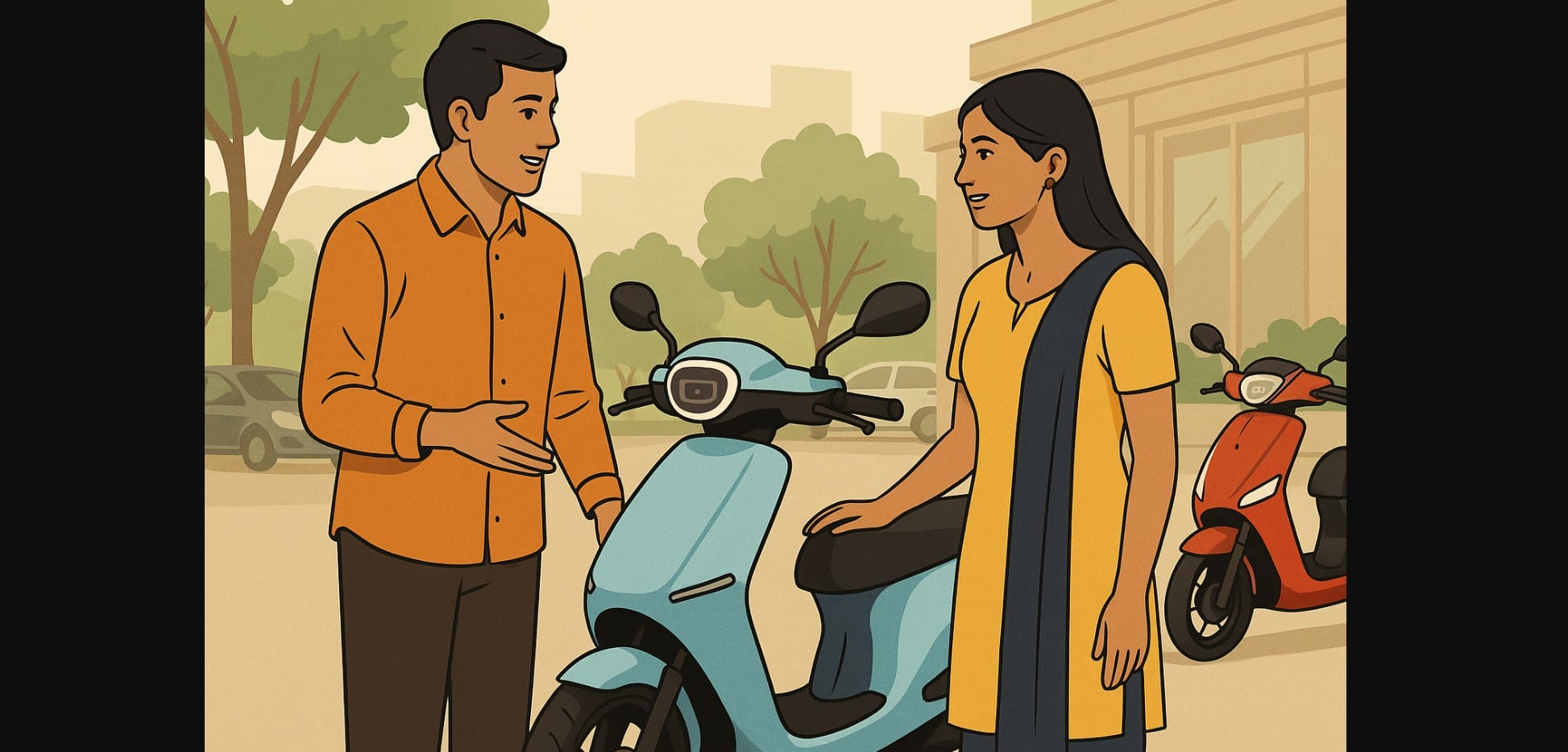
Electric scooters feel and behave differently compared to petrol scooters. The battery placement, instant motor torque, and riding posture directly impact how comfortable and safe your daily rides are.
In Indian conditions from bumper-to-bumper traffic to rough patches and sudden monsoon downpours choosing an EV scooter that matches your body type and comfort needs is critical for daily convenience, battery health, and long-term satisfaction.
1. Young Adult Riders (18-30 Years): Handling EV Instant Torque and Ride Agility
Lightweight + Quick Handling Matter for Urban Traffic
Electric motors deliver instant torque.
Younger riders often need scooters that feel:
- Light on the handlebar for fast weaving through tight traffic.
- Agile during quick U-turns and stop-go moments.
- Responsive but predictable under sudden acceleration.
Scooters like the Ather 450 and Ola S1 feel naturally quick but balanced, ideal for busy city riding.
Battery and Motor Tuning Make a Difference
- A mid-size battery (3-4 kWh) avoids unnecessary weight without sacrificing useful range.
- Scooters with better thermal management perform more reliably during aggressive riding in Indian summers.
Test how the scooter reacts during quick acceleration bursts some budget models jerk more than premium ones.
2. Daily Commuters (30-50 Years): Comfort, Battery Stability, and Ride Quality
Smooth Motor Response Over Raw Power
For daily office commutes, you need a scooter that:
- Accelerates smoothly, not too aggressively (reduces rider fatigue).
- Offers stable speed control at 30-50 km/h, the real-world Indian traffic speed.
- Has predictable regenerative braking, not sudden slowing that can throw off balance.
Scooters like the Vida V1 Plus and TVS iQube offer balanced motor tuning for calm daily rides.
Seat Comfort and Storage Practicality
- Wide, well-cushioned seats are a must to prevent back pain during long commutes.
- Under-seat storage should comfortably fit a laptop bag or rain gear.
Also, check the scooter’s kerb weight heavy scooters can feel tiring if you have to manually adjust in tight parking spots.
3. Senior Citizens (50+ Years): Ease of Handling and Smooth Controls
Lightweight Battery Placement Matters
For senior riders, weight balance becomes even more important:
- Prefer scooters where the battery is placed low (floorboard or lower deck designs).
- This keeps the center of gravity low and makes handling easier at slow speeds.
Models like TVS iQube or simple Ola S1 variants have well-balanced designs suitable for older riders.
Comfortable Throttle and Brake Feel
- Choose scooters with gentle throttle pickup rather than sharp surges.
- Brakes should feel progressive neither too sharp nor too spongy.
Reverse mode is a real advantage in crowded Indian parking lots.
Test how easily you can activate and control it during parking maneuvers.
4. Special Physical Needs: Picking the Right Electric Scooter Setup
Shorter Riders (Below 5’4″)
Electric scooters with tall seats and wide battery compartments can feel bulky.
- Prefer seat heights around 740-760 mm.
- Choose scooters where both feet touch the ground easily.
- Avoid models with very wide footboards that stretch the legs awkwardly.
Scooters like Ola S1 and TVS iQube often fit better than heavier premium designs.
Taller Riders (Above 6’0″)
Tall riders should check:
- Legroom clearance between knees and handlebar.
- Seats with good depth and width to avoid cramping.
In some models like Vida V1 and Ather 450, taller riders feel more natural due to better seat-handlebar positioning.
Riders with Back or Joint Issues
Electric scooters have less vibration than petrol scooters that’s a big advantage.
But you still need:
- Soft, well-damped suspension for bad Indian roads.
- A wider seat with decent cushioning.
- Smooth throttle calibration to avoid sudden jerks.
Avoid extremely “sporty-tuned” scooters that prioritize acceleration over ride comfort.
6. EV-Specific Comfort Features You Should Actively Check
- Battery Weight and Balance: Floor-mounted batteries are better for daily balance.
- Throttle Progressiveness: Test for smooth, not jerky, low-speed control.
- Regenerative Braking Tuning: Some scooters apply strong regen when you release throttle test if it feels natural.
- Seat Width and Pillion Support: Ensure the seat is broad and soft enough for your typical city usage.
- Instrument Cluster Readability: Digital displays should be visible in strong sunlight (important for daily India rides).
7. Indian EV Scooters That Match Different Comfort Profiles
- Ather 450 – Best for agile young riders needing quick control and city zipping.
- TVS iQube – Reliable comfort for daily commuting, soft ride, wide seat.
- Vida V1 Plus – Balanced comfort tuning for taller riders and office goers.
- Ola S1 – Budget-friendly lightweight option for new EV users, easy handling for seniors too.
Always prioritize fit and feel during your test ride small differences become big advantages in daily Indian riding.
8. Test Ride Comfort & Handling, Not Just Features
In a test ride, feel how the electric scooter:
- Handles sudden braking
- Balances at low speeds in stop-and-go traffic
- Responds to throttle without feeling nervous or jerky
- Lets you put your feet down comfortably at signals
Buying a scooter that matches your comfort needs based on age, riding style, and physical requirements makes daily EV riding safe, smooth, and genuinely enjoyable.

