
How to Dispose of Laptop Batteries Responsibly in India
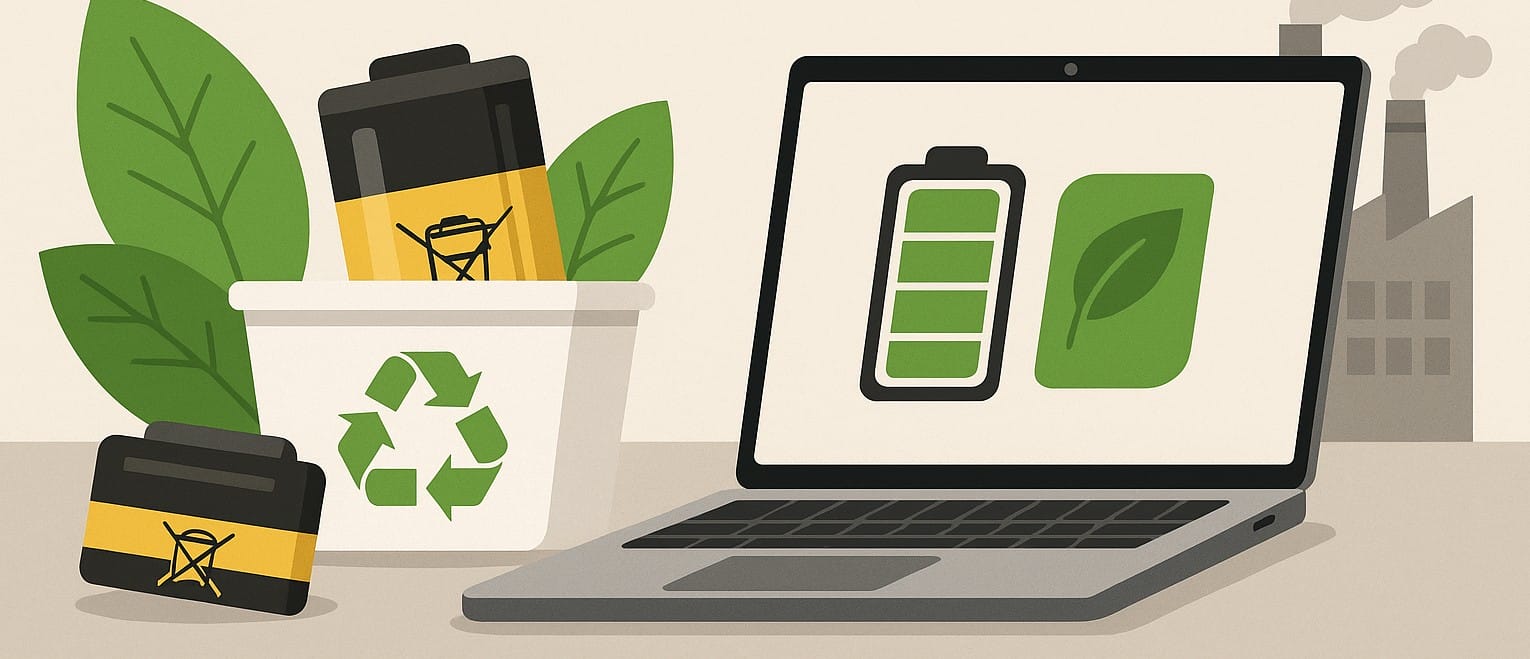
Why Laptop Batteries Are an Environmental Concern – Most laptop batteries contain a mix of lithium, cobalt, nickel, and trace amounts of lead metals that can leak into soil and groundwater when not handled properly.
Once damaged or degraded, these batteries become chemical hazards, especially in India where waste segregation is still limited in many regions.
1. What Happens When a Laptop Battery Is Thrown Out Improperly
Toxic Chemical Leaks from Batteries Dumped in Normal Garbage
Laptop batteries, when broken or burnt in uncontrolled conditions (as often happens in landfills), release:
- Lithium salts and heavy metals
- Toxic fumes that cause lung and skin irritation
- Groundwater contamination that affects nearby agricultural zones
These risks are magnified in India where open dumping and landfill fires are still common in urban peripheries.
Scavenging of Batteries by Informal Sector Leads to Unsafe Extraction
Unregulated scrap collection often involves manually opening battery packs for resale or reuse of metals.
This practice:
- Exposes workers to electric shock and fire
- Generates unsafe residue
- Often ends with partial components dumped in open areas
2. How to Identify When Your Laptop Battery Needs Safe Disposal
Battery Swells, Overheats, or Physically Warps the Laptop
If your laptop casing bulges, or the battery is visibly misshapen or pushing up the trackpad or base, the battery is no longer safe. Swollen lithium-ion cells are volatile and should be removed immediately.
Battery Health Falls Below 60% and Backup Is Unusable
If your battery backup time is reduced to less than 1 hour and full charge capacity is far below design capacity, it’s time to replace it.
Degraded batteries not only perform poorly they may also begin leaking or overheating, especially in Indian summer temperatures.
3. Where to Responsibly Dispose Laptop Batteries in India
Use Brand-Authorized Collection Points and Service Centers
Most major laptop brands in India offer battery take-back services:
- HP, Dell, Lenovo, Apple, Acer, ASUS all accept old batteries during official replacement
- Ask your local service center or check the brand’s India support website for e-waste return instructions
Search for CPCB-Authorized E-Waste Recyclers in Your City
The Central Pollution Control Board (CPCB) maintains an updated list of authorized e-waste collection agencies.
In major cities like Delhi, Bengaluru, Mumbai, Pune, Hyderabad, and Chennai, several companies accept consumer electronics and batteries for safe dismantling.
You can check: https://cpcb.nic.in/e-waste/
Drop at Retailer E-Waste Bins (Reliance Digital, Croma, Vijay Sales)
Retailers like Croma and Reliance Digital often host e-waste bins at select stores in metro cities.
These bins accept:
- Old chargers
- Laptop batteries
- Headphones
- Small electronics
4. What Not to Do with an Old Laptop Battery in India
Do Not Throw It in Household Dustbin or Mixed Waste
Doing this violates e-waste rules and endangers sanitation workers.
Batteries can ignite or release fumes when crushed in garbage trucks.
Do Not Sell It to Informal Scrap Collectors or Kabadiwalas
Though tempting for a quick return, selling used laptop batteries to local scrap dealers means it will likely be dismantled unsafely or dumped improperly.
Informal handling increases fire risks, especially in dense residential areas.
Do Not Store a Swollen or Leaking Battery at Home
Old batteries that leak or swell can become flammable. Storing them near household wiring, flammable material, or in closed boxes is dangerous especially in India’s hot, humid climate.
5. How to Encourage Responsible Battery Disposal
- Ask for take-back when you replace your laptop or battery don’t keep the old one
- In offices or schools, organize e-waste awareness and partner with authorized collectors once a year
- Buy only from brands that offer battery recycling avoid grey market imports with no disposal support
Spreading awareness among family members, PG roommates, or building staff can also reduce the chance of batteries ending up in municipal trash.
6. Safe Battery Disposal Protects India’s Air, Water, and People
Every laptop battery, if not handled properly, can become a miniature chemical hazard. India’s rising tech adoption from students and professionals to remote workers and travelers means millions of lithium-ion batteries will need proper disposal over the next few years.
Your action matters. By returning your used laptop battery to the right hands not a dustbin or street vendor you reduce toxic waste, support cleaner cities, and protect the health of the every people.

