
Samsung Galaxy XR India Launch – Expected Price, Specs, and Challenges
At $1,799, Samsung’s AI-Driven Headset Sparks Global Buzz, but India Awaits Its Turn
Samsung unveiled its Galaxy XR headset on October 21, 2025, during the “Worlds Wide Open” event, marking its entry into extended reality (XR) with a $1,799 device powered by Google’s Android XR platform and Qualcomm’s Snapdragon XR2+ Gen 2 chip. Positioned as an alternative to Apple’s $3,499 Vision Pro, it integrates Google’s Gemini AI for features like 3D navigation in Google Maps and real-time searches via Circle to Search. While US and Korean markets began sales immediately, Indian consumers, key to Samsung’s global strategy, are left anticipating a local launch, likely in Q1 2026. Here’s a closer look at what Galaxy XR offers, how it stacks up, and what its delayed arrival means for India.
1. Breaking Down the Samsung Galaxy XR Headset: Features and Specs
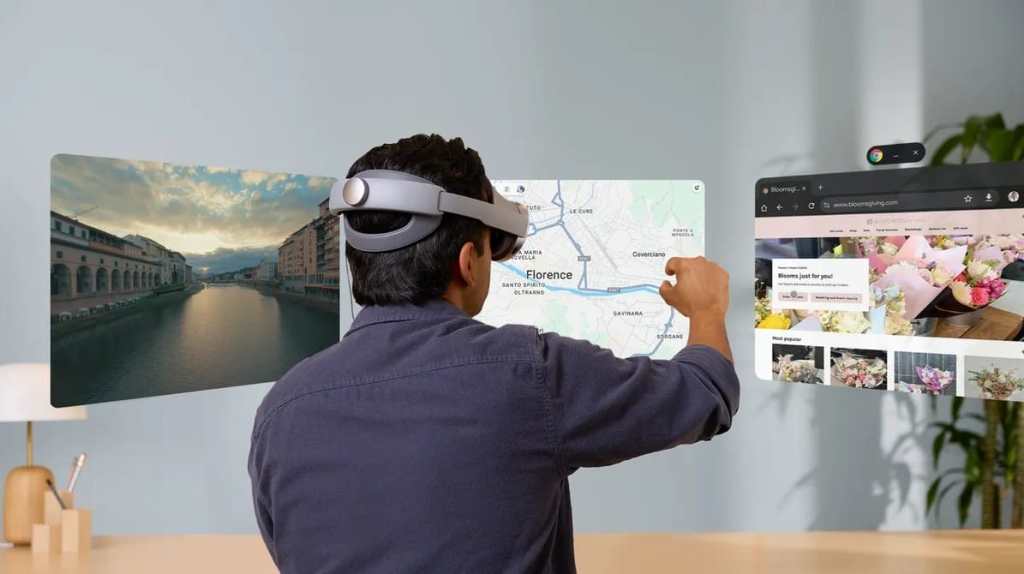
The Galaxy XR is a mixed-reality headset blending augmented and virtual reality, weighing 545g with high-resolution displays and spatial audio. Its detachable light shield allows users to toggle between immersive VR and AR overlays, aiming for versatility in daily tasks. The device leans on AI, with Google Gemini enabling voice-driven features like identifying objects in pass-through video or converting 2D media into 3D experiences.
It launches with apps like YouTube for spatial videos, Adobe’s Project Pulsar for immersive editing, and Google Maps for AR navigation. Optional controllers ($249.99, already sold out in some regions) support VR gaming ports from Meta Quest, while enterprise use cases include virtual training for industries like shipbuilding. Battery life is estimated at 3 hours, with 16GB RAM and 256GB storage as standard.
Here’s a quick overview:
| Feature | Details |
|---|---|
| Price | $1,799 (₹1.5-1.6 lakh estimated for India); Explorer Pack adds $1,000+ value with Google AI Pro |
| Processor | Qualcomm Snapdragon XR2+ Gen 2 |
| Display | 3,552 x 3,840, 27 million pixels Micro-OLED 6.3‑micron pixel pitch, 95% DCI‑P3 Refresh rates: 60Hz, 72Hz (Default), 90Hz (Up to, upon service request) Field of View 109 degrees horizontal and 100 degrees vertical , High-resolution per eye, eye/hand/head tracking, video pass-through |
| Memory/Storage | 16GB RAM, 256GB base |
| Camera | Supports 3D Photo & video capture 18mm / F2.0 – 6.5MP |
| Sensors | Two High-resolution Pass-through cameras Six World-facing tracking cameras Four Eye-tracking Cameras Five Inertial Measurement Units(IMUs) One Depth sensor One Flicker sensor |
| Audio | 2 x 2 Way speaker(Woofer + Tweeter) Six Microphones array |
| Video | Video Playing Resolution – UHD 8K(7680 x 4320)@60fps Video Playback (Supports HDR10 and HLG) |
| Connectivity | Wi-Fi 7(802.11a/b/g/n/ac/ax/be) Bluetooth v5.4 |
| Key Apps | Google Maps (3D navigation), YouTube VR, Circle to Search, Adobe Pulsar |
| Accessories | Controllers ($249.99); travel case ($249.99); light shield included |
| Battery Life | Up to 2 hours of general use, Video watching up to 2.5 hours Galaxy XR can be used while charging the battery. |
| Weight | 545 gm (w/ forehead cushion) Weight may vary depending on whether light shield is attached or not Separate battery weighs 302 gm |
| Availability | US/Korea now; India expected Q1 2026 |
While the specs are competitive, some question whether a single-chip design can match Vision Pro’s dual-chip power for complex tasks.
2. How It Compares: A More Open, Affordable Option?
| Device | Global Price | India Situation | Takeaway |
|---|---|---|---|
| Samsung Galaxy XR | $1,799 (~₹1.6L) | Not launched yet | Ultra-premium, no local warranty yet |
| Apple Vision Pro | $3,499 (~₹2.9L) | Not sold in India officially | Too expensive, niche import |
| Meta Quest 3 | $499 (~₹42k) | Available via resellers | More affordable, but weaker specs |
| Pico 4 (By ByteDance) | ~₹35–40k | Limited imports | Budget XR, fewer apps |
For Indian buyers, Samsung’s XR will compete more with Apple for status, not Meta for mass adoption.
At $1,799, Galaxy XR undercuts Apple Vision Pro’s $3,499 price, appealing to those seeking a less walled-off ecosystem. Android XR’s open platform encourages developers to build apps without Apple’s strict controls, potentially leading to a broader app library. Early reviews note its AI-driven features, like Gemini’s natural language processing as a practical edge for everyday use, though graphical fidelity may lag behind Apple’s offering.
On social media, reactions are mixed. Some praise the headset’s gaming potential, with sold-out controllers signaling demand, but others criticize its weight and battery life compared to lighter AR glasses. One user noted, “$1,799 is steep for 3 hours of battery, needs to deliver.” Samsung’s TM Roh emphasized accessibility: “We aim to scale XR for billions.” Yet, without hands-on testing, its real-world performance remains unproven.
3. India’s Perspective: Anticipation Meets Uncertainty

For India, Samsung’s third-largest market, the Galaxy XR’s launch on October 22 sparked excitement but no firm local release date. Based on Samsung’s rollout patterns (e.g., Galaxy S series), expect availability by Q1 2026, likely through Flipkart or Amazon with EMI options to ease the ₹1.5-1.6 lakh price. At half Vision Pro’s ₹2.8 lakh, it’s a premium but relatively accessible option for urban professionals and tech enthusiasts.
India’s XR market, projected to hit $1.3 billion by 2026, is ripe for Galaxy XR’s applications. Educational use cases, like AR history lessons for schools, or enterprise solutions, such as VR training at TCS or Infosys, align with India’s 800M+ smartphone base. Local developers in cities like Bengaluru could leverage Android XR’s openness to create apps tailored for Indian users, unlike Apple’s restrictive ecosystem. Still, the high price may limit adoption to affluent buyers unless Samsung offers aggressive financing.
Potential Hurdles and Questions
Despite the hype, challenges loom. The ₹1.5–1.6 lakh price, while lower than Vision Pro, remains out of reach for most Indian consumers, where mid-range smartphones dominate. Battery life (3 hours) and weight (545g) could deter prolonged use, especially for gaming or enterprise tasks. Uncertainties around app quality at launch and whether Gemini’s AI can deliver seamless multilingual support in India’s diverse linguistic landscape are also concerns. Without hands-on reviews, it’s hard to gauge if the headset justifies its cost over cheaper VR alternatives like Meta Quest.
Looking Ahead: India’s XR Future
Samsung’s broader vision includes AI-powered glasses in 2026, hinting at a long-term XR strategy. For India, Galaxy XR could catalyze innovation, from localized gaming to virtual tourism apps. But success hinges on pricing accessibility, robust developer support, and timely availability.
Conclusion: A Promising Start, but India Waits
The Galaxy XR positions Samsung as a serious XR contender, blending AI and Android’s openness to challenge Apple. For Indian fans, the wait for a Q1 2026 launch tests patience, but the headset’s potential for education, gaming, and work holds promise.
The Galaxy XR is a vision of what comes after smartphones. For India, its real impact will depend less on specs and more on ecosystem: developer participation, local content, affordability, and network readiness.
For early adopters, it’s an exciting glimpse into immersive computing. Keep an eye on Samsung India for pre-registration updates. Will it reshape India’s tech landscape? Only time and local pricing will tell.
Sources:
