
Combine Solar Power with Smart Devices for Lower Electricity Bills in India
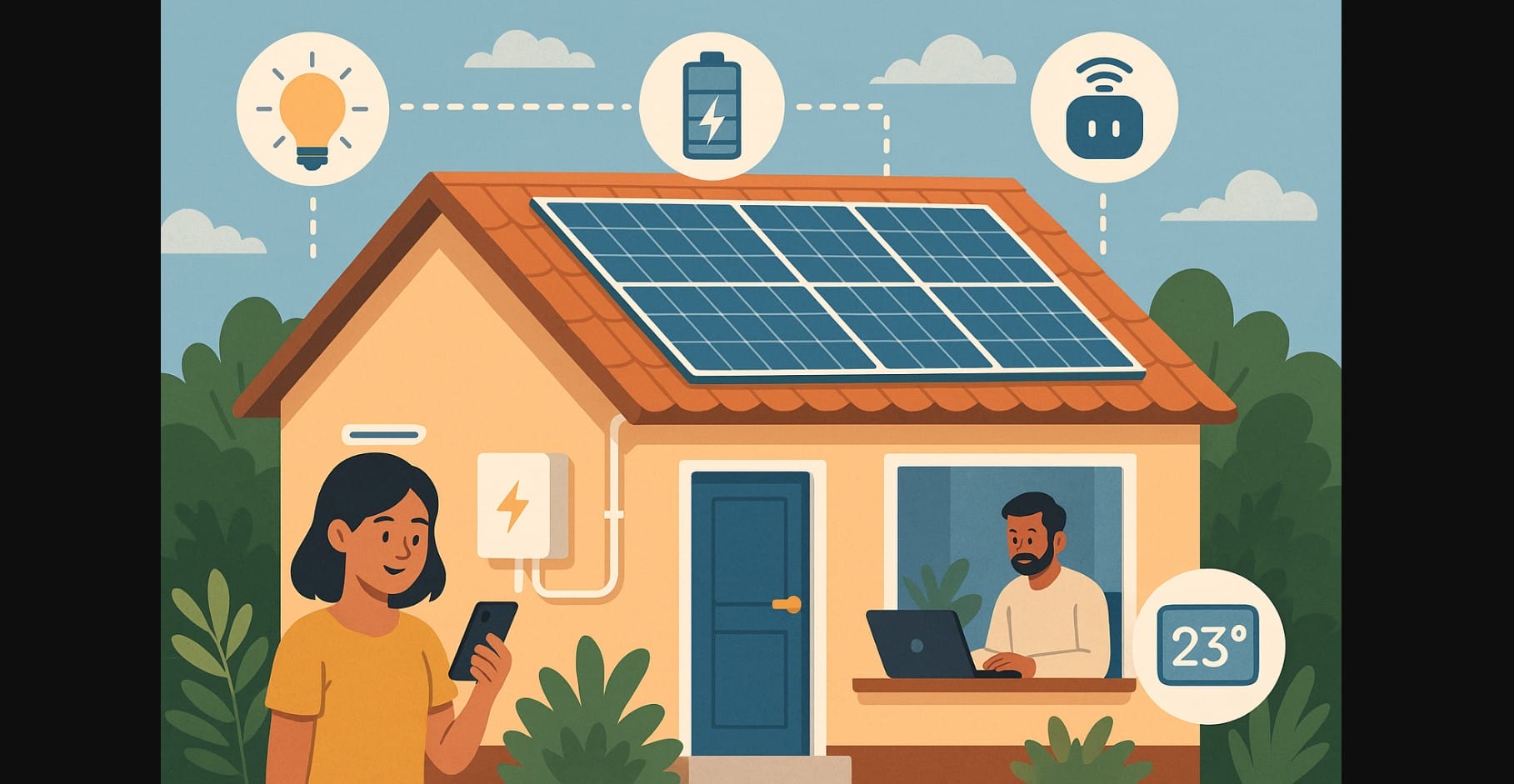
Getting solar panels installed is a big move toward energy savings but if your home still runs on outdated routines, you might be wasting the free electricity you’re generating.
Integrating smart plugs, automation routines, and energy monitors with your rooftop solar system allows you to:
- Use solar power when it’s available
- Reduce load on the grid and battery backup
- Track and control your consumption in real time
- Make your home more responsive, efficient, and future-ready
This isn’t just about comfort it’s about maximizing the return on your solar investment in everyday use.
How Smart Devices Work with Solar Power
When you combine solar with smart home tools, you get energy control, not just savings.
| Smart Device | How It Helps Your Solar System |
|---|---|
| Smart plug/timer | Schedules appliances to run when solar power peaks |
| Energy monitor | Tracks which device uses how much power, and when |
| Hybrid inverter | Prioritizes loads, switches power sources automatically |
| Home automation hub | Lets you control lights, fans, and appliances by time or solar output |
| Smart switchboard | Lets you turn off idle loads remotely |
You don’t need a massive setup. Even two or three smart plugs and your solar app can create a powerful, optimized system.
Example 1: Scheduling Appliances to Run When the Sun is Out
Solar generation peaks between 10am and 4pm. That’s when:
- Your panels produce more than your home typically uses
- Extra power is either exported or wasted (if not grid-tied)
Instead of exporting at low DISCOM rates:
- Schedule the washing machine, geyser, or water pump to run during these hours
- Use a smart plug with timer to automate these cycles
- If grid-tied, this reduces net import and lowers your electricity bill
Example 2: Use Your Solar Monitoring App to Guide Routines
Most inverters today (like Growatt, Luminous, Enphase) include:
- Real-time generation tracking
- Daily and monthly reports
- System alerts
Use this information to:
- Avoid running all high-power appliances at once
- Delay battery usage until solar drops
- Know when to clean panels (if output dips despite good sun)
Bonus: If paired with smart plugs, some home automation hubs can run devices only if solar is active, and stop them during low generation.
Example 3: Track & Adjust Energy Usage with Smart Meters
Smart energy monitors (e.g., Wiser, Sonoff, Zigbee-based meters) can help you:
- See how much power each appliance consumes
- Identify phantom loads (like idle set-top boxes or routers)
- Balance solar usage across rooms or devices
Especially helpful if:
- Your solar system is small (1-3 kW)
- You want to maximize usage without battery reliance
Example 4: Smart Solar Inverters and Battery Optimization
Some hybrid inverters available in India let you:
- Prioritize solar for essentials (lights, fans, fridge)
- Store excess power in batteries when usage is low
- Automatically fall back to the grid when battery is low
These features can be controlled:
- On an app
- Through in-home displays
- Or via integration with Alexa/Google routines (for supported models)
Main Benefits of a Solar + Smart Home Setup
| Benefit | What It Means |
|---|---|
| More solar used, less exported | Use your free power instead of selling it cheap |
| Lower battery drain | Avoid running backup power for devices when not needed |
| Less grid usage | Appliances run when solar is abundant, not in evenings |
| Better control and alerts | Know when something’s wrong or wasting power |
| Upgrade-friendly | Start small and expand your smart setup over time |
Realistic Solar & Smart Home Integration Challenges
| Challenge | Solution |
|---|---|
| Older inverter with no app or smart support | Use smart plugs and energy monitors separately |
| Weak Wi-Fi on rooftop or inverter area | Install an outdoor Wi-Fi extender |
| High cost of full automation | Start with 1-2 high-usage appliances like geyser or fridge |
| Power cuts disrupting Wi-Fi routines | Use devices with offline fallback or backup battery |
How to Start Building a Solar-Smart Setup
Simple Starter Kit for Indian Homes:
- Rooftop solar system (even 2-3 kW is fine)
- 2-3 smart plugs (₹800-₹1500 each) for geysers, ACs, washing machine
- A solar generation monitoring app (comes with most inverters)
- Optional: Energy monitor or smart hub like Alexa, Google Nest, or Home Assistant
That’s all you need to:
- Start running major appliances automatically on solar
- See what’s consuming power and when
- Control and improve room by room, device by device
Smart Home Devices That Work Well with Solar
| Device | Primary Role |
|---|---|
| Smart Plug | Schedule load usage for solar hours |
| Smart Switchboard | Central control of lights/fans/appliances |
| Solar Monitoring App | Track generation, plan usage |
| Energy Monitor | See power-hungry devices, reduce wastage |
| Hybrid Inverter | Automates battery and load management |
| Automation Hub | Create routines based on solar status or time |
Installing solar is the first step. Using that energy wisely brings true efficiency and savings.
With smart tools, you can manage your home based on solar energy. Start small, monitor your usage, and expand your system gradually with one plug, one panel, and one routine at a time.

