
Why Smart Refrigerators May Not Be a Smart Choice: Essential Buying Advice for India
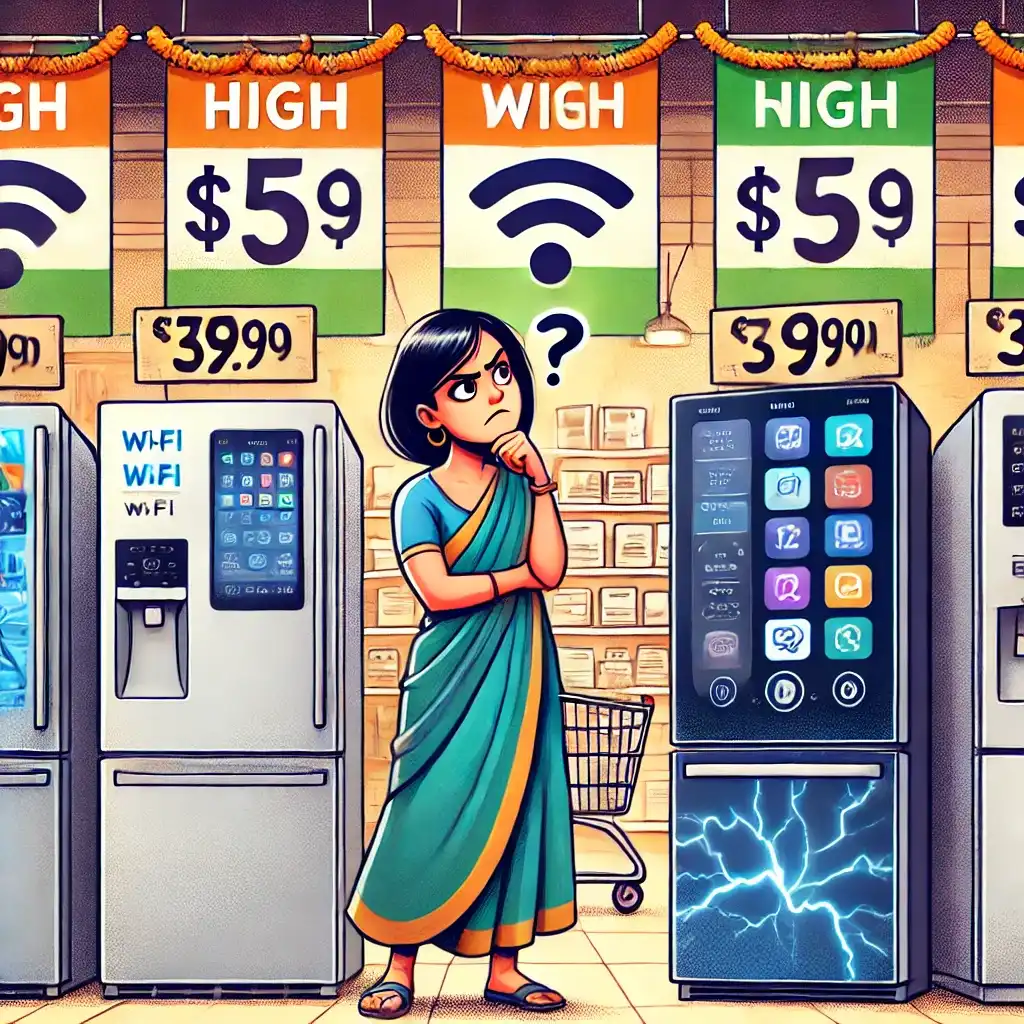
Smart refrigerators are being marketed as the future of home appliances, promising AI-powered cooling, remote control, and voice commands. However, do you really need a fridge that connects to Wi-Fi or lets you check food stock via an app?
Many Indian buyers are confused about whether these features provide real value or if they are just a way for brands to charge higher prices. This guide will help you understand which refrigerator features are worth paying for and which are unnecessary marketing gimmicks.
What this guide covers:
This guide will help you make an informed decision and save money by choosing the right refrigerator for your needs.
1. What is a Smart Refrigerator?
A smart refrigerator is a fridge with built-in technology that allows remote control, automation, and advanced cooling management. Brands market these refrigerators as premium appliances with features designed to improve convenience and efficiency.
Common features of smart refrigerators:
- Wi-Fi connectivity and smartphone app control
- AI-powered cooling adjustments based on usage patterns
- Touchscreen display for recipes, grocery tracking, and entertainment
- Voice assistant integration with Alexa or Google Assistant
- Internal cameras to check fridge contents remotely
- Energy monitoring and alerts for door left open
While these features sound impressive, the important question is whether they actually improve cooling performance or simply increase the price of the appliance.
2. Smart Refrigerator Features – Useful or Just Marketing Hype?
Many brands promote smart refrigerators by highlighting advanced features that claim to make food storage more efficient. However, not all of these features provide real benefits for Indian households. Below is a breakdown of commonly marketed smart refrigerator features and their actual usefulness.
2.1 Wi-Fi and App Control
- Allows you to monitor and adjust the fridge temperature remotely using a smartphone app.
- Some models also provide notifications if the door is left open.
Is it useful?
- Most users set the fridge temperature once and rarely change it.
- Door alarms are already available in many regular refrigerators.
- This feature may appeal to tech-savvy users, but it does not improve cooling performance.
2.2 AI-Powered Cooling
- Uses sensors and algorithms to adjust cooling based on how often the fridge is opened.
- Claims to optimize energy efficiency and maintain ideal temperature settings.
Is it useful?
- Inverter compressors already adjust cooling based on usage patterns.
- There is no major improvement in energy efficiency compared to a standard inverter refrigerator.
- This feature is mostly a marketing term without real performance gains.
2.3 Touchscreen Display
- A built-in touchscreen that allows users to browse recipes, create grocery lists, and stream media.
Is it useful?
- Most people already use smartphones for these tasks.
- Touchscreens add cost but do not contribute to better refrigeration.
- In case of a screen failure, repairs can be expensive.
2.4 Voice Assistant Integration
- Supports Amazon Alexa or Google Assistant for voice commands.
- Allows users to adjust temperature or check fridge status using voice control.
Is it useful?
- It is faster and easier to adjust fridge settings manually.
- This feature is not practical for everyday use.
2.5 Internal Camera for Food Monitoring
- A built-in camera inside the fridge allows users to check fridge contents remotely via an app.
Is it useful?
- Most users already know what they have stored in their fridge.
- The camera may not clearly show all items, leading to limited usability.
- Adds cost without improving food freshness or cooling efficiency.
2.6 Energy Monitoring and Notifications
- Sends alerts for power usage and efficiency recommendations.
- Notifies users if the door is left open for too long.
Is it useful?
- This feature can help in preventing unnecessary energy waste.
- However, traditional refrigerators already have door alarms and power-efficient designs.
2.7 Self-Diagnosis System
- Detects technical issues and alerts the user via an app.
- Some models allow customer service to access diagnostic data for troubleshooting.
Is it useful?
- Can help identify minor issues before they become major problems.
- While useful, this feature is not essential for most users.
2.8 Convertible Freezer
- Allows the freezer to be converted into extra fridge space.
Is it useful?
- This is one of the most practical features for Indian households.
- Helps adjust storage based on seasonal needs and grocery habits.
- More useful than AI cooling or smart connectivity.
Key Takeaway
Most smart refrigerator features do not improve cooling efficiency. Wi-Fi connectivity, AI cooling, voice assistants, and touchscreens are primarily marketing-driven features that increase the price of the appliance. Instead of paying for these unnecessary extras, buyers should focus on core refrigeration technologies that enhance cooling performance and energy savings.
3. What Should Indian Buyers Actually Pay For?
Instead of spending extra money on unnecessary smart features, buyers should focus on core technologies that directly impact cooling performance, energy efficiency, and durability.
3.1 Energy Efficiency (BEE Star Rating)
- The Bureau of Energy Efficiency (BEE) rating determines how much electricity a refrigerator consumes.
- A 4-star or 5-star refrigerator saves 30-50% electricity compared to a 2-star model.
- Over time, a more energy-efficient refrigerator reduces power bills, making it a better investment than smart features.
3.2 Inverter Compressor Technology
- Inverter compressors adjust cooling speed based on usage, reducing power consumption and maintaining temperature stability.
- Compared to conventional compressors, inverter models run quieter, last longer, and are more energy-efficient.
- This is a must-have feature for buyers looking for long-term reliability.
3.3 Multi-Airflow and Humidity Control
- Multi-airflow cooling ensures even temperature distribution across all shelves, preventing food spoilage.
- Humidity control maintains optimal moisture levels, keeping fruits and vegetables fresh for longer.
- This feature is far more useful than AI-powered cooling.
3.4 Cooling Performance in Indian Summers
- Indian summers can be extremely hot, so refrigerators must be capable of maintaining consistent cooling even at high temperatures.
- Look for models with fast cooling, stabilizer-free operation, and thermal insulation to ensure efficient performance.
3.5 Convertible Freezer
- A convertible freezer allows the freezer compartment to be converted into extra fridge space when needed.
- This is highly useful for Indian households, especially during festivals or when fresh food storage is a priority.
- More beneficial than AI cooling or touchscreen features.
3.6 Build Quality and After-Sales Service
- A good refrigerator should last at least 10-15 years without frequent repairs.
- Instead of paying for unnecessary tech features, invest in a brand that offers reliable after-sales service and easy availability of spare parts.
Key Takeaway
Indian buyers should prioritize energy efficiency, inverter technology, and cooling performance over unnecessary smart features. Refrigerators with Wi-Fi, AI, and voice assistants may sound advanced, but they do not improve the core function of the appliance.
4. The Hidden Costs of Smart Refrigerators
Smart refrigerators come with a higher price tag, but their real cost goes beyond just the initial purchase. Many buyers do not realize the long-term expenses associated with smart features, which can make them a poor investment compared to traditional refrigerators.
4.1 Higher Purchase Price
- A smart refrigerator costs ₹15,000 – ₹40,000 more than a similar-sized non-smart model.
- Most of this price increase is due to touchscreens, Wi-Fi connectivity, and AI-powered software, not better cooling performance.
4.2 Increased Power Consumption
- Features like Wi-Fi connectivity, internal cameras, and touchscreens consume extra electricity.
- Over time, this reduces the energy efficiency of the fridge, leading to higher electricity bills compared to a standard inverter model.
4.3 Expensive Repairs and Shorter Lifespan
- More electronics mean higher chances of failure compared to a regular refrigerator.
- Repairing touchscreen displays, sensors, or smart control boards can be expensive and may not be easily available in smaller cities.
- In many cases, once the smart components fail, the refrigerator becomes difficult to use normally.
4.4 Software Updates and Compatibility Issues
- Some smart features rely on software updates, which means they may stop working after a few years if the brand stops providing support.
- Unlike a regular refrigerator that can last 10-15 years, a smart refrigerator may become outdated much sooner.
4.5 Unnecessary Dependence on Internet Connectivity
- Some smart refrigerators require a constant internet connection to access advanced features.
- If the Wi-Fi is down, many smart functions may stop working, reducing its usefulness.
Key Takeaway
Smart refrigerators are not just expensive upfront but also costlier to maintain. More electronic components mean higher power consumption, expensive repairs, and a shorter lifespan. Instead of investing in unnecessary smart features, buyers should focus on reliable cooling technology and energy efficiency.
5. Cost vs. Savings – Are Smart Refrigerators Worth It?
To determine whether smart refrigerators provide value for money, we compare them to traditional inverter refrigerators based on cost, performance, and long-term savings.
5.1 Price Comparison: Smart vs. Non-Smart Refrigerators
| Feature | Regular Refrigerator (300L, Inverter, 4-Star) | Smart Refrigerator (300L, AI Cooling, Wi-Fi, 4-Star) |
|---|---|---|
| Price | ₹30,000 – ₹40,000 | ₹50,000 – ₹70,000 |
| Cooling Performance | Excellent | Same as regular fridge |
| Electricity Consumption | Low | Higher due to Wi-Fi, sensors, and display |
| Maintenance & Repair Costs | Low | High (expensive electronic components) |
| Lifespan | 10-15 years | May become outdated in 5-7 years |
| Usability | Simple and effective | Extra features may not be used regularly |
A smart refrigerator costs ₹15,000 – ₹30,000 more but does not provide better cooling performance. The extra cost comes from features like Wi-Fi connectivity, touchscreens, and AI cooling, which most users rarely use.
5.2 Long-Term Energy Costs
- A smart refrigerator uses more power because of its digital displays, sensors, and internet connectivity.
- Over a 10-year period, this could add ₹5,000 – ₹10,000 to electricity bills, compared to an efficient non-smart refrigerator.
5.3 Repair and Maintenance Costs
- Repairs for Wi-Fi modules, touchscreens, and electronic sensors can be expensive.
- Traditional refrigerators have fewer failure points and last longer with lower maintenance costs.
5.4 Resale Value & Durability
- A well-maintained non-smart refrigerator can last up to 15 years.
- Smart refrigerators become outdated faster, as software updates may stop or new models with newer technology may replace them.
Final Verdict: Are Smart Refrigerators Worth It?
- If you are buying a refrigerator for long-term use, a high-quality inverter refrigerator is a better investment than a smart fridge.
- If you love tech gadgets and don’t mind paying extra, a smart refrigerator may be interesting but does not offer significant real-world benefits.
6. Best Refrigerators That Focus on Real Cooling Performance
Instead of spending extra on AI cooling and app-based control, buyers should invest in refrigerators that provide better cooling, energy efficiency, and durability. Below are some of the best refrigerators available in India that offer real performance without unnecessary smart features.
6.1 Best Budget Refrigerators (₹20,000 – ₹35,000)
| Brand & Model | Capacity | Core Cooling Features | Price Range |
|---|---|---|---|
| Samsung 3-Star Inverter Refrigerator | 253L | Digital Inverter, Multi-Airflow Cooling | ₹22,000 – ₹28,000 |
| Whirlpool Intellifresh Refrigerator | 265L | IntelliSense Inverter, Multi-Airflow Cooling | ₹24,000 – ₹30,000 |
| Haier Twin Inverter Refrigerator | 258L | 360-Degree Cooling, Anti-Bacterial Gasket | ₹25,000 – ₹32,000 |
6.2 Best Mid-Range Refrigerators (₹35,000 – ₹50,000)
| Brand & Model | Capacity | Core Cooling Features | Price Range |
|---|---|---|---|
| LG 4-in-1 Convertible Refrigerator | 308L | Door Cooling+, Humidity Control | ₹36,000 – ₹44,000 |
| Samsung Curd Maestro Convertible Refrigerator | 314L | Twin Cooling Plus, Digital Inverter | ₹38,000 – ₹48,000 |
| Bosch VitaFresh Multi-Airflow Refrigerator | 324L | Multi-Airflow, VitaFresh Humidity Control | ₹40,000 – ₹50,000 |
6.3 Best Premium Refrigerators (₹50,000 – ₹80,000)
| Brand & Model | Capacity | Core Cooling Features | Price Range |
|---|---|---|---|
| Samsung 5-in-1 Side-by-Side Refrigerator | 657L | Twin Cooling Plus, PowerCool, Convertible Freezer | ₹55,000 – ₹70,000 |
| LG InstaView 4-in-1 Convertible Refrigerator | 668L | Surround Cooling, Hygiene Fresh+ | ₹60,000 – ₹75,000 |
| Haier 14-in-1 Convertible Refrigerator | 630L | Convertible Freezer, Quick Freeze | ₹50,000 – ₹68,000 |
8. Conclusion – Should You Buy a Smart Refrigerator?
Smart refrigerators are being aggressively marketed in India with features like Wi-Fi connectivity, AI cooling, touchscreen controls, and voice assistants. However, these features do not improve actual cooling performance and often come with a higher price, increased power consumption, and expensive repairs.
1. When a Smart Refrigerator is NOT Worth It
- If you only need a reliable refrigerator for long-term cooling.
- If you do not want to spend ₹15,000 – ₹30,000 extra for features you won’t use.
- If you prefer energy-efficient models over power-consuming smart features.
- If you want a durable refrigerator that lasts 10-15 years without software issues.
2. When a Smart Refrigerator Might Be Worth It
- If you want the latest tech features and are comfortable paying extra.
- If you are tech-savvy and enjoy app-based controls and smart home integration.
- If you do not mind potential repair costs for electronic components.
3. Smart vs. Practical Buying Decision
Instead of paying for unnecessary technology, Indian buyers should focus on real cooling performance:
- Inverter compressor for power efficiency and stable cooling.
- Multi-airflow and humidity control to keep food fresh longer.
- A convertible freezer for flexible storage based on needs.
- A 4-star or 5-star BEE-rated model to save electricity.
Final Advice
For most Indian households, a smart refrigerator is NOT a smart investment. You get better value by choosing a high-quality, energy-efficient refrigerator with essential features.
If you want to save money and get the best performance, avoid paying extra for AI, voice control, and Wi-Fi connectivity—these do not enhance refrigeration quality.

