
Solar Energy Basics for India- Full Setup Walkthrough
Electricity Isn’t Always Reliable Even in Cities
You’ve likely faced it: fan stops mid-summer, fridge resets during voltage dips, or bills creep higher every month. While solar panels once felt like a luxury, they’re now turning into a reliable way for homes to take back some control especially with support now built in across India.
More companies now offer rooftop installation across metros and towns, and state electricity boards have simplified net metering and solar approvals. Whether you live in a 2BHK or a large home, going solar is more straightforward than it’s ever been.
1. How Rooftop Solar Energy System Works?
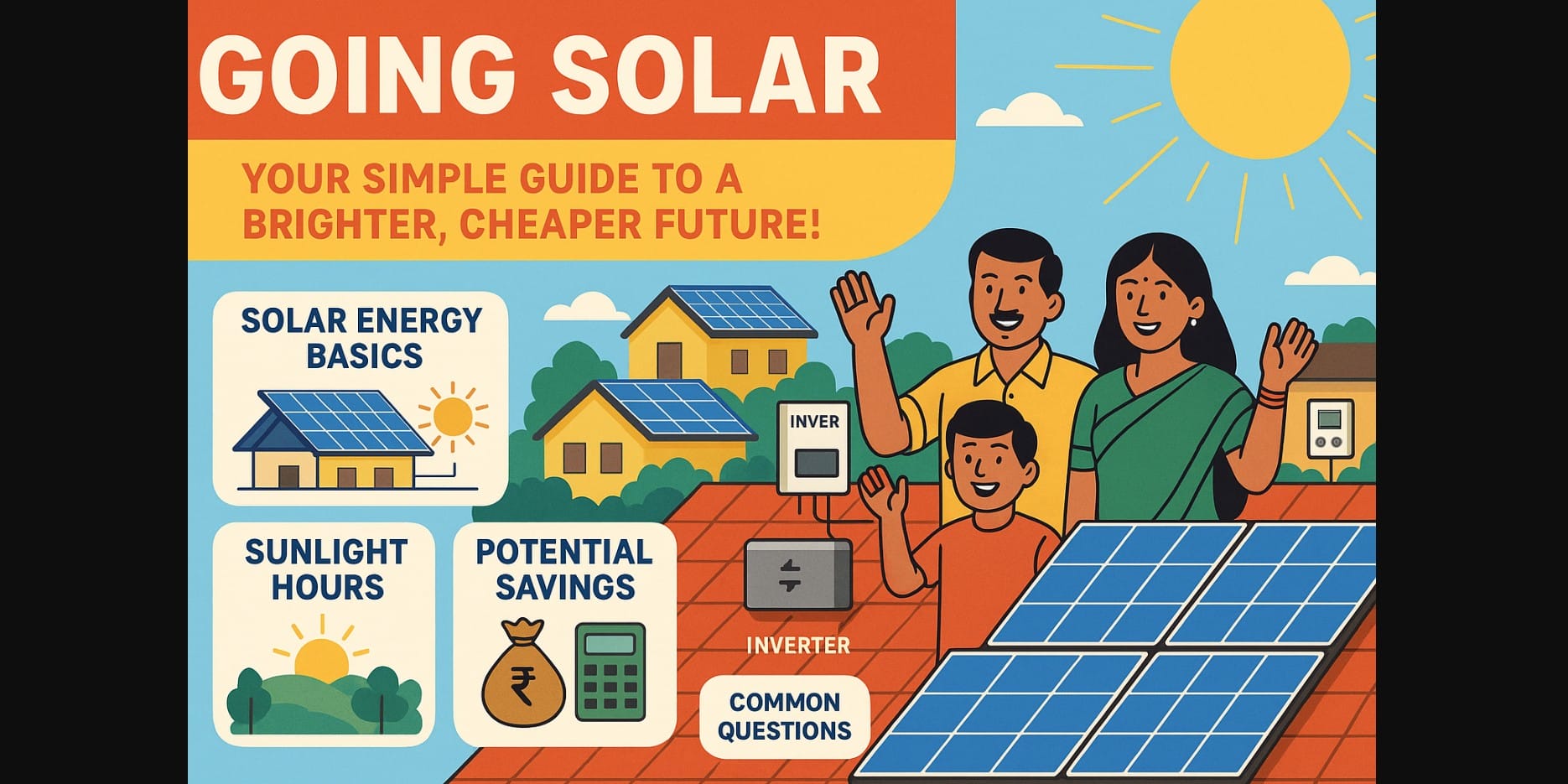
When sunlight hits the solar panels, they generate direct current (DC) electricity. This goes into a device called an inverter, which converts it into alternating current (AC) the type used by your home appliances.
From there, it powers your home’s wiring just like the grid does. You won’t even feel the switch but you will see it reflected in your meter readings.
The Key Solar Power Components at a Glance
- Solar Panels – Fixed on your roof, these absorb sunlight and generate electricity
- Inverter – Usually wall-mounted near your existing power board
- Net Meter – Replaces your existing meter to track solar usage
- Battery (optional) – Only needed if you want backup during outages
2. Not Every Roof Is Solar-Ready But Many Are
What Installers Look For First
- Direction & Tilt: South-facing rooftops get the best sunlight
- Shadow-Free Area: Trees, nearby buildings, or tanks shouldn’t block sunlight
- Roof Size: Even a 10×10 ft area can support a small 1-2 kW setup
- Structure: RCC rooftops are ideal; tiled or asbestos roofs may need reinforcements
Independent Homes vs Apartments
Independent houses are easiest to convert to solar. For flats, the best approach is shared rooftop solar handled by your RWA useful for lifts, pumps, and common lighting.
3. Types of Solar Setups Families Can Choose
On-Grid Systems (Most Common)
- Connected to your electricity board
- Power your home during the day
- Send excess energy to the grid (credited via net metering)
- Don’t include batteries you rely on the grid at night
Hybrid Systems (For Extra Backup)
- Work like on-grid but include a small battery
- Useful if your area faces blackouts and you want seamless power
Off-Grid Systems (For Remote Areas)
- Fully independent from the power grid
- Require larger battery banks
- Ideal for rural homes, farms, or second properties
4. What a Typical Day on Solar Power Looks Like
Morning to Sunset
As soon as sunlight hits the panels, your inverter switches to solar power. You use electricity as normal powering lights, fans, chargers, or even heavy loads like washing machines and geysers.
Evening and Night
Once the sun goes down, your home automatically switches back to grid power (unless you have a battery). There’s no need to flip switches or change anything manually.
Monitoring Your Usage
Most systems come with a mobile app. You can track:
- Daily solar generation
- Grid vs solar power usage
- Alerts for inverter issues or panel performance drops
5. Solar Setup Maintenance: Easier Than You Might Expect
No Need for Daily Cleaning
Dust and pollution reduce efficiency, but you don’t need to clean daily. A simple rinse every 15-30 days using a pipe or soft brush is enough in most Indian cities.
Inverter Checks
If anything goes wrong, your inverter’s display will show an alert. Basic errors (like connectivity loss) are fixable through app guidance or a technician visit.
Panel Lifespan
Most panels last 20-25 years with minimal drop in output. Inverters usually last 8-10 years and can be replaced when needed.
6. What to Expect During Solar Panel Installation
The Setup Timeline
- Site visit by installer to check your roof
- Load calculation based on your electricity usage
- Approval filing for net metering (done by installer)
- Mounting structure + panel installation (1-2 days)
- Inverter setup and testing
- Net meter replacement by local DISCOM
No Major Construction Required
You don’t need to break anything or move out. The mounting structures are drilled into your terrace (or ballasted for non-drill installations), and all electrical work is handled neatly next to your existing board.
7. Rooftop Solar Setup Made Easy
| Aspect | What You Should Know |
|---|---|
| Daily Power Use | Solar runs your home during daytime |
| Rooftop Area Needed | 10-15 sq. ft. per panel (3 kW ≈ 300-350 sq. ft.) |
| Setup Time | 3-7 days including paperwork |
| Night Backup | Needs battery or stays on grid at night |
| Maintenance | 1-2 cleanings per month, minimal upkeep |
| Net Metering | Tracks your export and import with DISCOM |
| Lifespan of Panels | 20-25 years |
| Ideal Users | Homeowners with ₹2,000+ monthly electricity bill |
This guide gives you everything you need to start exploring solar without confusion or pressure.
7. What You Can Do Today If You’re Still Deciding
Try Low-Commitment Solar First
- Solar water heaters are reliable and cost-effective
- Solar lights or plug-and-play kits can reduce nighttime grid usage
- Monitor your monthly electricity usage to see what size system you may need
Talk to a Local Installer
Most vendors now offer free surveys and detailed cost breakdowns no pressure, no upfront payment. It’s a useful first step even if you plan to go solar later this year.

