
How to Maintain Your Solar Battery in India for Long-Lasting Backup
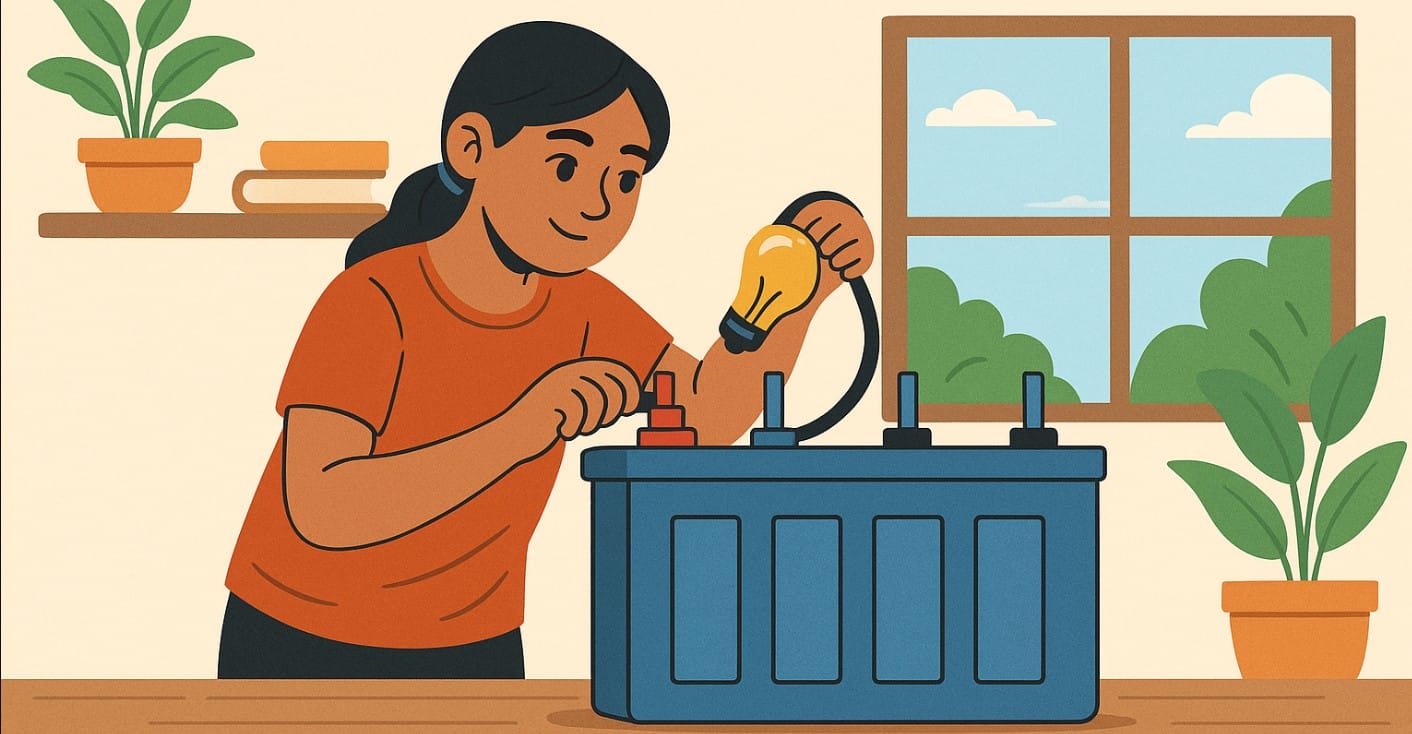
In rooftop solar setups with battery storage, the battery is more than a backup it’s your evening power, your outage safety net, and a major part of your system’s cost. If neglected, it can:
- Lose capacity within 2-3 years
- Fail during long power cuts
- Force premature replacement, often costing ₹10,000-₹40,000 per unit
With proper care, most solar batteries in India last between 5 to 12 years, depending on the type. This post shows you how to keep yours running reliably for as long as possible.
1. What Kind of Battery Does Your Solar System Use?
Tubular Lead-Acid (Most Common in India)
- Used with home inverters and basic solar backup systems
- Needs regular water top-ups and terminal cleaning
- Lifespan: 5-7 years with care
Lithium-Ion (LiFePO₄, Growing in Cities)
- Found in hybrid inverters or smart energy storage kits
- Compact, efficient, no water needed
- Lifespan: 8-12 years with proper charging
SMF or VRLA (Sealed Batteries)
- Less common in solar setups
- No service access, works until failure
- Mostly used in office UPS, not rooftop solar
2. Daily & Weekly Habits That Protect Your Solar Battery
| Habit | Why It Helps |
|---|---|
| Turn off heavy loads after sunset | Avoids draining the battery too fast |
| Use smart plugs to schedule usage | Reduces full discharge cycles |
| Watch charging pattern via app | Detects issues early (overheating, low charge) |
| Check if inverter fans run normally | Poor cooling increases internal battery wear |
3. Monthly & Seasonal Battery Maintenance
For Tubular Lead-Acid Batteries:
- Check water level every 2-4 weeks
- Use only distilled water not tap or filtered
- Keep level between the minimum and maximum lines
- Clean terminals if you see white or green buildup
For Lithium Batteries:
- Wipe off dust from casing and wiring
- Keep the area ventilated to avoid heat retention
- Don’t allow full discharge regularly aim for 20-80% cycling if your system allows control
4. How to Keep Your Solar Battery Healthy During Monsoon & Summer
| Season | Risk | What to Do |
|---|---|---|
| Summer | Overheating | Use shaded space with airflow |
| Monsoon | Humidity, moisture on floors | Elevate battery slightly above ground level |
| Winter | Less sunlight = slow charging | Reduce load or extend charging hours via grid |
Always mount batteries on a non-metal rack with spacing not directly on floor tiles or bricks.
5. Boost Solar Battery Lifespan
| Tip | Why It Works |
|---|---|
| Avoid deep discharges below 20-30% SoC | Reduces wear on battery plates or cells |
| Don’t overload beyond inverter-battery combo | Prevents heating and stress cycles |
| Allow full charging once a week (lead-acid) | Keeps plates balanced and capacity stable |
| Set inverter to correct battery mode | Ensures right cut-off voltages and current |
Check your inverter’s battery type setting many support different modes for tubular, lithium, and VRLA. A mismatch reduces life and risks undercharging or overcharging.
6. Watch for These Signs of Battery Trouble
| Symptom | Possible Problem |
|---|---|
| Backup time reduced suddenly | Ageing cells or repeated deep discharges |
| Battery fully charged but dies fast | Loss of capacity or inverter misread |
| Heating or bulging battery casing | Internal fault call for service immediately |
| White powder on terminals | Corrosion – clean with baking soda + warm water |
| Acid smell or leaking fluid | Lead-acid battery failure – isolate and replace |
7. Ideal Setup for Solar Battery Placement in Homes
| Element | Best Practice |
|---|---|
| Ventilation | Cross-ventilated or semi-open room |
| Ground contact | Slight elevation (wooden or plastic stand) |
| Sunlight exposure | Indirect or fully shaded setup |
| Distance from inverter | Less than 2 meters if possible |
| Terminal access | Keep at least 1 foot clear for maintenance |
Avoid tucking batteries into sealed cupboards or closed shelves trapped heat damages both lithium and lead-acid systems over time.
8. Monthly Solar Battery Care in Indian Conditions
| Task | Applies To | Frequency |
|---|---|---|
| Water top-up (distilled only) | Lead-Acid only | Every 15-30 days |
| Terminal corrosion check | All battery types | Monthly |
| Clean outer casing and cables | All systems | Monthly |
| Runtime observation | All systems | After every power cut |
| Inverter settings confirmation | All systems | Once per season |
9. Fix and Prevent Backup Issues with Solar Batteries
Your solar panels collect power, but your battery stores it. If not cared for, a battery may fail to last, perform well, and protect your home when needed.
Whether you’re topping up water in a lead-acid unit or monitoring a lithium battery via app, regular attention pays off in:
- Longer backup
- Fewer breakdowns
- Better return on investment
Keep your solar battery in good shape, and it will last for years.

