
How to Quickly Judge a Scooter or Bike in a Short Test Ride
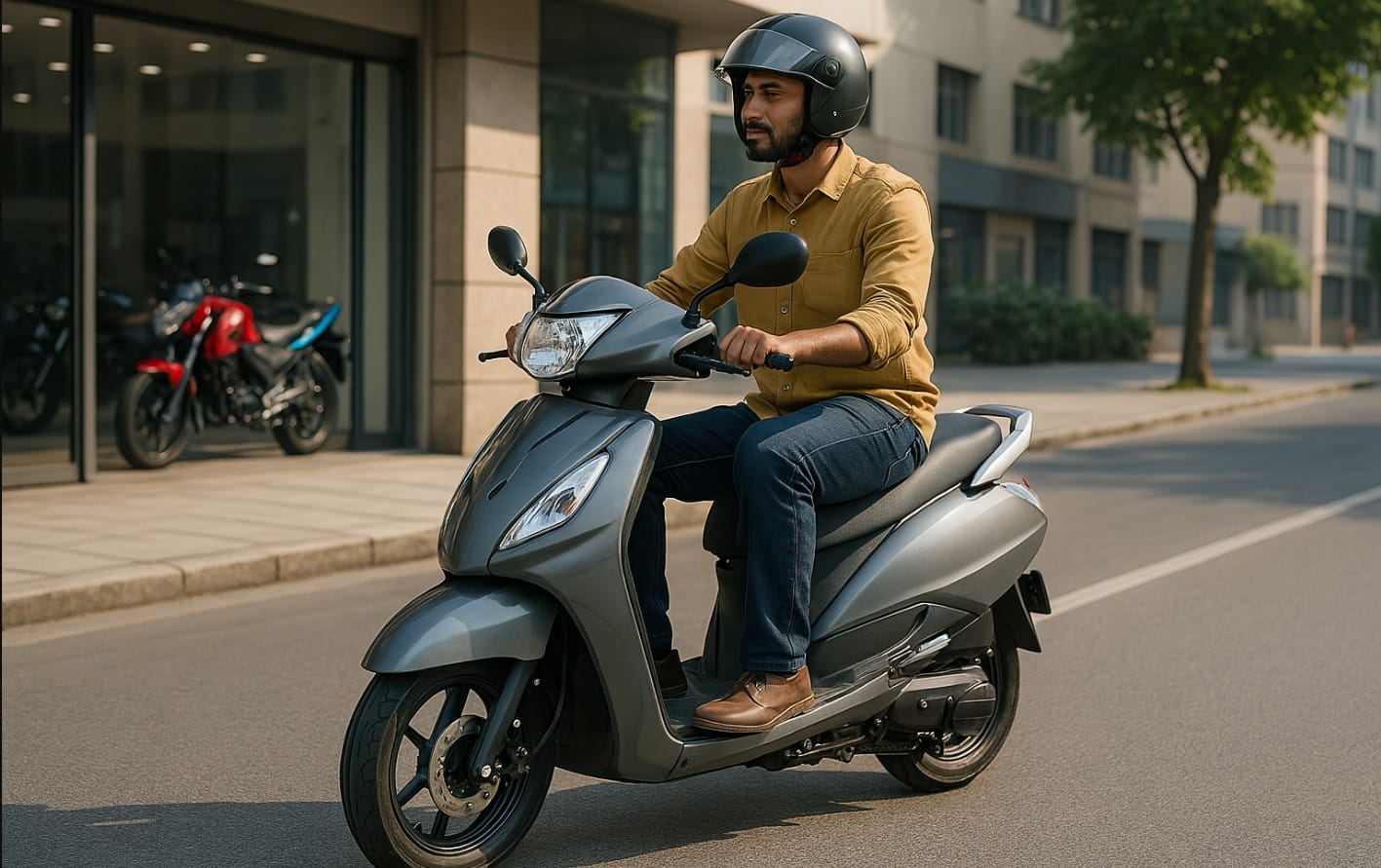
If you’re serious about buying a scooter or bike, a test ride is not optional it’s essential.
But here’s the catch: most people in India either skip the test ride completely or take a quick loop without paying attention. The result? You end up with a two-wheeler that looks good on paper but feels wrong every single day you ride it.
A proper test ride doesn’t have to be long just 10-15 minutes is enough to tell you if the scooter or bike really fits your body, your route, and your comfort level.
Here’s how to make those 15 minutes count.
1. First, Just Sit. Does It Fit You?
Before you even start the engine, check:
- Can you place both feet flat on the ground?
- Is the seat height too high or too low?
- Are the handlebars too far forward or awkwardly high?
- Does the bike or scooter feel too heavy to hold or push?
You should feel confident and balanced not stretched, tiptoed, or struggling.
2. Start-Up and Throttle Response – Smooth or Jerky?
Now start the vehicle. Pay attention to:
- Does it start easily with self-start or kick?
- When you twist the throttle, is the pickup smooth or sudden?
- Is there a delay or hesitation in power?
That first 10 seconds of response tells you how it’ll behave in stop-and-go traffic.
3. Low-Speed Handling – U-Turn Test is Gold
Try a tight U-turn or a few slow corners.
- Does it feel stable or wobbly at low speed?
- Is the steering smooth or too tight?
- Are your knees hitting the handlebar?
If it feels tricky at low speeds, it’ll exhaust you in city traffic.
4. Test the Brakes – Gently and Then Firmly
Now go up to 25-30 km/h and gently apply the brakes. Then try a firmer stop.
- Is the front brake sharp or soft?
- Does it stop in a straight line or pull to one side?
- Does ABS (if available) kick in smoothly?
This is the most important safety check do not skip this step.
5. Ride Over a Bump or Rough Patch
Find a speed bump or broken patch nearby.
- Does the suspension feel harsh or bouncy?
- Do you feel the shock in your back or arms?
- Does the pillion seat (if tested) bounce too much?
Suspension comfort decides if you’ll enjoy or hate every ride.
6. Notice Any Vibration or Buzzing?
Pay attention to:
- Handlebar shaking at idle or when revving
- Mirror vibration (can you still see clearly?)
- Footboard or seat buzzing too much?
Some vibration is normal. But if it bothers you in 5 minutes, it’ll annoy you every day.
7. Use the Switches While Riding
Test all the basics:
- Turn indicators (are they within easy reach?)
- Horn (can you hit it instantly without looking?)
- High/low beam, start-stop switch, digital display visibility
If you need to look down every time, it’s not well designed for real traffic.
8. After the Ride – What Does Your Body Say?
This is important. Step off the vehicle and ask yourself:
- Did your wrists or back feel strained?
- Was the seat too hard or too short?
- Was the vehicle too heavy to handle confidently?
Even a short ride can reveal long-term discomfort. Trust your body.
9. Try to Ride It Like You Normally Would
Don’t treat this like a racing lap.
If your regular use involves:
- Pillion riding – ask for a pillion test
- Rough roads – test a patch nearby
- Frequent stops – simulate that traffic style
Don’t ride for fun ride for truth.
Summary: A Test Ride Is Where the Spec Sheet Meets Reality
You’ve done your research, checked the mileage, read reviews, maybe even watched a few YouTube videos. But none of that matters if the two-wheeler doesn’t feel right under you.
Your height, posture, wrist angle, confidence they can’t be judged by numbers.
So don’t treat a test ride like a formality. Treat it like the final interview before you hire the vehicle to work for you, every single day. And if it doesn’t pass? Walk away. There’s always a better fit out there.

