
Wall-Mounted vs. Under-Sink vs. Gravity Water Purifiers: Which One is Worth the Cost?
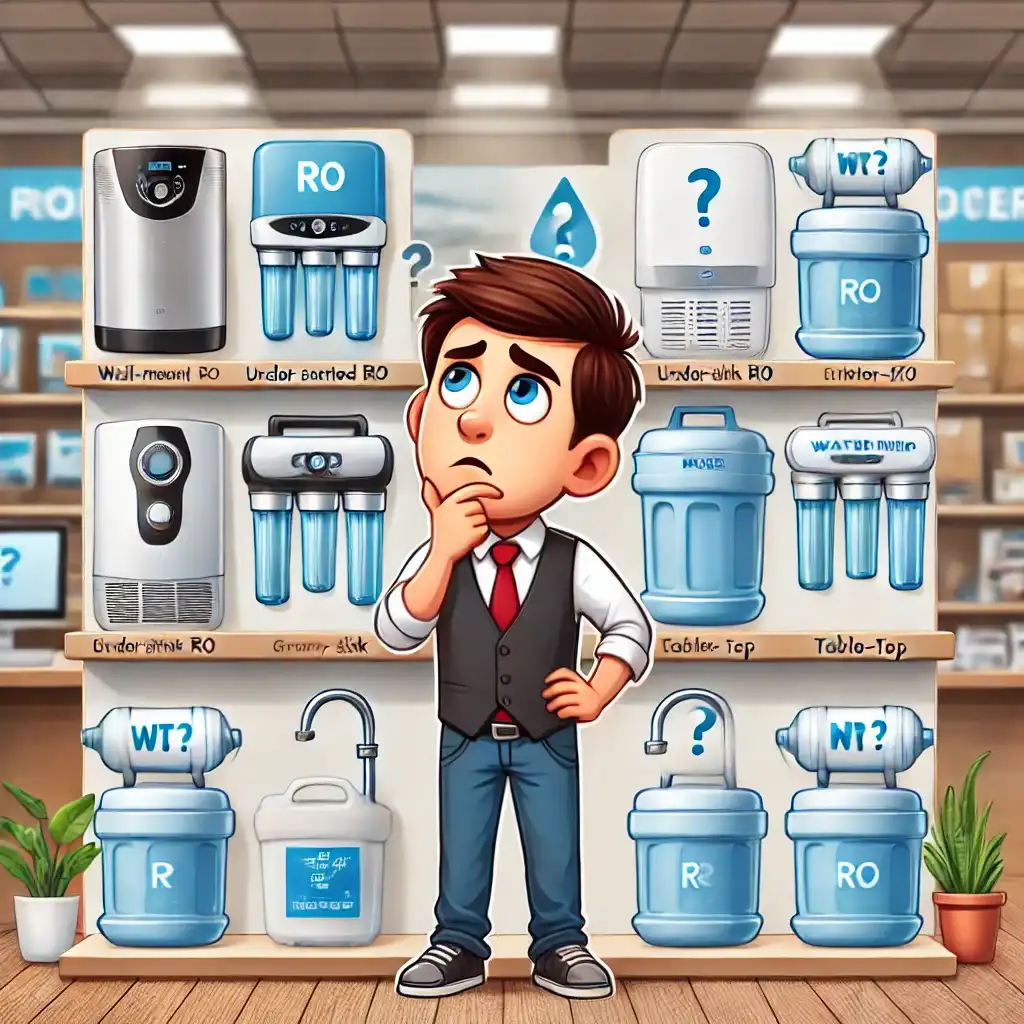
Access to clean and safe drinking water is a priority in every Indian household. With multiple water purification technologies available, choosing the right water purifier can feel overwhelming. While RO (Reverse Osmosis) and UV (Ultraviolet) purifiers dominate the market, installation type and purification method play a crucial role in selecting the ideal model for your home.
This guide will compare Wall-Mounted, Under-Sink, Gravity-Based, Table-Top, Faucet-Mounted, UV, and Multi-Stage RO purifiers—highlighting their features, benefits, limitations, and suitability for different Indian water conditions.
Understanding Different Water Purifier Types
Water purifiers in India vary based on installation method, purification process, and maintenance requirements. Here’s a closer look at how each type functions and which water conditions they suit best.
A. Wall-Mounted Water Purifiers (RO/UV/UF Models)
How It Works:
- Installed on the kitchen wall, directly connected to the water supply.
- Uses RO filtration to remove TDS (Total Dissolved Solids), heavy metals, and chemical contaminants.
- UV light sterilization eliminates bacteria and viruses.
Pros:
- Space-saving design, making it ideal for compact kitchens.
- Capable of treating high TDS water from borewells and tankers.
- Available in RO, UV, and mineralizer-based models.
Cons:
- Requires continuous power supply for operation.
- Wastes some water during purification, especially in RO models.
- Higher maintenance cost due to regular filter replacements.
Best For:
- Urban households that rely on borewell or tanker water.
- Homes needing powerful water purification in a compact unit.
B. Under-Sink Water Purifiers (Hidden RO Systems)
How It Works:
- Installed below the kitchen sink, with purified water dispensed through a dedicated tap.
- Uses RO and UV filtration, similar to wall-mounted units, but remains hidden under the counter.
Pros:
- Keeps kitchen countertops clutter-free.
- Higher water storage capacity compared to wall-mounted purifiers.
- Operates quietly, making it a discreet choice for modern homes.
Cons:
- Requires permanent installation with plumbing modifications.
- More difficult to access for maintenance than wall-mounted units.
- Slightly more expensive due to extra storage and fittings.
Best For:
- Modular kitchens where aesthetics matter.
- Families needing a larger storage capacity for daily water consumption.
C. Gravity-Based Water Purifiers (Non-Electric Models)
How It Works:
- Relies on natural filtration using activated carbon and ceramic filters.
- Works without electricity by allowing water to pass through different filtration layers.
Pros:
- Affordable option with minimal maintenance costs.
- No electricity needed, making it ideal for rural areas.
- Effectively removes sediments, chlorine, and organic impurities.
Cons:
- Does not remove dissolved salts (TDS), making it unsuitable for borewell or tanker water.
- Slower filtration process compared to RO models.
- Limited microbial protection—cannot eliminate bacteria and viruses completely.
Best For:
- Households relying on municipal tap water with low TDS levels.
- Areas facing frequent power cuts or limited access to electrical appliances.
D. Table-Top Water Purifiers (Portable and Convenient Models)
How It Works:
- A compact, plug-and-use water purifier that can be placed anywhere in the kitchen.
- Available in gravity-based (non-electric) or UV-based (electric) models.
Pros:
- No installation required—simply place it on a countertop and start using it.
- Lightweight and portable, ideal for rented homes or offices.
- More affordable than built-in RO/UV purifiers.
Cons:
- Lower storage capacity, requiring frequent refilling.
- Limited filtration efficiency—not suitable for high TDS water.
Best For:
- Renters, students, and small households looking for a temporary purification solution.
- Secondary purification for areas with already treated municipal water.
E. Faucet-Mounted Filters (Basic Tap Filters for Quick Purification)
How It Works:
- A small filter attaches directly to a tap, improving water quality using activated carbon filtration.
- Reduces chlorine, dirt, and basic contaminants but does not remove TDS or heavy metals.
Pros:
- Extremely affordable and easy to install.
- No electricity or storage tank required.
Cons:
- Does not remove TDS, bacteria, or viruses.
- Frequent filter replacements needed.
Best For:
- Municipal tap water with low TDS levels.
- Backup purification option for clean water sources.
F. UV Water Purifiers (Standalone UV-Based Disinfection)
How It Works:
- Uses ultraviolet (UV) light to neutralize bacteria and viruses in water.
- Does not remove dissolved solids, heavy metals, or pesticides.
Pros:
- Kills 99.99 percent of bacteria and viruses without using chemicals.
- No water wastage like RO systems.
Cons:
- Ineffective for high TDS water and does not remove dissolved salts.
- Requires electricity to function.
Best For:
- Homes with municipal water that may carry bacterial contamination.
G. Multi-Stage RO + UV + UF + TDS Controllers
How It Works:
- Combines multiple purification technologies, including:
- RO (removes TDS and heavy metals)
- UV (kills bacteria and viruses)
- UF (provides additional sediment filtration)
- TDS Controller (retains essential minerals)
Pros:
- Best purification for high TDS water (above 500 ppm).
- Ensures complete removal of contaminants while maintaining water taste.
Cons:
- Higher cost and maintenance expenses.
- Consumes more electricity compared to basic UV or gravity models.
Best For:
- Households with borewell or tanker water containing high TDS levels.
Choosing the Best Purifier for Your Home – Quick Comparison
| Purifier Type | Best For | Key Benefits | Limitations |
|---|---|---|---|
| Wall-Mounted RO/UV | High TDS water (Borewell/Tanker) | Deep purification, space-saving | Requires power, regular maintenance |
| Under-Sink RO | Modular kitchens | High storage, hidden installation | Requires plumbing changes |
| Gravity-Based | Municipal water | Affordable, no power required | Cannot remove TDS or heavy metals |
| Table-Top | Renters, students | Portable, easy to use | Limited storage, basic filtration |
| Faucet-Mounted | Municipal tap water | Easy installation, low cost | Minimal filtration, frequent filter change |
| UV Purifier | Low TDS water | Kills bacteria, no wastage | Does not remove dissolved salts |
| RO + UV + UF | High TDS borewell/tanker water | Best purification, retains minerals | Expensive, high maintenance |
Final Thoughts: Which Purifier Should You Buy?
- Choose a Wall-Mounted RO/UV Purifier if your water has high TDS and needs deep purification.
- Select an Under-Sink RO for aesthetic kitchens needing higher storage.
- Opt for a Gravity-Based Purifier for low-cost, non-electric filtration in municipal water areas.
- Use a UV Purifier if your water is biologically unsafe but has low TDS.
- Consider a Multi-Stage RO for maximum filtration in high TDS water.
The best purifier depends on your water source, kitchen space, and budget. Select wisely to ensure safe and clean drinking water for your family.

