
Power Bank Safety for India: What to Check Before You Plug In
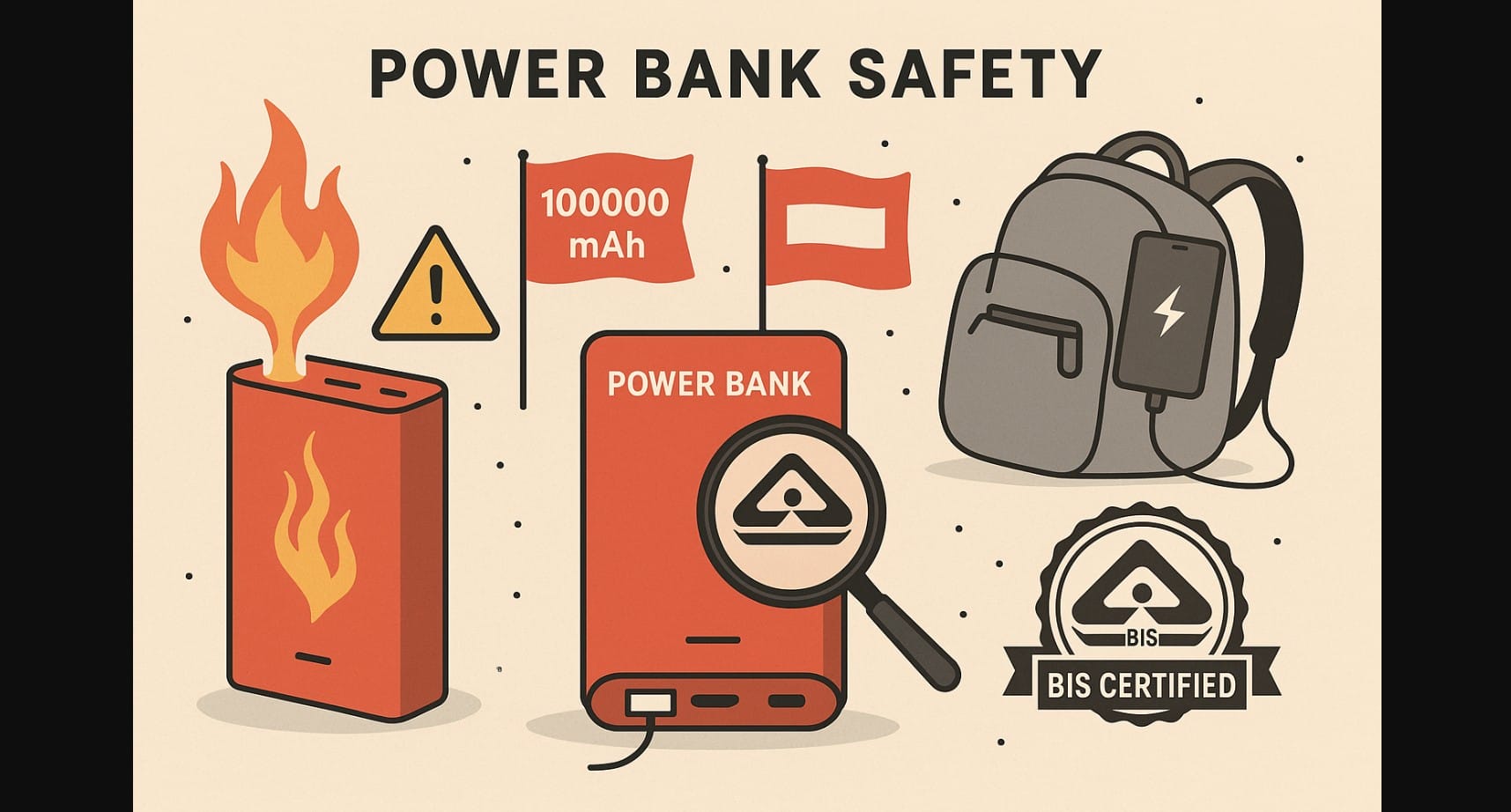
It’s happened in Indian trains, hostels, schoolbags, and even inside jeans pockets. A power bank that gets too hot, swells up, or leaks can cause fires or burns. And while these accidents may seem rare, most are caused by low-quality cells, cheap circuits, and risky usage habits all made worse by India’s heat, humidity, and long power cuts.
If you’ve ever bought a no-name ₹499 unit at a railway station or local shop, you’re taking a chance with your safety.
1. How to Spot a Fake or Unsafe Power Bank in Indian Markets
Counterfeit and low-grade power banks are still widely sold in India especially in places like:
- Train stations and bus depots
- Small mobile accessory shops
- Local markets and unverified e-commerce listings
Watch for these red flags:
- No brand name or obvious spelling errors on the box
- Claims like “100000 mAh” or “Charge 10 devices”
- No wattage or charging speed printed clearly
- No mention of BIS certification (mandatory in India)
Often, these power banks use recycled or rejected battery cells with poor thermal insulation and no safety circuit.
2. Why the BIS Mark Is Non-Negotiable for Indian Buyers
The Bureau of Indian Standards (BIS) regulates electronic product safety in India. All lithium-ion batteries and power banks sold in India must have a BIS mark it’s not optional.
How to verify:
- Look for the BIS logo (a triangle with a tick mark inside)
- Genuine products print the registration number near the logo
- You can cross-check the number on the BIS portal or scan QR codes on some packaging
If it doesn’t have a BIS mark or looks poorly printed, avoid it especially if sold offline.
3. Using Your Power Bank Safely in Dusty, Crowded, or Hot Places
India’s climate and usage habits can easily stress a power bank. Here’s how to stay safe:
- Don’t charge inside tightly packed bags or zipped compartments it traps heat.
- Unplug devices after charging leaving them connected drains power and increases heat.
- Avoid simultaneous charge + discharge unless your power bank supports pass-through charging.
- Never leave power banks inside locked cars or under train seats, especially in summer.
Basic precautions go a long way in avoiding heat damage or bloating.
4. The Most Common Mistakes That Lead to Power Bank Damage
Even a good-quality power bank can be damaged by daily misuse. These are the top causes of failure or danger:
- Using damaged cables that spark or short during charging
- Dropping power banks on hard surfaces, causing internal damage
- Charging with incompatible or non-branded wall plugs
- Leaving power banks in direct sunlight or near windows
- Charging overnight without auto cut-off protection
5. Should You Charge Your Phone While the Power Bank Is Charging?
This depends entirely on whether your power bank supports pass-through charging (charging itself while also powering another device).
If it does:
- Charging is safe, though slightly slower
- Circuitry is designed to balance input/output flow
If it doesn’t:
- Internal heating increases
- Could shorten battery life or cause swelling
Check the packaging or user manual. If it doesn’t mention pass-through support, avoid it.
6. How to Handle Power Banks Safely in Indian Conditions
| Situation | Do This | Avoid This |
|---|---|---|
| Charging in summer | Use in open space, near airflow | Charging inside zipped backpack |
| Public transport use | Store in outer pocket | Keeping under heavy luggage |
| Daily college/office use | Buy BIS-certified unit | Buying offline with no specs |
| Charging overnight | Use smart auto cut-off power banks | Leaving cheap units plugged in unattended |
7. If Power Bank Swells, Smells, or Warms Up Unusually Stop Using It
Never ignore these warning signs:
- Swelling or bulging: Indicates internal gas buildup from degraded cells
- Chemical smell or burnt plastic: Sign of internal failure or short circuit
- Hot casing even when idle: A sign the protection circuit isn’t working
Stop using it immediately. Store it away from flammable items and dispose of it through a certified e-waste collection point.
8. Why Spending a Bit More Can Protect You from Bigger Problems
You don’t need to spend ₹3000 to be safe. But avoiding the cheapest models especially the unbranded ₹500 ones makes a real difference.
Paying ₹300-₹500 more usually gets you:
- Short-circuit protection
- Temperature control features
- Smart auto cut-off
- BIS certification
- Trusted battery cells
In a country where temperatures frequently exceed 40°C and power outages happen often, a reliable power bank is essential for safety.

