
India’s Power Bank Obsession: What’s Behind the Everyday Use?
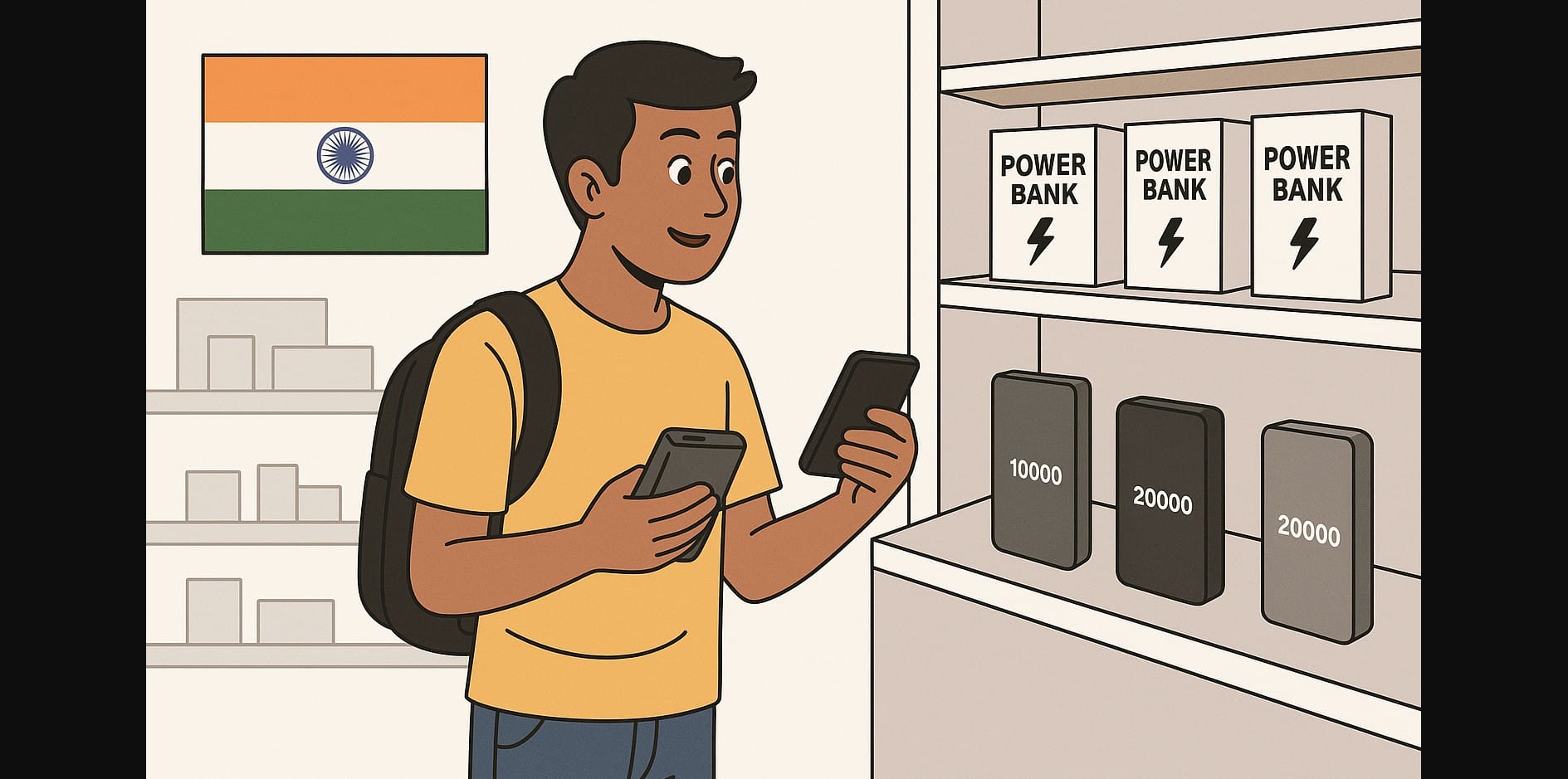
Power banks aren’t just popular in India, they’ve become a quiet essential in everyday life. Whether you’re commuting on a crowded train/metro, attending online classes on the go, or managing deliveries for a living, there’s a good chance you carry one in your bag. But this widespread adoption goes beyond just low prices.
In India, power banks represent something bigger – a practical response to real-world challenges like unreliable power supply, long hours of mobile usage, and growing digital dependence. This article breaks down the deeper reasons behind their popularity and whether they’re truly justified.
1. Heavy Smartphone Usage in Everyday Life
You’re not imagining it, everyone around you seems glued to their phone. With India crossing over 800 million smartphone users, the mobile has become more than just a device. It’s your bank, your workplace, your entertainment hub, and your social connection.
From gig workers and students to older adults using UPI or WhatsApp, constant mobile use creates a real battery drain problem. And since most phones today last just a day under heavy usage, power banks fill in that growing gap.
2. Unreliable Power Infrastructure Across Many Regions
Power cuts haven’t vanished. In many Tier 2 and Tier 3 towns, as well as rural India, load shedding is still common, especially during peak summer or monsoon seasons. Even short interruptions mean charging routines get disrupted.
That’s where power banks step in, not just as a travel tool, but as a backup for daily life. In states like Bihar, UP, Assam, and parts of Maharashtra, this reliability gap continues to fuel strong demand.
3. E-Commerce Flash Sales and Bundling Boost Visibility
You’ve probably seen power banks bundled in flash sales on Amazon or Flipkart, either discounted with phones or offered during events like Big Billion Days or Great Republic Day Sale. These offers make them highly visible and often impulse buys.
Add to that the “Frequently Bought Together” nudges, and many users end up buying a power bank when purchasing a new phone, even if they didn’t initially plan to.
4. Real Daily Needs: Travel, Commute, Gig Economy, Students
Not all of India lives within reach of a wall socket all day. Consider:
- Delivery agents and cab drivers rely on GPS and mobile apps for hours
- College students attend classes, coaching, and commute across cities
- Train/bus travelers on intercity routes often spend 6-10 hours in motion
For these users, a power bank isn’t optional, it’s a necessity.
5. Shift Toward Safety: BIS Certification and Fake Import Crackdown
India saw an influx of fake Chinese power banks claiming unrealistic capacities. Many lacked safety features, had poor battery cells, and even caused fire incidents.
That changed when the BIS (Bureau of Indian Standards) began stricter enforcement and cancelled certifications of hundreds of low-grade imports in 2024-25. Now, brands need to meet minimum safety standards, and users are more aware.
You’ll notice increasing demand for branded, BIS-marked power banks, even if they cost ₹200-₹400 more.
6. New Features and Charging Technology: Fast, Multi-Port, Lightweight
Today’s power banks are no longer clunky bricks. Consumers now want:
- Fast charging with PD (Power Delivery) or Quick Charge support
- Multiple ports (USB-C, USB-A) to charge two devices at once
- Sleek and lightweight options for daily carry
- Pass-through charging so both phone and bank can charge overnight
Many power users now charge a phone, TWS earbuds, and smartwatch using one power bank.
7. Local Manufacturing and Indian Government Policy Support
Government support through the PLI scheme (Production Linked Incentive), and removal of import duty on lithium cell components, has boosted local assembly.
Brands like Ambrane, URBN, pTron, and Portronics are manufacturing in India. This shift has made reliable power banks more available while reducing dependence on Chinese imports.
8. Rise of Solar & Green Charging for Off-Grid Users
Solar-powered homes are slowly gaining ground in India, especially in off-grid villages, remote communities, and NGO-led rural programs. They’re not mainstream yet, but there’s growing interest.
With India pushing for green energy transitions, solar-integrated charging could become a bigger factor in the next few years.
9. Cultural Drivers: Gifting, Practicality, and Preparedness Psychology
Festivals like Diwali, Raksha Bandhan, and New Year now see power banks featured in gift guides, practical, budget-friendly, and brand-neutral.
There’s also a psychological factor: many users in India view power banks as a symbol of self-sufficiency, especially while traveling. “What if my phone dies?” is a real fear, and this ₹1000-₹1500 product solves it instantly.
10. Justified Demand: Is the Power Bank Popularity Backed by Need and Behavior?
Yes. Here’s why power bank demand isn’t just hype in India:
- Usage is behavior-backed, not brand-hyped
- Power gaps and mobile dependence are real
- Safety awareness is growing
- Local manufacturing supports demand
- Prices remain accessible for all income levels
Even with newer phones having better battery life, power banks are not fading anytime soon. If anything, they’ve become essential infrastructure for India’s mobile-first lifestyle.
Summary – The Rise of Power Banks in India
The power bank’s popularity in India isn’t a passing trend or a price-driven impulse. It reflects how people actually live and work, constantly mobile, heavily dependent on smartphones, and often without guaranteed access to charging points. From students to gig workers, from urban commuters to rural users, the need for portable power is real and growing.
What started as a backup tool is now seen as a daily necessity. As safety standards improve, local manufacturing expands, and smarter features become affordable, the power bank continues to evolve alongside India’s digital lifestyle.

