
Understanding Solar and Grid Power Interaction in India
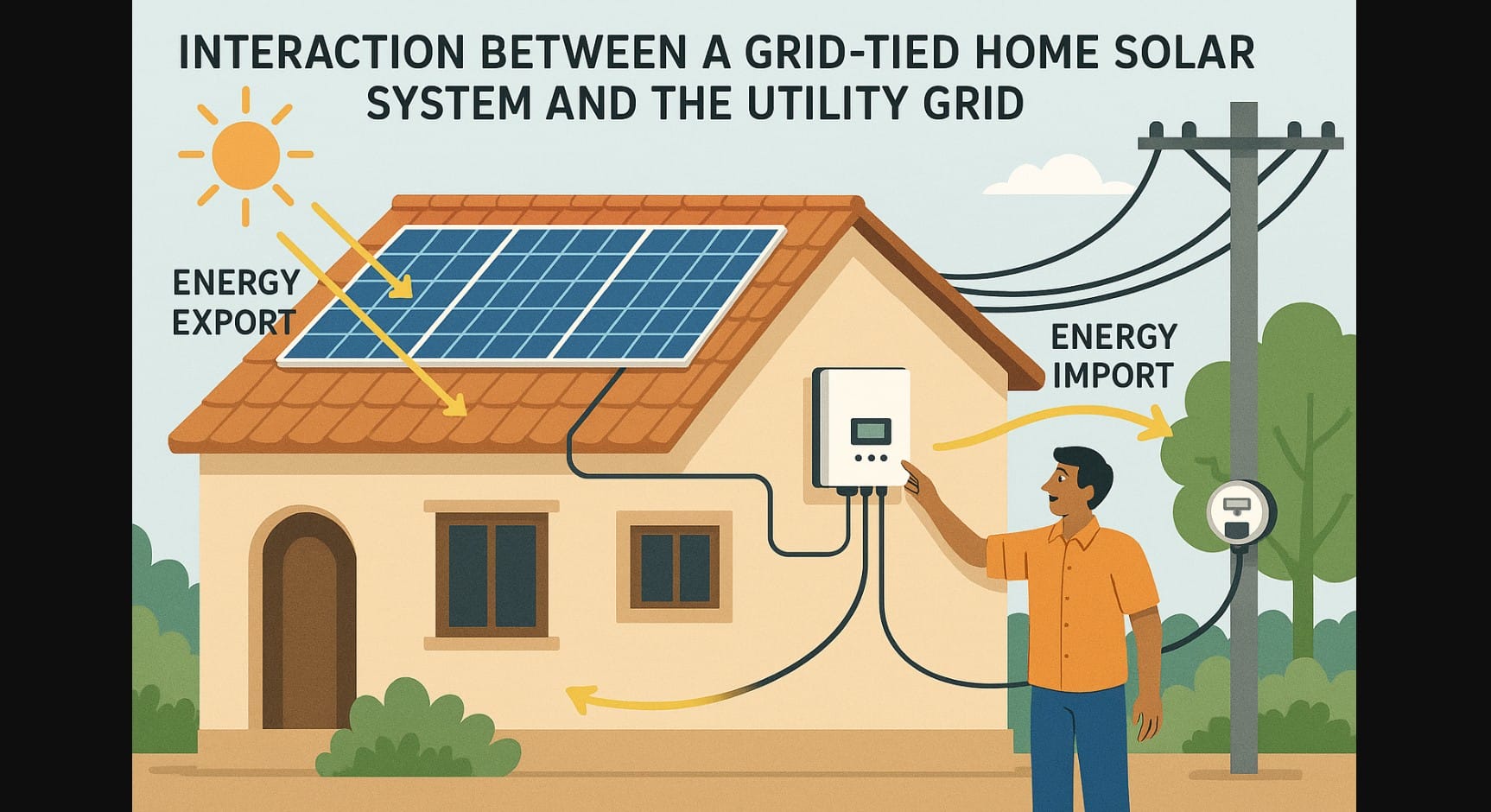
Once your solar system is grid-connected, it’s not just producing power in isolation. It’s continuously interacting with your state’s electricity grid. Every second, your system:
- Sends solar power to your home appliances
- Pushes extra energy back to the grid
- Pulls grid power when solar isn’t enough
This interaction determines your bill, your savings, and how your system behaves during fluctuations or outages.
1. How Electricity Moves Through a Grid-Tied Solar Setup
During the Day – Solar Runs the Show
- Your solar panels generate direct current (DC)
- The inverter converts it to alternating current (AC)
- Your home uses solar power first
- Any surplus goes through the net meter and into the grid
Example: If your panels produce 4 kWh and your home uses 2.5 kWh, the remaining 1.5 kWh goes out to the grid.
At Night or in Low Sunlight – Grid Takes Over
- Solar panels shut down after sunset
- All power comes from your DISCOM supply
- Net meter records this as imported units
2. What the Net Meter Actually Measures
A net meter tracks two values:
- Energy you import from the grid
- Energy you export back to the grid
At the end of the billing cycle:
- If you exported more than you imported, your next bill is credited
- If you imported more, you pay for the net difference
Note: Fixed charges still apply even if your net usage is zero
3. Typical Daily Flow in a Solar-Connected Home
| Time | What Happens |
|---|---|
| 7 AM | Solar starts up slowly, home still uses grid power |
| 10 AM | Solar generation rises, home starts running entirely on solar |
| 12 PM | Surplus energy flows to grid as solar exceeds home usage |
| 3 PM | Home uses some grid as clouds reduce generation |
| 6 PM | Sun sets, grid supplies all power again |
4. Power Cuts and Solar Power
If you have no battery, your inverter shuts off when the grid goes down even in full sunlight. This is by design. Your system stops exporting to avoid back-feeding live wires during repair work.
To keep the lights on during outages, you need a:
- Hybrid inverter (one that supports battery backup)
- Battery bank sized to your backup needs
- Proper load segregation for essential appliances
5. How Local Grid Quality Affects Your Solar Output
The grid isn’t always stable. When voltage or frequency falls outside safe limits:
- Your inverter may disconnect for safety
- Export to grid stops temporarily
- The system may auto-restart once conditions normalize
Common scenarios in India:
- Rural feeders with voltage drops
- Urban overloads during peak AC use
- Post-outage surges that trip inverters
6. How to Reduce Grid Dependence and Improve Usage
- Use solar-heavy tasks (washing machine, geyser) during daytime
- Track your solar generation vs. home usage using your inverter’s app
- Stagger appliance use to avoid drawing from the grid unnecessarily
- Maintain proper panel cleaning and inverter ventilation for stable generation
7. Example: Real-Life Energy Flow in a Tier-2 Indian City
- Installed Capacity: 5 kW
- Daily Usage: ~10 units
- Solar Generation (March): ~20 units/day
| Action | Units Used | From Solar | From Grid | Exported |
|---|---|---|---|---|
| Running fridge, lights, fans | 6 units | 6 units | 0 | 0 |
| Using washing machine at 1 PM | 2 units | 2 units | 0 | 0 |
| AC used at 7 PM | 2 units | 0 | 2 units | 0 |
| Remaining solar sent to grid | – | – | – | 10+ units |
End of month:
- Imported = 60 units
- Exported = 300 units
- Billed units = 0 (net export)
- Credits carried to next month
8. Solar Power + Grid: Real-Time Usage and Unit Flow
| Condition | Who Powers Your Home? | Meter Reading Behavior |
|---|---|---|
| Bright sunny day | Solar, with surplus to grid | Export units increase |
| Cloudy afternoon | Mix of solar + grid | Both import and export active |
| Evening hours | Grid only | Import units rise |
| Power cut (no battery) | No power | Inverter shuts off |
| Grid stable, low usage | Solar only | Export builds up |
9. Solar by Day, Grid by Night
Your solar system can power your home and supply energy to the grid. However, your savings depend on the timing of your energy use compared to when your panels produce power.
Understanding this interaction helps you:
- Use solar more effectively
- Reduce grid reliance
- Avoid surprises in your bill
- Plan upgrades (like batteries or automation) wisely

