
Is Your Terrace Ready for Solar? Start with These 5 Rooftop Checks First
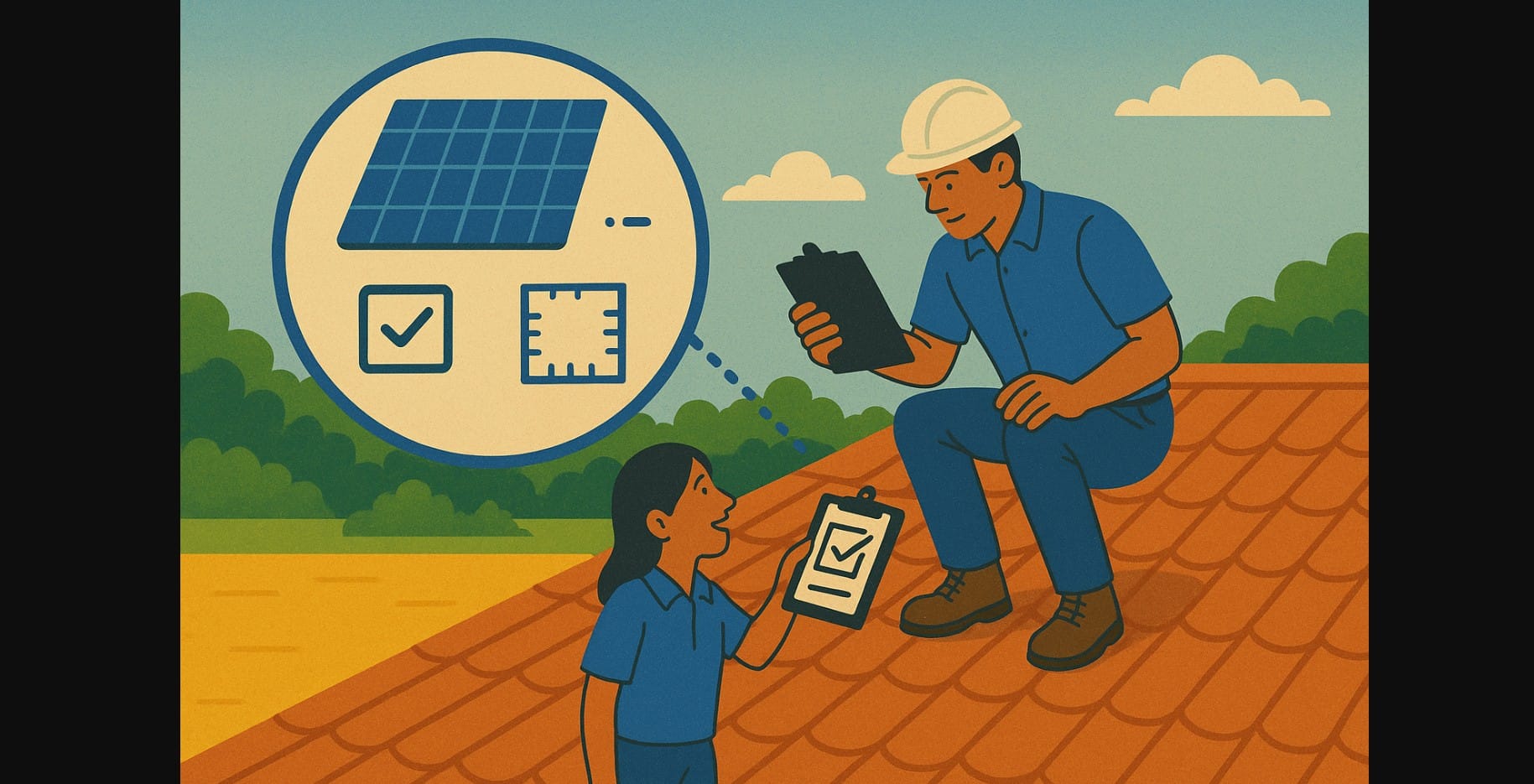
If you’re thinking about installing rooftop solar in India, the first thing you need to check isn’t your budget it’s your roof.
In India, not every terrace or roof is automatically suitable for solar panels. From older buildings with aging slabs to houses shaded by trees or mobile towers, there are several hidden factors that can reduce your system’s performance or even make installation risky.
Before you contact a vendor or start calculating savings, use this practical checklist to assess whether your roof is solar-ready.
1. Age and Condition of the Roof Structure
- Is your roof slab cracked, water-damaged, or patched in places?
- Has your terrace been waterproofed in the last 5 years?
- Is the roof strong enough to support panel weight and metal mounting?
Very Important
Solar panels typically last 20-25 years. Mounting them on a damaged roof could lead to:
- Leaks during monsoon
- Safety risks if the frame weakens
- Expensive reinstallation later if the roof needs repair
If your house is over 15-20 years old, get a basic structural inspection done before going solar.
2. Roofing Material and Surface Type
- RCC (reinforced concrete) rooftops are the best base for solar
- Metal sheet or tiled roofs can be used with extra care, but may need special clamps
- Asbestos, PVC, or thatched roofs are generally unsafe or unsuitable
Mounting Considerations
Installers usually drill into the roof to fix frames. But if your terrace has waterproofing layers or decorative tiles, drilling may not be allowed. In that case, ballast-mounted (non-drilling) systems are used but they require flat rooftops with enough weight-bearing strength.
3. Shade-Free Sunlight for Most of the Day
What You Need to Observe
Stand on your terrace between 10 am and 4 pm and look for shadows caused by:
- Overhead tanks
- Tall buildings
- Satellite dishes or chimneys
- Trees or billboards nearby
Even small patches of shade can reduce output from an entire panel string. It’s best to install where the sunlight is direct for at least 5-6 hours daily.
Regional Considerations
- In North India, winter shadows are longer due to low sun angles be extra careful
- In South India, shadows tend to move faster, but strong midday sun makes up for it
4. Direction and Slope of the Roof
Ideal Direction in India
- South-facing rooftops receive the most sunlight throughout the year
- East-facing roofs are good for early-day generation
- West-facing panels are okay but will generate less in the morning
- North-facing rooftops are the least efficient in India
Slope and Tilt Angle
If your roof is:
- Flat: You can add custom tilt frames facing the right direction
- Sloped: Panels will follow the roof’s angle, which may need correction if it’s not south-facing
Your installer will optimize the tilt (usually 15-25 degrees depending on region) to match the sun path.
5. Available and Usable Terrace Space
How Much Room Do You Need?
- 1 kW system: Requires 75-100 sq. ft. of shadow-free space
- 3 kW system (common in Indian homes): Needs about 250-300 sq. ft.
Also consider:
- Clear walking paths between panels for cleaning
- Space away from dish antennas, tanks, vents, and staircases
- Easy access for installation tools and post-setup maintenance
6. Access and Drainage
Even if your roof checks all the boxes above, don’t forget:
- Is your terrace easily accessible for technicians?
- Does water drain properly during rain?
- Can you easily reach the panels to clean them?
Blocked access or stagnant water may not stop you from going solar, but they increase long-term maintenance effort.
7. What If Your Roof Doesn’t Qualify?
Don’t give up on solar just yet. Here are alternatives:
- Shared rooftop solar via your housing society (for apartments)
- Small plug-and-play balcony kits for partial savings
- Ground-mount solar systems if you have backyard or open land
- Wait until the roof is renovated or rebuilt to integrate solar planning
8. Rooftop Solar Installation – Readiness Checklist
| Check | What to Look For |
|---|---|
| Structural condition | Strong, leak-free RCC slab; no cracks or weakness |
| Roof material | Prefer RCC; avoid asbestos, sheet, or weak structures |
| Shade coverage | No major shadows between 10 am – 4 pm |
| Direction & slope | South-facing or adjustable tilt on flat roof |
| Free space available | 100 sq. ft. for 1-2 kW systems, more for 3+ kW |
9. Start with the Roof, Then Think About Panels
Solar is a good long-term investment, but a weak or shaded roof can be a problem. Before getting quotes or looking into subsidies, spend an hour on a sunny day to check your roof using these five assessments.
You may already have a solar-ready house, or a small change like trimming a tree or moving a tank could give you free electricity from the sun.

