
Ensure Safe Solar Wiring at Home – Grounding, Protection & Quality Cables
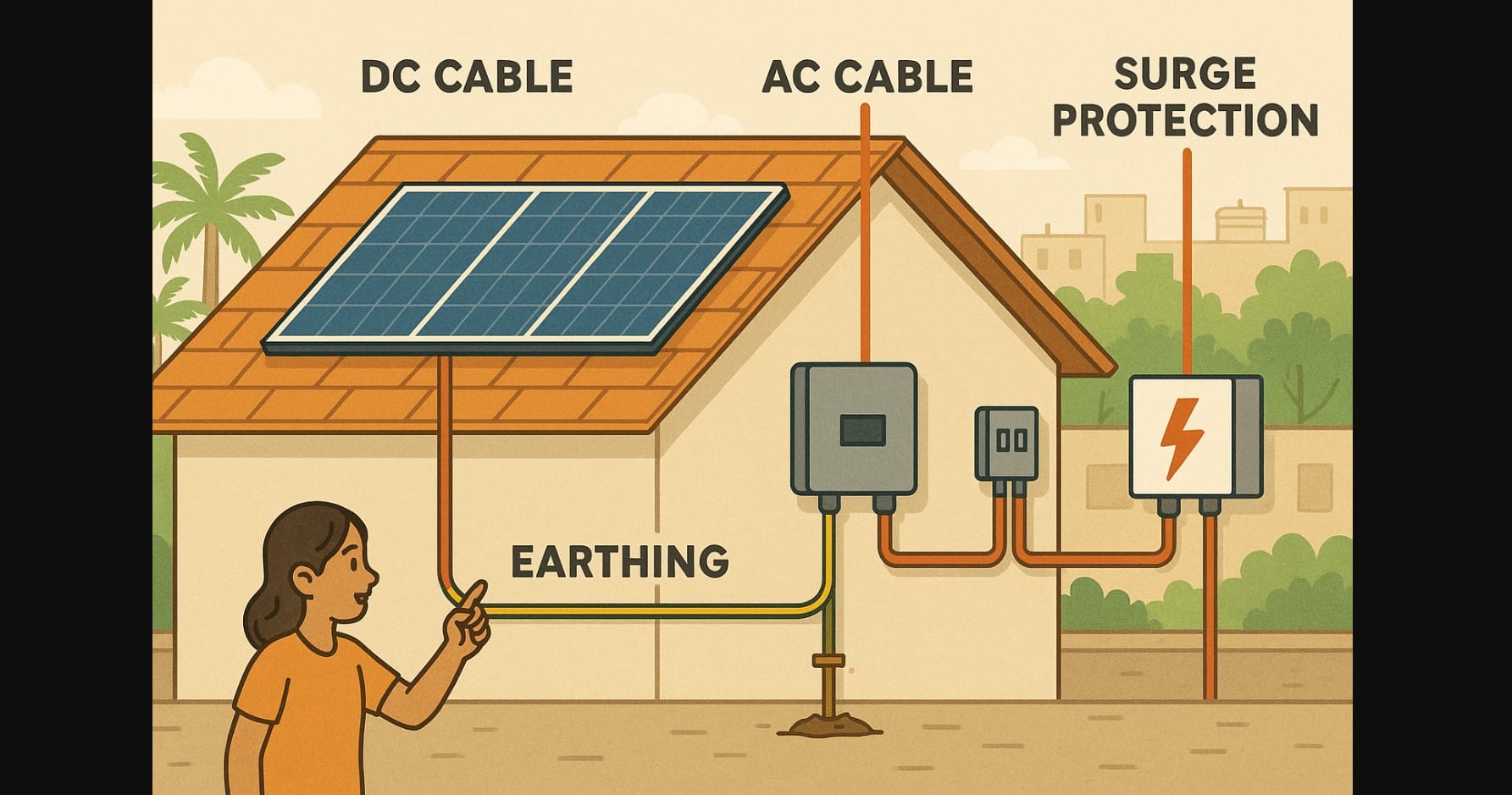
Most people focus on the number of solar panels or the inverter brand. But what truly connects your system and keeps it running safely is the wiring.
In India, where extreme heat, dust, and power fluctuations are common, safe and code-compliant wiring is not optional. It’s essential.
Let’s walk through what safe solar wiring looks like, why it matters, and how to make sure your home system follows the right practices.
1. Solar Wiring Isn’t Like Regular Wiring Here’s Why
Solar wiring involves both DC and AC electricity, each with different risks:
- DC electricity from solar panels is continuous it doesn’t cross zero like AC, so arcing risks are higher
- A fault on the DC side is harder to detect without proper protection
- In India, hot summers and monsoons test the strength of every cable, junction, and connector
That’s why safe solar wiring must go beyond regular household standards.
2. Main Parts of Safe Solar Wiring You Should Know
DC Wiring from Panels to Inverter
- Carries high-voltage DC current
- Must be:
- Double-insulated
- UV- and weather-resistant
- Properly color-coded (usually red and black)
- Should run inside conduits or cable trays, not left loose on the rooftop
AC Wiring from Inverter to Your Home’s DB
- Transmits solar power into your house
- Follows standard household codes
- Must be copper cables, sized for the inverter’s rated output
3. What’s Grounding (Earthing), and Why It Saves Lives
Grounding protects your home, devices, and people from electrical faults.
A good solar setup will include:
- Earth connection to the panel frames
- Earthing for the inverter body
- Separate earth pit for surge protection
Without proper grounding, your inverter may shut down during heavy rain or storms or worse, send shock risk into your system.
4. Protection Devices Every Solar System in India Should Include
| Device | What It Does |
|---|---|
| DC Isolator Switch | Lets you disconnect DC power during servicing |
| DC MCB or Fuse | Cuts off current during short circuits on DC lines |
| AC MCB | Protects your home’s wiring from inverter faults |
| SPD (Surge Protection Device) | Absorbs spikes from lightning or grid surges |
| RCBO (optional but useful) | Detects leakage current on the AC side |
All of these should be mounted in weatherproof junction boxes, especially for rooftop DC circuits.
5. Why Cable Quality Really Matters
Cheap cables may:
- Crack under heat
- Melt during overload
- Absorb moisture and corrode from inside
Ask your installer to use:
- TUV or CE-certified solar cables
- Copper wires only
- Clearly labeled and routed cables (no twisted bundles or taping)
A ₹1,000 saving on cheap wiring can cost you lakhs in fire or inverter damage later.
6. Who Should Be Doing the Wiring?
Solar wiring should be done by:
- An MNRE-certified installer, or
- A licensed electrician trained in solar safety
Ask these questions before work begins:
- Will the team follow IS 16221 and CEA solar safety codes?
- Are the junction boxes IP65 rated?
- Do they provide earthing and SPD as part of standard installation?
7. Common Solar System Wiring Mistakes:
Unfortunately, these are still too common in India:
- Loose or taped joints instead of proper crimping or terminals
- No earthing or shared earthing between devices
- Exposed wires on rooftops, at risk from sun, rain, or rats
- Incorrect wire sizing, causing voltage drop and low inverter output
- No surge protection, putting your appliances at risk during storms
Always ask for a wiring diagram and do a walk-through after installation.
8. What Can Go Wrong Without Safe Wiring?
Here’s what happens when shortcuts are taken:
- Inverter shutdowns due to over-voltage or ground faults
- Fire hazards from overloaded or unprotected wires
- Reduced panel performance from improper string layout
- Appliance failure if surges pass into your home wiring
And worst of all most warranties won’t cover damage caused by bad wiring practices.
9. Solar Wiring Safety Checklist for Every Solar Installation
| Component | Safety Requirement |
|---|---|
| DC cables | Double-insulated, UV-proof, copper core |
| AC wiring | Properly rated, with branded MCBs |
| Surge protection | SPDs on both AC and DC sides |
| Earthing | Separate rods for panels and inverter |
| Junction boxes | IP65+ rated, labeled, with fuses or isolators |
| Cable routing | Concealed, conduit-protected, animal-proof |
| Electrician | MNRE or licensed with solar wiring experience |
10. Don’t Let Bad Wiring Ruin Your Solar System
Even the best solar panels and inverters can fail if they’re connected with bad cables, mismatched fuses, or lack of safety gear. Don’t ignore wiring; it’s crucial for protecting your family, appliances, and investment. Ask questions, expect quality, and ensure safety standards are followed during installation.

