
Pests vs. Solar Panels: Keep Birds and Animals Away from Your Solar Setup
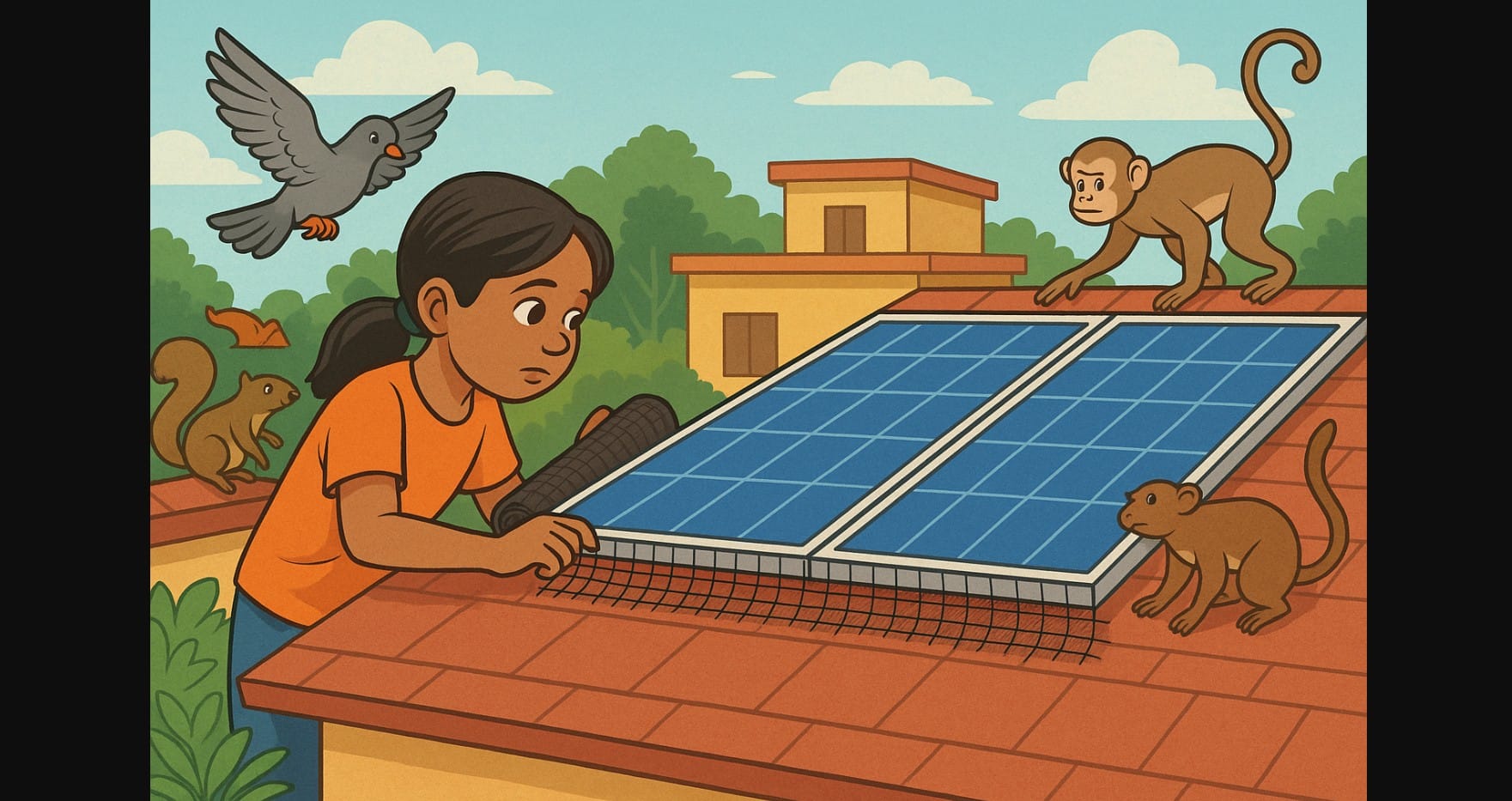
Rooftop solar systems are open, warm, and often shaded the perfect nesting ground or play area for wildlife. Unfortunately, these same natural visitors can quietly damage the system you’ve invested in, leading to:
- Chewed wiring
- Nesting under panels
- Droppings that corrode surfaces
- Loosened mounts
- Blocked airflow or short circuits
In India, where rooftops often double as water tank zones or drying areas, this kind of interaction is common. If ignored, it can reduce generation, create safety hazards, and cost you thousands in repairs.
1. Common Wildlife That Damages Solar Systems in India
| Animal | Damage Caused |
|---|---|
| Pigeons, doves | Nest under panels, block airflow, leave corrosive droppings |
| Monkeys | Pull cables, dislodge panels, scratch glass surfaces |
| Rats, squirrels | Chew wire insulation, enter junction boxes, start shorts or fires |
| Bees, insects | Build nests inside inverters or vents, attract ants |
| Snakes (in rural zones) | Hide in shaded inverter zones, unsafe for inspection |
Even if panels stay clean, wiring and inverter areas are especially vulnerable.
2. Warning Signs You May Have an Animal Problem
- Early morning or evening scratching or movement sounds on the roof
- Bird feathers or nesting material around panel edges
- Output dip in one string on the inverter or app
- Frayed or loose cables
- Signs of chewed insulation or exposed copper
- Insects swarming around the inverter or electrical cabinet
- Electrical smell or heat near junction boxes
If your inverter shows intermittent fault codes, check the surroundings not just the system logs.
3. How to Prevent Bird and Monkey Damage to Your Solar Panels
Bird Protection
- Install UV-resistant mesh under the panels (especially for flat mounts)
- Angle the panels above 30°-35° to reduce under-panel space for nesting
- Add bird spikes near tanks and railings don’t mount directly on panels
- Clean droppings regularly to prevent corrosive damage and sticky buildup
Monkey Deterrence
- Surround the panel edges with L-shaped rods or monkey guard mesh
- Avoid placing food bowls, water sources, or satellite dishes near the array
- Use visual deterrents (e.g., reflectors or mirrors) in monkey-heavy areas
- Avoid open rooftop wiring keep all cables tied and covered in conduit
4. Protecting Power Cables from Chewing or Impact Damage
| Protection Method | What It Prevents |
|---|---|
| Steel-reinforced cable conduit | Stops rodents from chewing through insulation |
| Rat deterrent sprays (non-toxic) | Deters chewing, especially near inverters |
| Elevate junction boxes | Keeps them out of rodent reach and moisture |
| Avoid cable slack or open loops | Rodents tend to chew loose, hanging wires |
| Use multi-point cable clips | Secures wires tightly along frames or walls |
Rodent bites can be invisible at first but they create heat spots, shorts, and fire risk.
5. How to Protect Your Solar Inverter and Equipment Area
- Place inverter inside a semi-enclosed box with mesh vents
- Use insect-screened grills for airflow not open slats
- Seal unused openings in junction boxes and cable trays
- Don’t store clothes, food, paper, or cardboard near inverter/battery
- Mount inverter and batteries above ground level to avoid snakes or insects
Avoid placing solar control boxes in basements or closed sheds without airflow heat and pests both thrive there.
5. Location-Based Solar Panel Damage Prevention In India
Urban Rooftops (Delhi, Mumbai, Hyderabad)
- Focus on pigeon prevention
- Regularly clean corners and under-frame zones
- Use reflective foil on frames to discourage nesting
Semi-Urban, Temple Areas (Mathura, Haridwar, Nashik)
- Use monkey mesh and reinforced conduit
- Consider motion-activated sprinklers or harmless alarms (where possible)
Rural or Forest-Side Homes (Kerala, Uttarakhand)
- Install low fences around ground-mount panels
- Raise wiring and junction boxes 1.5-2 feet above ground
- Don’t allow dry leaves or waste near equipment housing
6. Pest Protection Checklist for Solar Systems
| Threat | Protection Strategy |
|---|---|
| Birds nesting | Mesh under panels, angled mounts, bird spikes |
| Monkey tampering | Guard rods, mesh enclosure, strong wiring conduit |
| Rodent chewing | Metal conduit, rat spray, cable clips |
| Insect nests | Screened inverter vents, sealed cable boxes |
| Snake hiding spots | Elevated battery/inverter setup, clear floor area |
7. Pest Management for Safe and Reliable Rooftop Solar
Your solar system performs best in the sun, not when it’s filled with nests, chew marks, and pests. Keeping animals away not only saves power but also prevents faults, fire risks, and annoying service calls.
If you see feathers, hear sounds from the roof, or notice worn cables, take action early. A bit of mesh and careful work on the cables now can prevent problems later.

