
Why India’s Budget Android Segment Is the World’s Toughest Phone Market
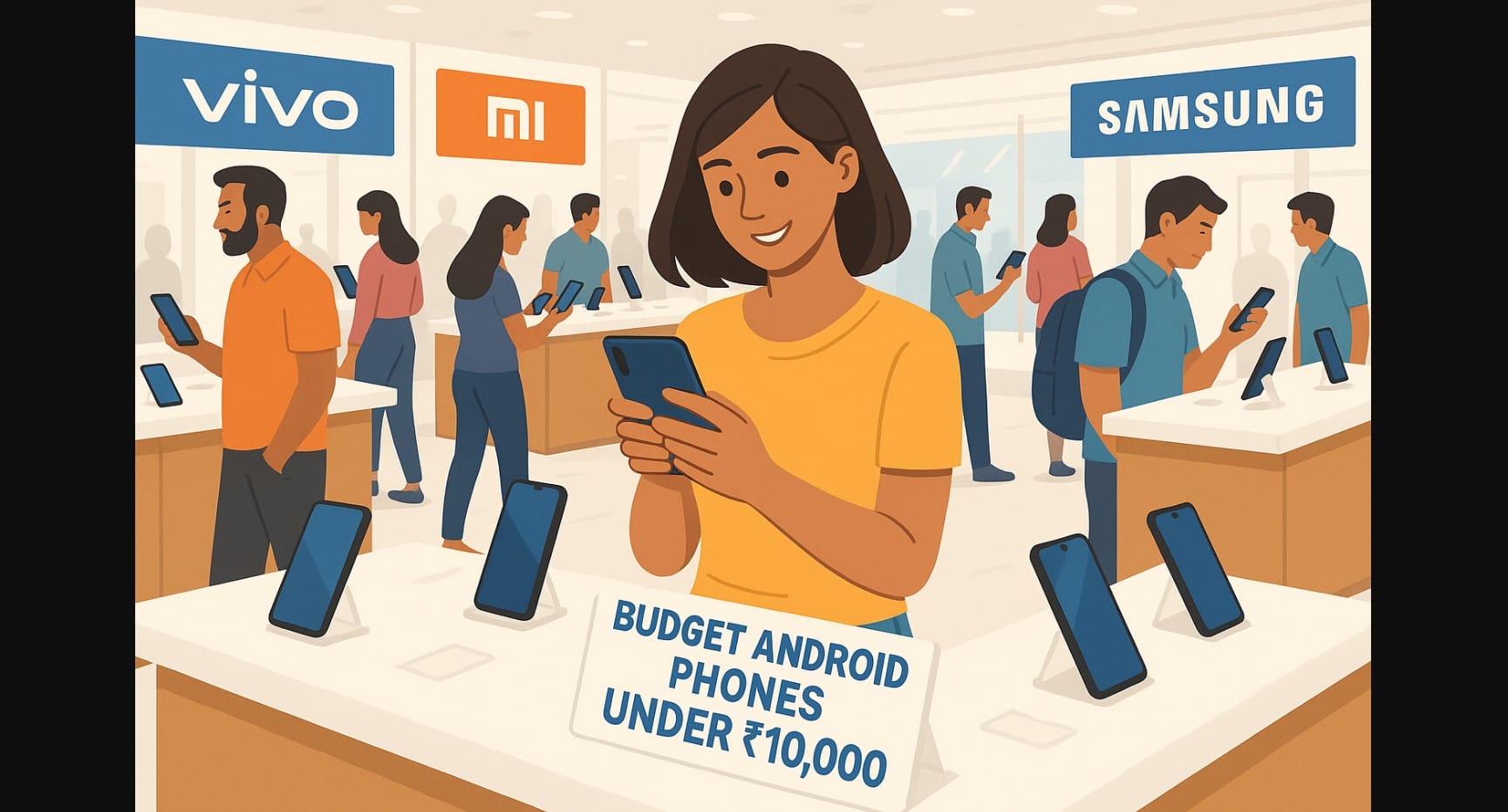
India’s smartphone headlines are often dominated by premium launches, but the real battle is waged in the budget segment, phones priced between ₹7,000 and ₹20,000. This is where more than 70% of Indian buyers spend their money, and where brand loyalties are first built. Unlike the premium space, where margins are healthy, the budget segment is brutal: brands undercut each other with razor-thin profits, launch cycles are relentless, and buyers switch brands with little hesitation.
In 2025, this segment has become the most competitive smartphone market in the world. The question is not just who sells the most today, but who controls the upgrade paths of the next billion Indian smartphone users.
1. The Mechanics of Budget Anfroid Smartphone Competition
Price as the First Weapon
In India, price is not just a factor, it is the battlefield itself. Phone Brands slash margins during launches and festive seasons, often pricing below cost to grab market share. A phone launched at ₹12,999 may pack features that cost ₹18,000 elsewhere, because scale and brand visibility matter more than profit in the short term.
The Refresh Cycle Trap
In the budget tier, new models arrive every 6-8 months. Buyers expect every launch to raise the bar, faster charging, bigger batteries, better displays. Brands that fail to refresh quickly lose relevance, no matter their past success. This short cycle keeps the pressure relentless, making the battlefield unforgiving even for established leaders.
Feature Overload as a Differentiator
To stand out, brands compete on “specification shock.” High-refresh displays, multi-lens cameras, 5G chipsets, and fast charging have all filtered down to phones under ₹15,000. The arms race is less about true innovation and more about who can push premium-like features into the budget tier first, without collapsing margins.
2. The Role of Parent Phone Companies
BBK Electronics: Fighting With Multiple Brands
Oppo, Vivo, Realme, iQOO, and even OnePlus in the Nord series all trace back to BBK Electronics. By splitting into multiple sub-brands, BBK ensures it can attack from every angle, offline (Vivo, Oppo), online (Realme, iQOO), and aspirational mid-range (OnePlus). This strategy prevents one brand from being overexposed and makes BBK the single most dominant force in India’s budget segment.
Xiaomi and Redmi (Including Poco)
Xiaomi pioneered the online “value-for-money” playbook, but faces pressure as BBK expanded offline. Redmi remains strong in the ₹10,000-₹15,000 space, while Poco caters to young, performance-oriented buyers. Xiaomi’s challenge is not features, it’s holding onto share while margins shrink and offline rivals chip away.
Samsung: The Lone Non-Chinese Heavyweight
Samsung competes differently: it rarely engages in extreme undercutting, but balances competitive specs with brand trust and widespread service. The Galaxy A and M series may not always win spec wars, but they maintain steady presence because Samsung is perceived as a safer bet.
Transsion Holdings: Infinix, Tecno, Itel
Transsion plays in ultra-low cost (sub-₹10,000), where brand trust is weaker but feature-price balance matters most. Its strategy is volume-driven, targeting Tier-3 towns and rural India with massive batteries and large displays at rock-bottom prices.
Indian Brands: Lava and Micromax
Indian players don’t dominate the segment, but they are not irrelevant. Lava pushes budget 5G devices while Micromax, via Bhagwati Products, leans on Make in India branding and local manufacturing. They compete less on scale and more on narrative, appealing to buyers who value domestic identity.
3. Why This Budget Mobile Phone Segment Is So Brutal
- Margins Are Minimal: Phones are often sold at or below cost, with profits depending on accessories, services, or volume.
- Brand Loyalty Is Weak: Buyers readily switch brands for better specs or flash sale deals.
- Parent Groups Overlap: BBK competes with itself through Oppo, Vivo, Realme, and iQOO, fragmenting the battlefield further.
- Short Lifespans: Budget phones are kept relevant only for 18-24 months; then buyers upgrade or brands abandon support.
- Marketing Costs Are High: Endorsements, flash sales, and influencer campaigns eat into profits, but skipping them risks invisibility.
4. Budget Smartphone Competition Matrix
| Brand / Parent | Price Strategy | Refresh Speed | Feature Push | Parent Strength | Upgrade Path Advantage |
|---|---|---|---|---|---|
| Vivo (BBK) | Moderate; not the cheapest, but stable margins | Regular 8-10 month cycles | Camera-heavy, offline trust features | Backed by BBK’s R&D, distribution | Strong in Tier-2/3; buyers often move to Oppo/Vivo mid-range |
| Oppo (BBK) | Similar to Vivo; relies on EMI/retail margins | Steady, ~10 month refresh | Design focus, offline bundles | Shared with Vivo/Realme, BBK scale | Smooth migration to higher Oppo models |
| Realme (BBK) | Aggressive online-first pricing | Very fast, 6-8 month cycles | High-refresh displays, fast charging in low tier | BBK’s cost-sharing helps | Upgrade to Realme GT or OnePlus (cross-brand loyalty capture) |
| iQOO (BBK) | Targeted performance pricing | Focused refreshes, tied to gaming hype | Gaming features, powerful chipsets | Uses Vivo/BBK supply chain | Buyers graduate to higher-performance devices (OnePlus) |
| Xiaomi / Redmi / Poco | Aggressive pricing, festive discounts | Extremely fast, often 6 months | Spec shock: bigger batteries, 5G chipsets | Strong brand recall; online dominance | Buyers often upgrade within Redmi, sometimes switch to Poco |
| Samsung | Balanced, avoids extreme price cuts | Slower, 12 month refresh | Reliable batteries, Knox security, One UI | Global R&D, huge service network | Loyal buyers move from A/M to Galaxy S/A series |
| Infinix / Tecno (Transsion) | Ultra-low pricing | Slower cycles, ~12 months | Big displays, huge batteries | Parent specializes in African/Asian markets | Buyers may switch up to Xiaomi/BBK once income rises |
| Lava (India) | Affordable, patriotic positioning | Moderate, ~12 month cycles | Simple but reliable; 5G under ₹15,000 | Local R&D, government support | May retain budget buyers but weaker upgrade ladder |
| Micromax (India) | Budget + Make in India focus | Limited refreshes, irregular | Competes with safe specs; positioning > features | Expanding factories (Bhagwati Products) | Upgrade path weak; depends on nationalist appeal |
5. Strategic Stakes: Why This War Matters
The budget smartphone market is not just about today’s sales; it is about owning the customer journey. A student who buys their first Realme at ₹12,000 may buy a OnePlus at ₹25,000 two years later. A family that picks Samsung in the budget tier may stick to Galaxy when upgrading to ₹40,000.
That is why competition is so fierce: whoever wins in budget, wins India’s smartphone future.
Summary: The World’s Toughest Smartphone Market
India’s budget Android segment is not just another price band, it is the most competitive arena in the world’s fastest-growing smartphone market. Chinese conglomerates like BBK and Xiaomi fight on multiple fronts with overlapping sub-brands, Samsung stands as the steady global challenger, Transsion caters to ultra-low-cost buyers, and Indian brands like Lava and Micromax struggle to survive with local identity and policy support.
But beneath the brand names, the mechanics remain the same: sell at the lowest possible margin, refresh at breakneck speed, overload features, and fight for visibility. For consumers, this means more choice than ever. For companies, it means survival depends on scale, speed, and strategy.
The stakes are far bigger than quarterly sales. The brand that wins in budget today will own the upgrade path of millions of Indian buyers tomorrow. That is why this segment, more than any premium launch, decides the future of India’s smartphone market.

