
Not Sure Which Insurance to Pick for Your Scooter or Bike? Start Here
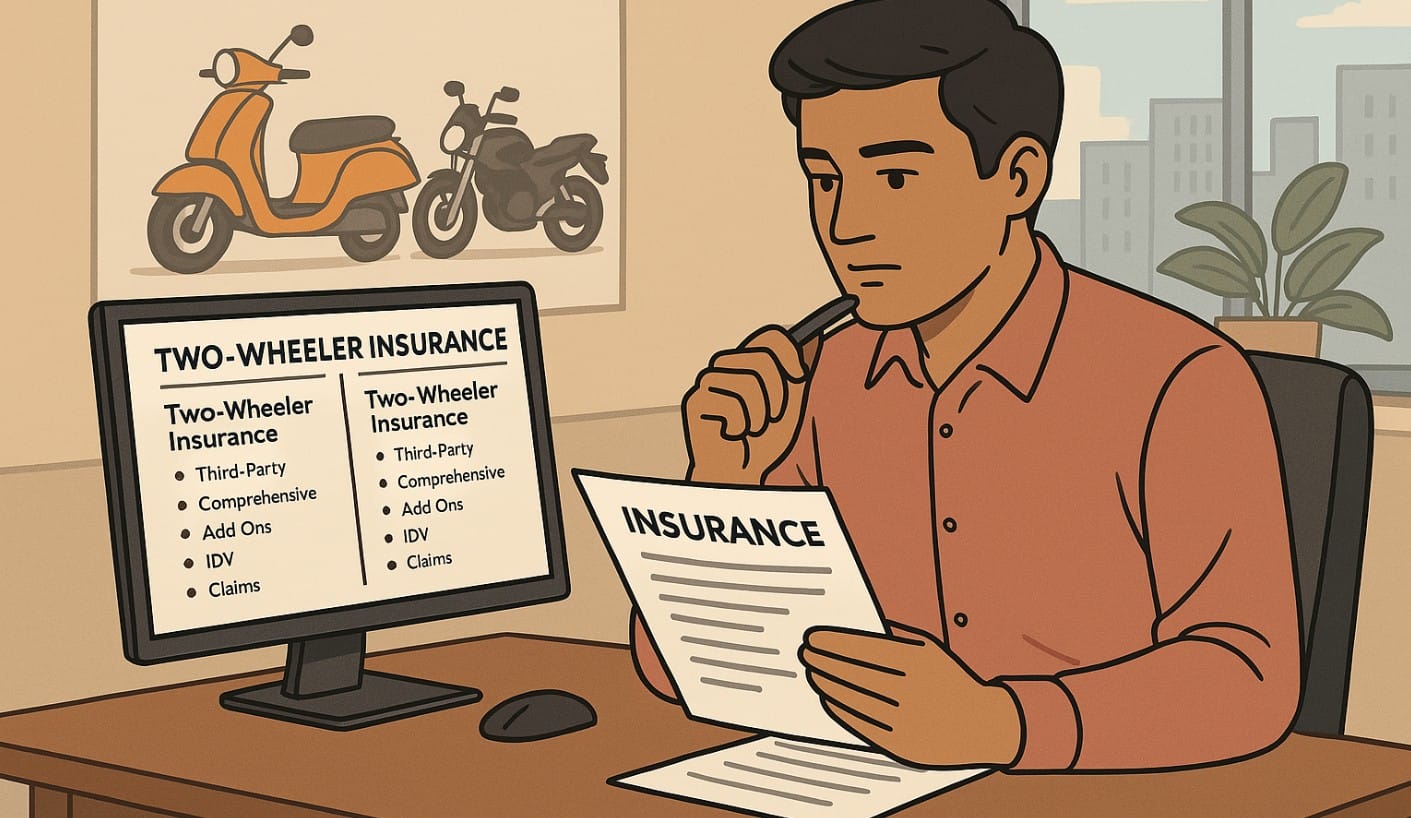
You’ve picked your scooter or bike. You’re ready to ride. The dealer hands you an insurance document and you just accept it. But Wait:
- Do you know what’s actually covered?
- Do you know how much you’ll get if the vehicle is stolen or damaged?
- Do you know who handles your claim?
In India, most two-wheeler buyers don’t think about insurance until something goes wrong. And that’s a problem because not all policies are the same, and not all cover the things that matter to you.
This post helps you choose insurance the smart way so you’re protected, not surprised.
1. What Type of Two Wheeler Insurance Do You Need?
There are three main types of policies:
1.1 Third-Party Insurance (Mandatory)
This is legally required in India. It covers:
- Damage to another person’s vehicle or property
- Injury or death caused to a third party
But it does not cover your scooter or bike. It’s basic but it won’t help if your own vehicle is stolen or damaged.
1.2 Own-Damage Insurance
This covers damage to your own two-wheeler from:
- Accidents
- Fire
- Theft
- Natural disasters
It’s optional but essential if you want to actually protect your vehicle.
1.3 Comprehensive Insurance
This combines both third-party and own-damage coverage.
It’s the most complete option and usually what the dealer will offer.
Tip: For new vehicles, insurers are required to bundle 5 years of third-party cover + 1 year own-damage (can be renewed later separately).
2. What Does a Good Policy Actually Cover?
A well-structured two-wheeler insurance plan should include:
- Protection against theft or total loss
- Damage from accidents, fire, floods, or riots
- Third-party liabilities
- Personal accident cover for the owner/driver (₹15 lakh standard)
The amount your insurer promises to pay is called IDV (Insured Declared Value). Make sure it reflects your scooter’s actual price, not a reduced number to lower premium.
3. Add-Ons That Actually Help (Not Just Fancy Names)
When you buy insurance, you may see a list of “extras.” Some are useful. Some are not.
Here’s what matters:
- Zero Depreciation: You get full claim without deduction for wear and tear. Useful in the first few years.
- Roadside Assistance: Help with towing, fuel delivery, battery jump-starts. Ideal if you ride long distances.
- Engine Protect: Covers water damage or internal failure. Important in flood-prone areas.
- NCB Protection: Keeps your No Claim Bonus safe even after a minor claim.
- Return to Invoice: If your vehicle is totaled or stolen, you get full invoice value.
Don’t say yes to every add-on. Choose based on your route, weather, and usage.
4. If You’re Buying an EV – Insurance is Different
EVs come with their own set of risks and rules. So the insurance should cover:
- Battery pack damage or replacement
- Fire from electrical faults
- Theft of charging cables or chargers
- Software/hacking issues (for app-based scooters)
Also confirm the difference between battery warranty and battery insurance. They’re not the same.
5. Should You Buy Insurance from the Dealer?
Most showrooms will bundle insurance into your on-road price. It’s convenient but not always best.
Pros of Dealer Insurance:
- Fast
- No paperwork
- Often part of the total price
Cons:
- Limited options
- Always cost more than online
- You can’t easily choose add-ons or insurer
You can cancel and switch the policy within the first few days (free-look period). So if you find a better one later, you still have a chance.
6. What to Check Before You Accept the Policy
Don’t just file the papers read them once. Look for:
- Correct name, vehicle model, chassis number
- Coverage start and end dates
- Add-ons mentioned clearly
- IDV that matches your vehicle value
- Claim process and contact details
Also check if the policy is digital-only or if you’ll get a physical copy too.
7. Common Two Wheeler Insurance Mistakes You Can Avoid
- Choosing the cheapest premium without checking what’s included
- Accepting a low IDV to reduce cost (hurts at claim time)
- Ignoring add-ons even if they fit your route or weather
- Not understanding claim limits or exclusions
- Forgetting to renew on time (and losing NCB)
Final Word: Insurance Is for You, Not for the Traffic Police
You don’t buy insurance just to avoid fines. You buy it to protect something that costs ₹80,000 to ₹1.5 lakh and more if it’s electric or premium.
So ask questions. Read what you’re signing. Choose a policy that fits your roads, your risks, and your comfort not just your dealer’s convenience. And once you’ve got the right cover, ride worry-free because now, you’re actually protected.

