
How Indian Weather Affects Your Solar Power System Output
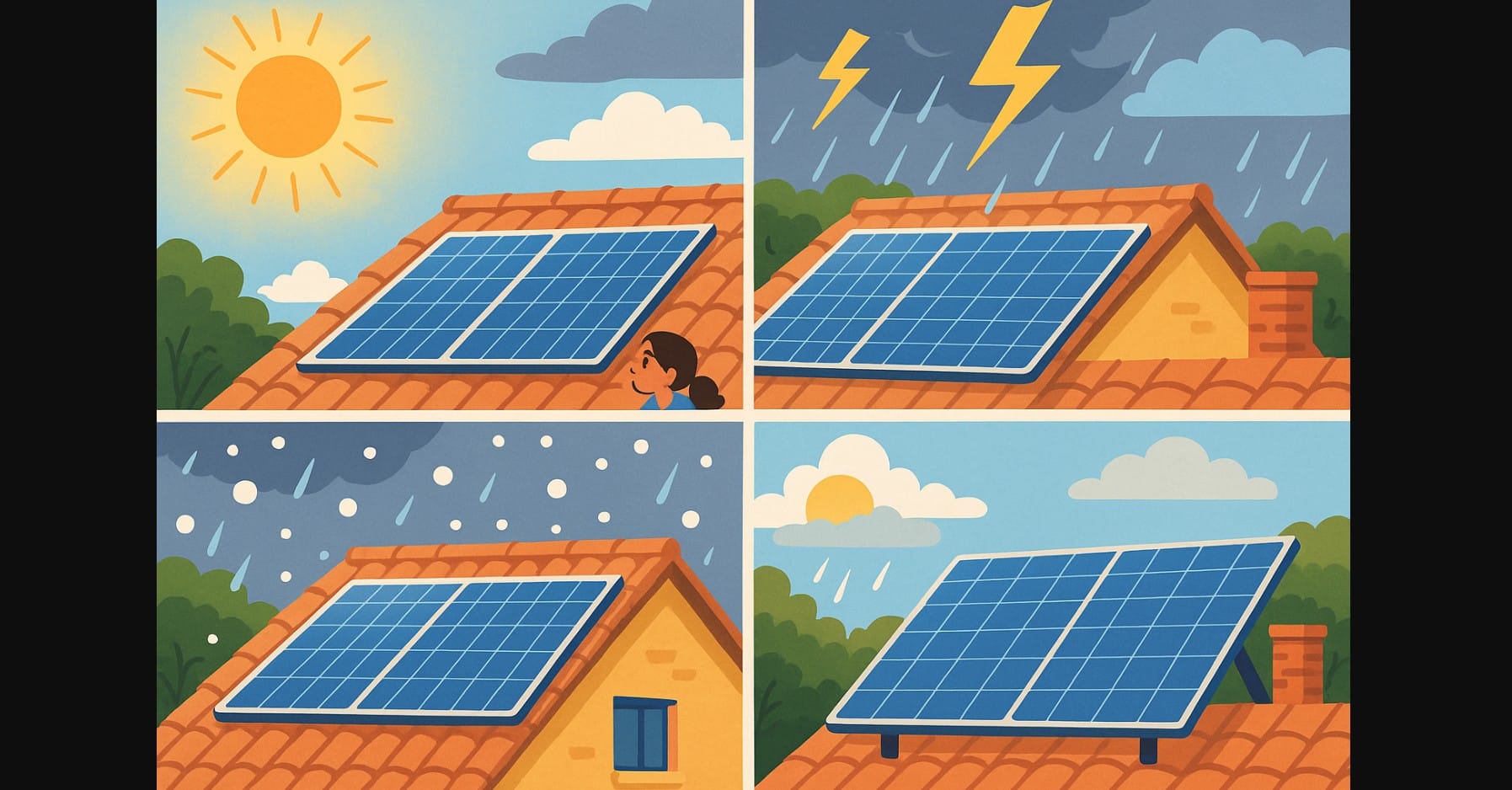
Rooftop solar panels in India are designed to last 25+ years but their daily output changes more often than you’d expect. Even with a well-installed system, weather conditions can make your generation fluctuate by 30-80% depending on the season.
So, is it normal if your solar app shows a drop in power on cloudy days? What happens during the monsoon? Let’s explore how Indian weather affects your system and what you can do to keep it running efficiently.
1. Cloudy Days Can Reduce Solar Power Output by 80% Here’s Why
Solar panels work best with direct sunlight. On dense, overcast days:
- Generation can drop by up to 70-80%
- Light clouds reduce power slightly, but thick cloud cover has major impact
- Inverters may ramp up and down as light levels change quickly
These dips are common during late afternoons or during pre-monsoon storms.
What You Can Do:
- Use an inverter with MPPT (Maximum Power Point Tracking) to adapt better to shifting light
- Monitor your daily output to confirm the system is still operating correctly (not shut down)
2. The Monsoon Months: What to Expect Across India
India’s monsoon varies by region, but in most places, it brings:
- Weeks of cloud cover and rain
- Daily generation dropping by 20-40% on average
- Intermittent generation patterns due to moving clouds
What You Can Do:
- Clean your panels before and after monsoon to prevent grime from rainwater and debris
- Consider slightly oversizing your system (10-15%) if you live in rain-heavy regions like Kerala, Konkan coast, or North-East
- Use higher tilt angles to promote faster drying and water runoff
3. Dust and Pollution: The Hidden Enemies of Your Solar Panel
In cities like Delhi, Jaipur, and Ahmedabad, air pollution and dust can:
- Reduce solar output by 5-20% over time
- Build up as a thin, dulling layer that blocks sunlight
- Stick harder during humid or post-monsoon seasons
What You Can Do:
- Clean panels every 10-15 days in dry, dusty months
- In high-pollution zones, use tilted mounts that help dirt roll off
- Monitor monthly generation trends if there’s a steady drop, check for grime
4. Winter Fog and Smog: A North India Problem Solar Problem
In states like Punjab, UP, Delhi, and Bihar, thick fog in winter:
- Cuts morning generation by several hours
- Smog (especially post-Diwali) creates a semi-permanent haze that persists for weeks
- Daily output may be 30-40% lower than summer months
What You Can Do:
- Wipe off sticky pollutants after major smog periods
- Keep an eye on monitoring data to compare year-over-year winter performance
- Avoid trimming or moving system parts without checking safety (smog doesn’t mean system failure)
5. High Temperatures Can Also Lower Solar Power Output
It sounds strange, but too much heat also affects panel output:
- Solar panels are tested at 25°C, but Indian rooftops reach 50-60°C
- Power drops 0.4-0.5% for every 1°C above 25°C
- So in peak summer, you might see 5-10% lower output than expected
What You Can Do:
- Ensure a 6-10 cm air gap between your panels and the rooftop surface for ventilation
- Don’t place panels flat on concrete use mounts with airflow
- Use light-colored rooftop paint (if possible) to reduce heat absorption
6. What’s Normal Seasonal Variation in India?
| Season | Typical Output Impact |
|---|---|
| Summer (Mar-June) | High generation, minor loss due to heat |
| Monsoon (Jul-Sep) | 20-40% drop in output (varies by region) |
| Autumn (Oct-Nov) | Stable, ideal generation |
| Winter (Dec-Feb) | Mild loss in South; fog-related drop in North |
Your solar app should show seasonal ups and downs. If you see no generation for days, contact your installer to check for faults.
7. Using Your Solar Monitoring App to Track Weather Loss
Your inverter’s app or web portal can help you:
- See daily generation patterns
- Compare cloudy days vs sunny days
- Spot any unexpected drops that don’t match the weather
Tip: Use a free weather app alongside your solar app to correlate low-output days with actual cloud cover or fog.
8. What You Can and Can’t Control as a Homeowner
| Weather Factor | Can You Control It? | What Helps |
|---|---|---|
| Clouds & rain | No | Size system right, use MPPT inverter |
| Dust & pollution | Yes | Clean panels often, use tilted mounts |
| Summer heat | Yes | Ensure ventilation and airflow |
| Fog or smog | No | Monitor app, clean after pollution events |
| Shading (trees/walls) | Yes | Trim vegetation, adjust layout during install |
9. Seasonal Solar Efficiency and Generation Trends in India
| Condition | Impact Level | Mitigation Strategy |
|---|---|---|
| Heavy clouds | High (up to -80%) | Use MPPT inverter, don’t panic on single-day drops |
| Monsoon season | Medium to High | Slight oversizing, pre/post rain cleaning |
| Dust/pollution | Medium | Regular cleaning, pollution-aware tracking |
| High summer heat | Low to Medium | Mount with air gap, choose cool surface |
| Fog/smog (winter) | Medium | Cleaning + monitoring, no need for urgent fixes |
Weather impacts are part of solar life in India. What matters is:
- Knowing what’s normal,
- Cleaning and maintaining your panels, and
- Using your app to track patterns across months.
Stay informed to keep your system running well in any weather, whether it’s sunny, smoggy, or rainy.

